Direct Answer
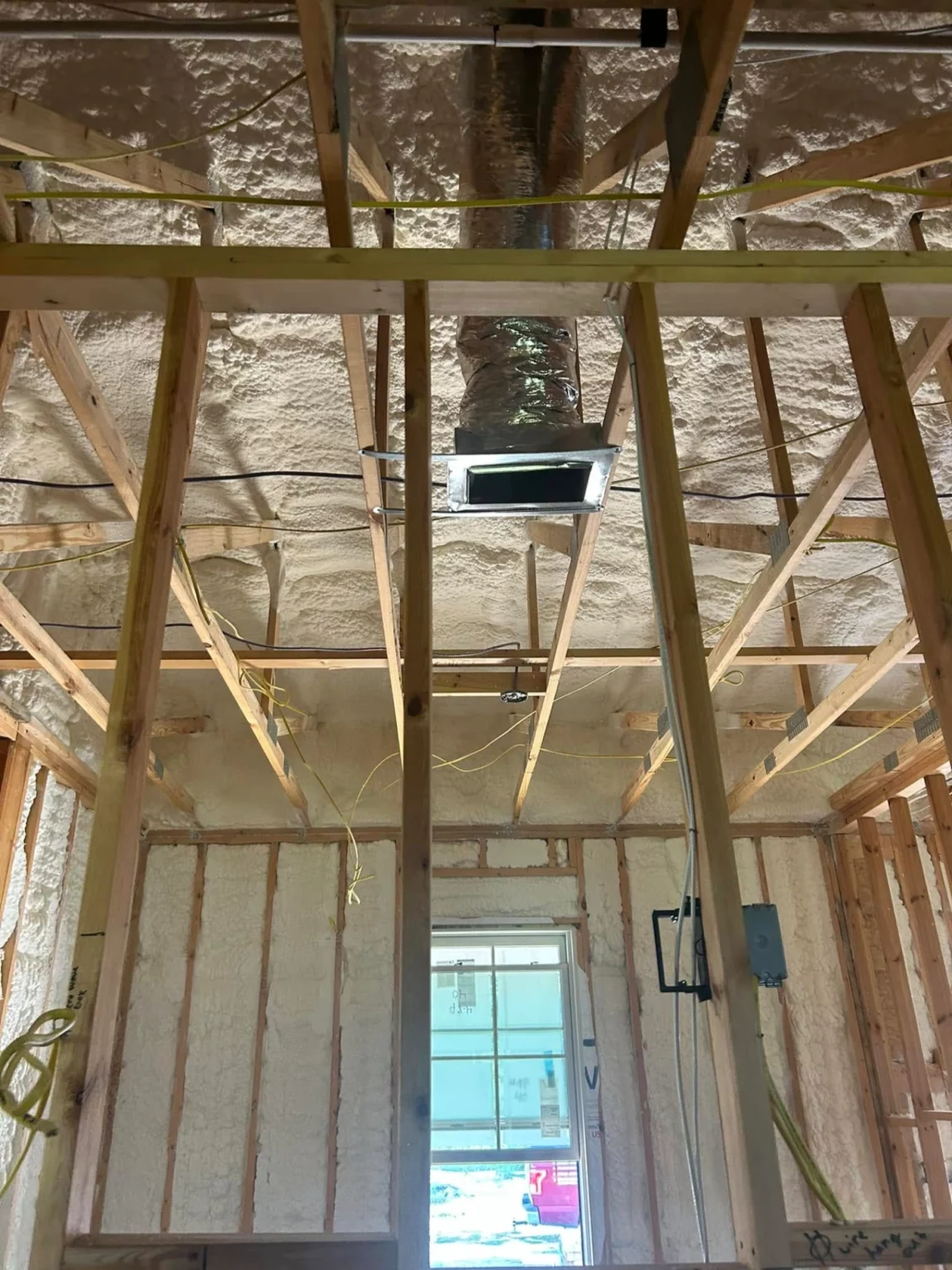
Choosing the best spray foam insulation type for maximum thermal resistance depends on your specific application, budget, and performance goals. Open-cell spray foam offers excellent sound dampening and flexibility at a lower cost, making it ideal for interior walls and attics in moderate climates. Closed-cell spray foam delivers superior R-value per inch (typically R-6 to R-7), acts as a moisture barrier, and provides structural reinforcement, making it the top choice for exterior walls, crawl spaces, and areas exposed to moisture. The right selection balances thermal performance, moisture resistance, and cost efficiency for your specific project requirements.
TLDR
- Closed-cell spray foam provides the highest thermal resistance at R-6 to R-7 per inch, ideal for exterior walls, foundations, and moisture-prone areas
- Open-cell spray foam costs 20-40% less than closed-cell, while offering superior soundproofing and flexibility for interior applications
- Climate matters: closed-cell performs best in humid climates, while open-cell works well in temperature-controlled interior spaces
- Professional installation is critical, as improper application reduces thermal performance by up to 30%
- Average costs range from $1.50-$3.00 per board foot for open-cell and $3.00-$5.00 per board foot for closed-cell
- DIY kits exist, but rarely achieve the density and coverage professional installers deliver
- Spray foam outperforms traditional fiberglass insulation by 40-60% in thermal efficiency
- Proper thickness (2-4 inches for closed-cell, 4-6 inches for open-cell) is essential for maximum R-value
Understanding Spray Foam Insulation
Spray foam insulation has revolutionized how homeowners and contractors approach thermal efficiency in buildings. Unlike traditional fiberglass batts, spray foam expands upon application, creating an airtight seal that eliminates gaps, drafts, and thermal bridging. This comprehensive guide breaks down the two primary spray foam types, their applications, and how to choose the right option for your 2026 insulation project.
What Sets Spray Foam Apart
Traditional insulation materials like fiberglass and cellulose rely on trapped air pockets to slow heat transfer. Spray foam takes this principle further by creating a continuous air barrier that seals every crack and crevice. Our team has installed thousands of applications across residential and commercial properties, and the performance difference is measurable. According to the U.S. Department of Energy, proper spray foam installation can reduce heating and cooling costs by 30-50% compared to traditional insulation methods.
Open-Cell Spray Foam: Interior Performance Champion
Open-cell spray foam is a lighter, more flexible material that expands to approximately 1 inch thick during application. Despite its lower density, it delivers impressive thermal performance and offers unique advantages for specific applications.
Best Applications for Open-Cell Foam
Our professionals recommend open-cell spray foam primarily for interior wall cavities, attic floors, and ceiling spaces where moisture exposure is minimal. The material’s flexibility allows it to accommodate normal building movement without cracking, and its open-cell structure permits moisture vapor to escape, reducing the risk of trapped moisture and mold growth.
Open-cell foam also excels as a sound-damping solution. The softer, more porous composition absorbs sound waves more effectively than closed-cell alternatives, making it ideal for home offices, media rooms, and multifamily housing units where noise control matters. The EPA recognizes spray foam as one of the most effective air sealing materials available for residential applications.
Performance Characteristics
Open-cell spray foam typically achieves an R-value of R-3.5 to R-4.0 per inch. While this falls below closed-cell performance, the material compensates through cost efficiency and application versatility. Our team commonly installs open-cell foam at 4-6 inch thicknesses in attic applications to achieve total R-values exceeding R-20.
Closed-Cell Spray Foam: Maximum Thermal Defense
Closed-cell spray foam represents the premium choice for thermal resistance and structural reinforcement. Its dense, compact structure contains millions of tiny closed cells that trap gas bubbles, creating an exceptional thermal barrier.
Why Choose Closed-Cell
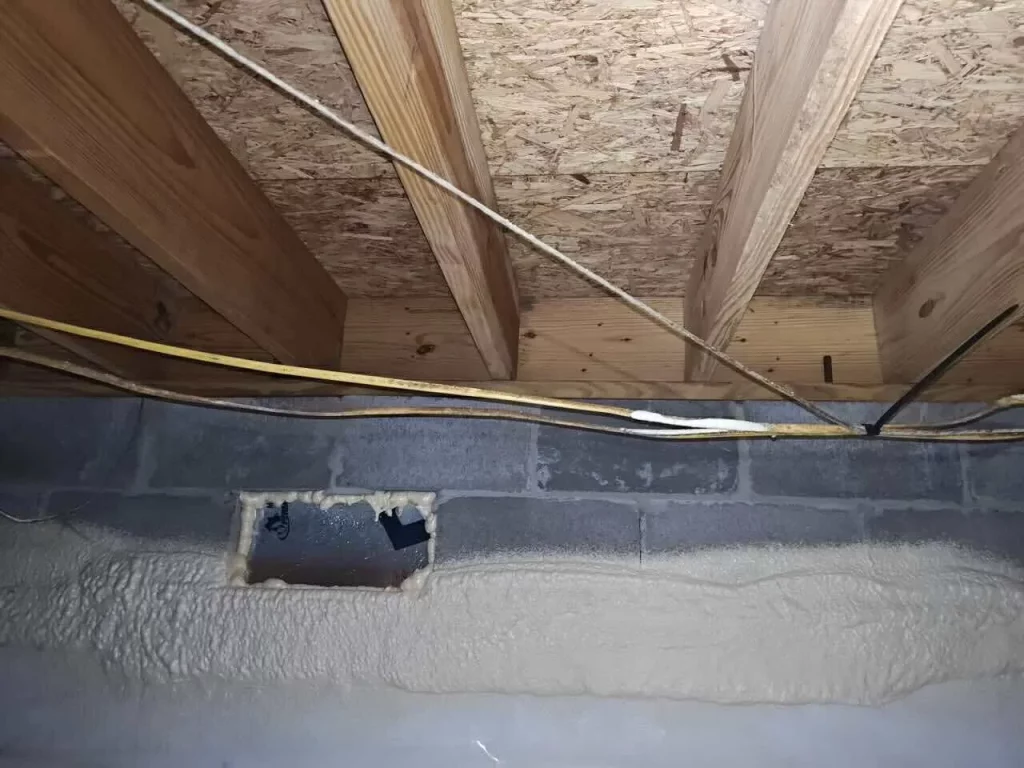
For exterior walls, foundation walls, crawl spaces, and areas exposed to moisture or flooding, closed-cell foam is the definitive choice. Our technicians often recommend closed-cell applications in coastal regions or areas with high humidity where moisture resistance is critical. The material achieves R-values of R-6 to R-7 per inch, meaning you need less thickness to achieve superior thermal performance. Per Energy Star guidelines, closed-cell foam is recommended for areas requiring both insulation and moisture control.
Beyond insulation, closed-cell spray foam adds structural rigidity to walls and roofs. This strength becomes valuable in hurricane-prone regions where building codes increasingly require impact-resistant construction materials.
Performance Characteristics
The higher density of closed-cell foam (typically 2-3 pounds per cubic foot versus 0.5-1 pound for open-cell) translates directly to thermal efficiency. Our installation teams apply closed-cell foam at 2-3 inches for walls and 3-4 inches for roof assemblies, consistently achieving R-values exceeding R-20 with minimal thickness.
Comparing Spray Foam Types
| Property | Open-Cell | Closed-Cell |
|---|---|---|
| R-Value per Inch | R-3.5 to R-4.0 | R-6 to R-7 |
| Moisture Resistance | Permeable (vapor-breathable) | Acts as a vapor barrier |
| Sound Dampening | Excellent | Good |
| Cost per Board Foot | $1.50 – $3.00 | $3.00 – $5.00 |
| Structural Reinforcement | Minimal | Significant |
| Best Climate | Controlled interior spaces | All climates are ideal for humid |
| Application Thickness | 4-6 inches | 2-4 inches |
| Curing Time | 24-48 hours | 24 hours |
2026 Market Considerations
The spray foam industry continues evolving with advances in eco-friendly formulations and installation technology. Modern spray foams use hydrofluorocarbon (HFC) blowing agents with significantly reduced global warming potential compared to older formulations. Our team stays current with these developments, ensuring every installation meets both performance requirements and environmental standards. According to the Building Science Corporation, continuing education and certification help contractors stay updated on evolving product technologies.
Energy code requirements have tightened across most jurisdictions, with many regions now mandating R-38+ in attic spaces and R-20+ in wall cavities. These requirements make spray foam an increasingly attractive option, as achieving equivalent performance with traditional materials requires substantially greater thickness.
Choosing the Right Type for Your Project
Residential New Construction
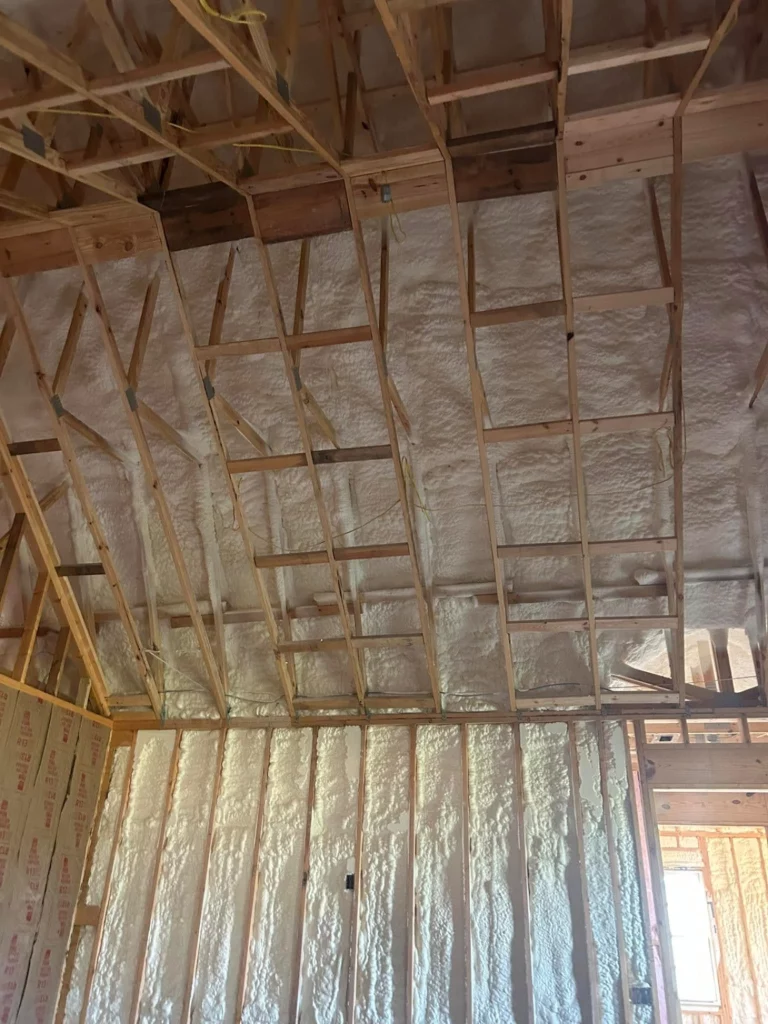
For new home builds, our recommendation typically combines both foam types. We install closed-cell foam in exterior walls and band joists where moisture resistance matters, then use open-cell foam in interior walls and attic assemblies for sound control and cost efficiency.
Existing Home Retrofits
Retrofit projects require careful evaluation of existing conditions. Our specialists assess current insulation levels, moisture issues, and air sealing needs before recommending a specific approach. In most retrofit situations, closed-cell foam in exterior walls delivers the best return on investment through superior thermal performance and air sealing.
Commercial Applications
Commercial buildings with temperature-controlled environments benefit enormously from spray foam application. Our commercial division frequently installs closed-cell foam in warehouse roofs, retail spaces, and manufacturing facilities where consistent interior temperatures reduce energy consumption and protect inventory.
Installation Quality Matters
Even the highest-quality spray foam underperforms with improper installation. Our technicians undergo continuous training on application techniques, safety protocols, and building science principles. Common installation errors include inadequate surface preparation, improper mixing ratios, and insufficient thickness application.
We recommend requesting proof of certification and insurance from any contractor you consider. The International Spray Foam Association (ISFA) offers certification programs that verify contractor competency in safety, application techniques, and building code compliance.
Signs You’ve Found the Right Insulation Contractor
Quality contractors distinguish themselves through transparent communication and professional practices. Our team provides detailed proposals that specify foam type, application thickness, and expected R-values before any work begins. We welcome questions and provide educational resources to help clients understand their insulation investment.
Look for contractors who conduct thorough energy audits or assessments before recommending specific solutions. Avoid those who quote prices without evaluating your property’s specific needs, as proper insulation requires customized solutions rather than one-size-fits-all approaches.
Premier Insulation Services
Our team at Premier Insulation specializes in spray foam insulation solutions for residential and commercial properties throughout the region. We assess each property’s unique requirements and recommend optimal foam types and application strategies.
- Residential Spray Foam Insulation: Complete home insulation solutions, including attic, wall, and crawl space applications using open-cell and closed-cell foam.
- Commercial Spray Foam Insulation: Large-scale insulation for warehouses, retail spaces, office buildings, and industrial facilities.
- New Construction Insulation: Pre-drywall insulation services for builders and contractors working on residential and commercial projects.
- Insulation Removal and Replacement: Safe removal of outdated insulation and installation of modern spray foam solutions.
- Energy Audits and Assessments: Comprehensive evaluation of your property’s insulation needs with detailed recommendations.
Frequently Asked Questions
How long does spray foam insulation last?
Properly installed spray foam can last 30+ years without degradation, maintaining its R-value and air sealing performance throughout the building’s lifespan.
Can I install spray foam myself with DIY kits?
While DIY kits are available, professional installation typically achieves better results. Our trained technicians ensure proper thickness, coverage, and curing that DIY applications often miss.
Is spray foam safe for homes with children and pets?
Yes, once fully cured (typically 24-72 hours), spray foam is inert and safe. Our team follows all safety protocols during installation and provides clear guidance on re-occupancy timelines.
How quickly will I see energy savings after installation?
Most clients notice immediate improvements in comfort and see measurable energy savings within the first heating/cooling season, typically 3-6 months after installation.
Does spray foam help with moisture problems?
Closed-cell foam acts as a moisture barrier, while open-cell foam allows vapor to breathe. Our team recommends the appropriate type based on your specific moisture concerns and climate conditions.
Request Your Insulation Evaluation
Choosing the right spray foam insulation type directly impacts your building’s energy efficiency, comfort, and long-term value. Our experienced team at Premier Insulation evaluates your specific requirements and recommends optimal solutions backed by professional installation.
Phone: (229) 554-3939
Email: premiereinsulationga@gmail.com