
Effective mold remediation in Blakely’s humid climate requires a two-pronged approach: physical removal of existing fungal growth and permanent modification of the crawl space environment to control moisture. Simply scrubbing visible mold from wood joists is insufficient because the high ambient humidity in southern Georgia ensures rapid regrowth. Actual remediation involves sealing the crawl space vents, installing a heavy-duty vapor barrier, and conditioning the air to maintain relative humidity below 60%.
This guide outlines the specific technical steps required to eliminate mold issues in this region permanently. We draw upon extensive field experience to explain why standard cleaning methods often fail and how building science principles apply to local homes. You will learn how to identify the severity of an infestation, the limitations of DIY solutions like bleach, and the structural requirements for keeping a crawl space dry year-round.
The Science of Mold in Southern Georgia
Blakely sits in a climate zone where high heat and saturation levels create the perfect incubator for fungal growth. Mold spores are always present in the air, but they require moisture, a food source (your wood framing), and suitable temperatures to colonize. While you cannot control the temperature or the food source easily, you can control the moisture.
The primary driver of mold here is the “stack effect.” As warm air rises into the attic and escapes, it pulls new air in from the lowest point of the home, the crawl space. If that space is vented, you are pulling hot, humid Georgia air into a cool, shaded area. When that humid air hits cool floor joists or HVAC ducts, condensation occurs. A report from the United States Environmental Protection Agency states that keeping indoor humidity between 30 and 50 percent is ideal for mold control, a target that is impossible to meet in an open-vented crawl space in this region without mechanical intervention.
Identifying the Problem
Before attempting remediation, you must assess the extent of the damage. In many local homes, the signs are often misinterpreted as general “old house smells.”
- Musty Odors: A persistent earthy smell inside the home, especially after rain.
- Cupped Flooring: Hardwood floors above the crawl space start to buckle or cup due to moisture absorption from below.
- Visible Growth: White, powdery substances or dark patches on floor joists.
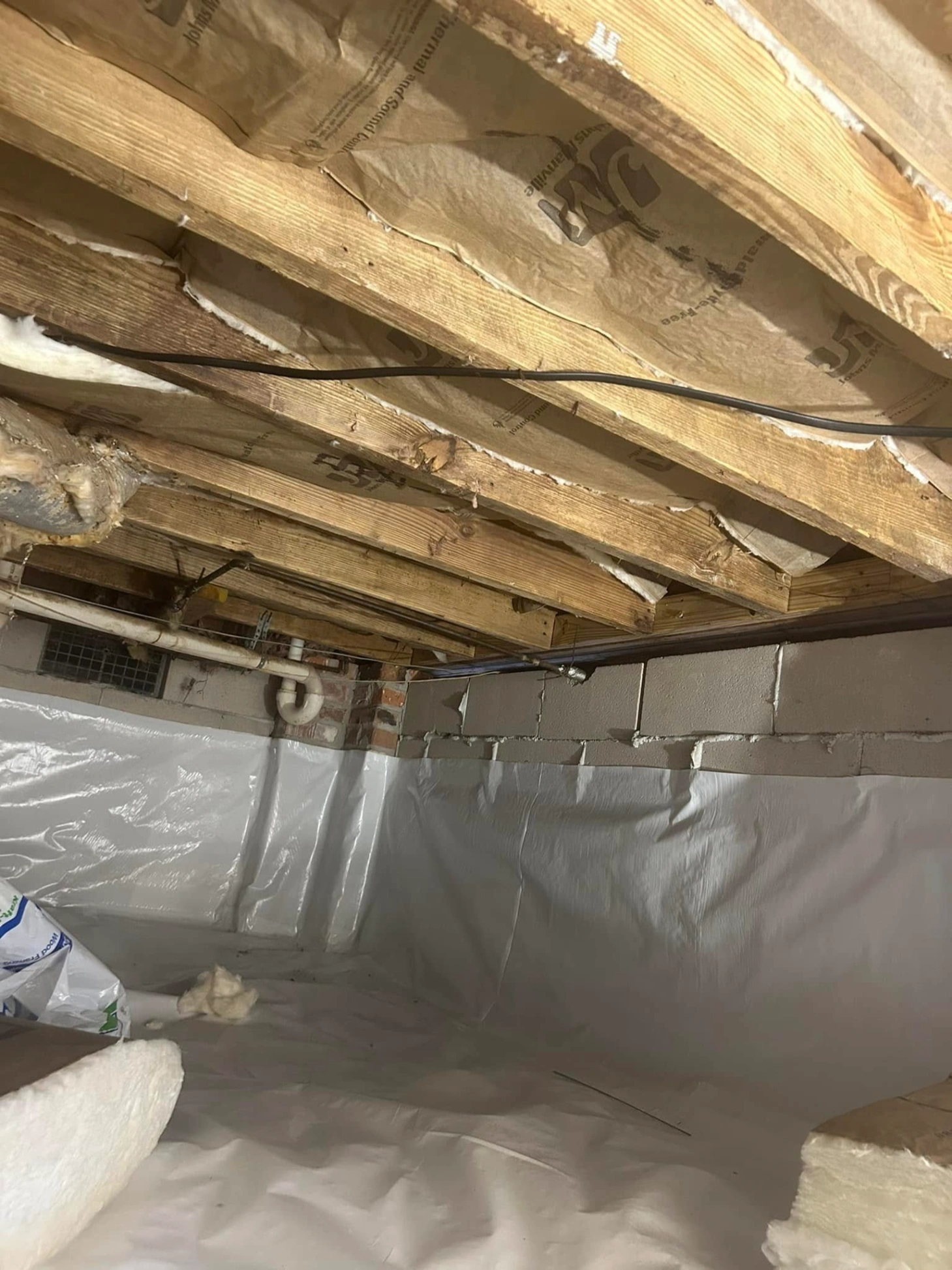
- Wet Insulation: Fiberglass batting that hangs down or feels damp to the touch.
Step-by-Step Remediation Process
Correcting a mold issue is a systematic process. Skipping steps usually results in the mold returning within months.
1. Containment and Safety
Mold spores release toxins when disturbed. Professionals set up negative air pressure zones to ensure that as they clean, spores are vented outside rather than being pushed up into the living space. Personal protective equipment (PPE), including respirators, is mandatory during this phase.
2. Physical Removal
Removing the mold is the labor-intensive part of the job. For surface mold, soda blasting (with baking soda and compressed air) or dry ice blasting is the most effective method. These techniques abrade the mold from the wood without damaging the timber’s structural integrity. Chemical cleaners are also used, but they must penetrate the wood fibers. A common mistake is using household bleach. According to the Occupational Safety and Health Administration, bleach is not recommended for mold remediation on porous surfaces like wood because it does not penetrate deeply enough to kill the roots, which can lead to regrowth.
3. Removal of Damaged Materials
Porous materials that cannot be effectively cleaned must be discarded. This almost always includes the existing fiberglass insulation. Fiberglass acts like a sponge, holding moisture against the wood and providing a matrix for dust and mold to accumulate.
4. Drying and Verification
Once the mold is gone, the wood moisture content (WMC) must be brought down. Construction standards generally suggest that wood is susceptible to decay at 20% moisture content. Fans and commercial dehumidifiers are used to dry the framing until the WMC reads below 15%.
Permanent Moisture Control Solutions
After cleaning, you must stop the moisture from returning. This is where the concept of “encapsulation” comes into play.
The Encapsulation Method
Encapsulation treats the crawl space as part of the home’s building envelope.
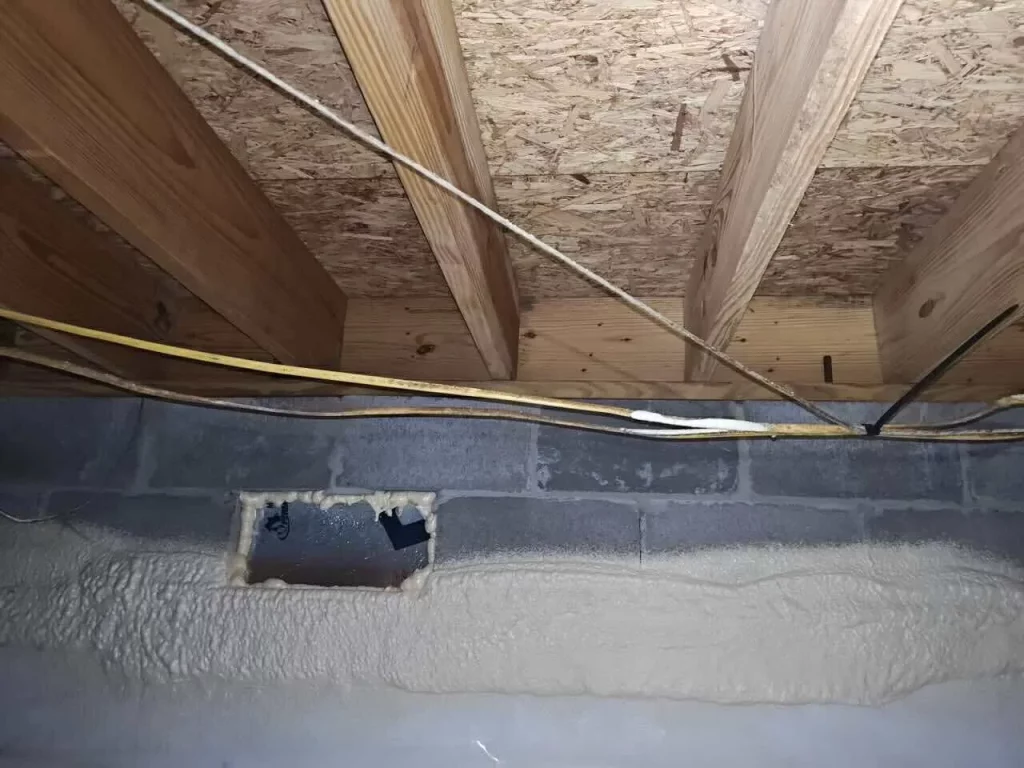
- Vents are Sealed: Blocks the entry of humid outside air.
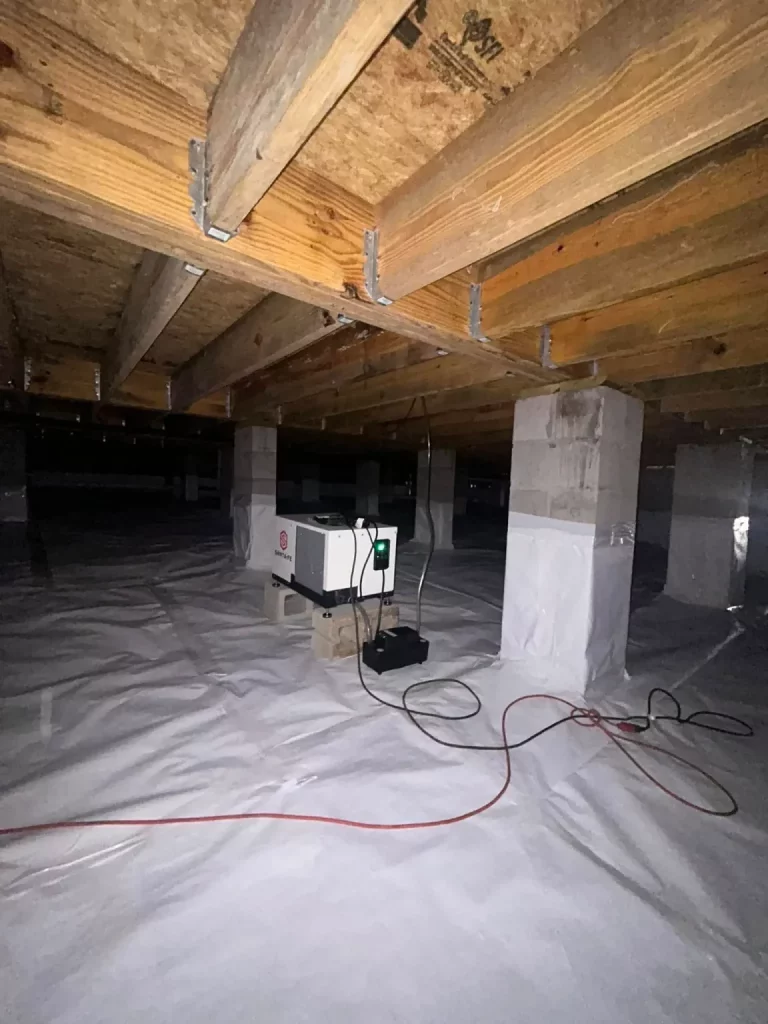
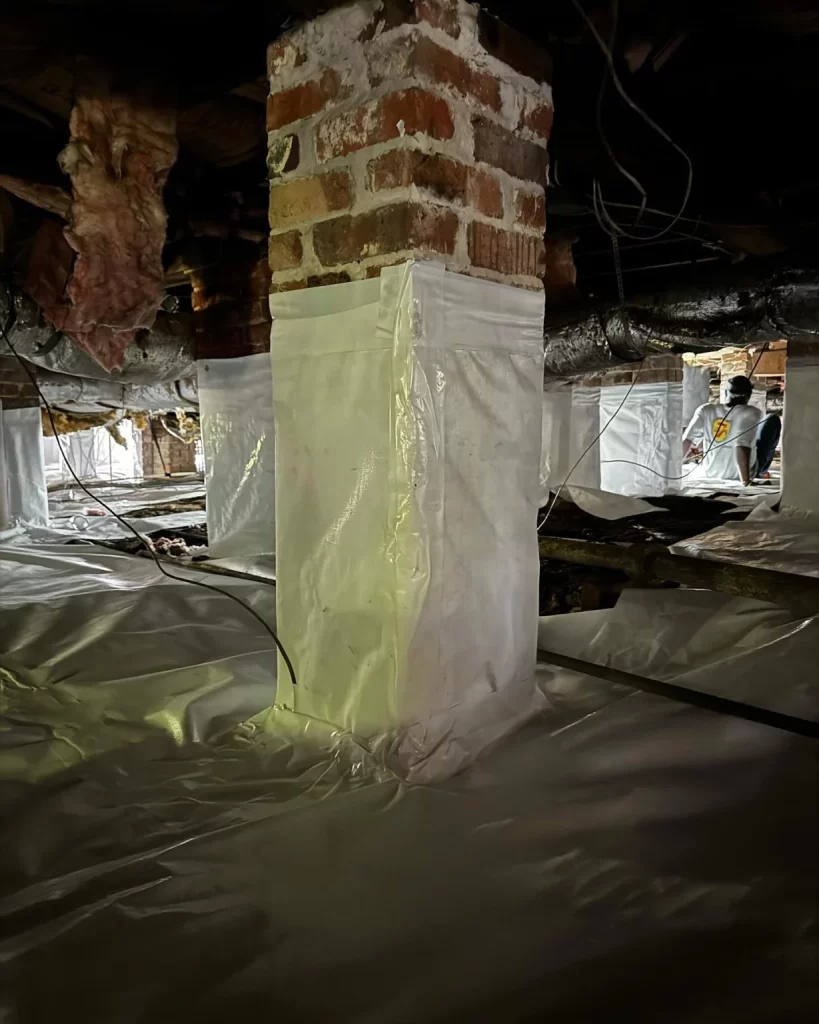
- Vapor Barrier: A thick (12-20 mil) plastic liner is installed over the dirt floor and sealed to the foundation walls. This stops moisture from evaporating out of the ground.
- Wall Insulation: The foundation walls are insulated, often with spray foam, to prevent condensation and manage temperature.
- Air Conditioning: A dehumidifier or a small supply of conditioned air from the HVAC system is introduced to dry the air.
Comparison of Control Methods
Understanding the difference between old methods and modern building science is vital for decision-making.
| Feature | Open Vented Crawl Space | Partial Sealing | Full Encapsulation |
|---|---|---|---|
| Humidity Control | Poor (Matches outside weather) | Moderate | Excellent (Controlled) |
| Mold Risk | High | Medium | Low |
| Initial Cost | Low | Medium | High |
| Long-term Energy Savings | None | Low | High (15-20%) |
| Insulation Type | Fiberglass (prone to sagging) | Fiberglass or Board | Spray Foam or Rigid Board |
| Air Quality Impact | Allows allergens to enter | Reduces some allergens | significantly improves indoor air |

Things to Consider Before Making a Decision
Before committing to a remediation plan, evaluate specific factors related to your property in Blakely.
Drainage Around the Foundation If water pools against your house when it rains, encapsulation alone will fail. You must address exterior drainage issues, grading, gutters, and downspouts before spending money on interior remediation. Hydrostatic pressure can push water through concrete blocks, bypassing internal barriers.
HVAC Location If your ductwork runs through the crawl space, it is likely sweating. Uninsulated or poorly insulated ducts in a humid crawl space create significant condensation. Encapsulation protects these ducts, extending the life of your HVAC system.
Budget vs. Value Full remediation and encapsulation is a significant investment. However, data indicate that it protects the home’s structural integrity. A study by Advanced Energy demonstrated that closed crawl spaces resulted in energy savings and substantial reductions in relative humidity compared to wall-vented spaces.
Bonus Tip: The Termite Inspection Gap
When sealing a crawl space, you must leave a “inspection gap” at the top of the foundation wall. Termite inspectors need to see the physical structure to check for mud tubes. Do not run vapor barriers or insulation all the way to the sill plate without consulting your pest control provider first.
Conclusion
Successfully handling mold in Blakely requires shifting your strategy from cleaning to controlling. While physically removing the mold is necessary for health and safety, it is a temporary fix if the environment remains wet. By managing humidity through encapsulation and proper drainage, you protect your home’s structural wood and improve your family’s air quality. Evaluate your crawl space not just as a dark area under the house, but as the foundation of your home’s health.
Ready to Secure Your Home?
If you suspect mold growth or moisture issues in your crawl space, do not wait for the damage to spread to your living areas. Premier Insulation specializes in identifying root causes and implementing permanent solutions for Georgia homes. Contact us today to discuss your specific situation.
Phone: (229) 554-3939 Email: premierinsulationga@gmail.com
Sources
- United States Environmental Protection Agency – Guidelines on moisture control and mold prevention in buildings.
- Occupational Safety and Health Administration – Safety and Health Information Bulletin on the hazards of using bleach for mold cleanup.
- Advanced Energy – Research data on the energy efficiency and moisture performance of closed vs. vented crawl spaces.
Frequently Asked Questions
How long does the remediation process take?
Most residential projects take between three to five days. This timeline includes removing old insulation, cleaning and treating the wood, drying out the structure, and installing the new moisture-control system.
Will homeowners’ insurance cover mold remediation?
Policies vary, but standard policies often exclude mold unless it is the direct result of a covered peril, such as a burst pipe. Gradual damage from humidity or deferred maintenance is rarely covered. You should review your specific policy language carefully.
What is the ideal humidity level for a crawl space?
The target range is between 45% and 55%. Levels consistently above 60% allow mold to grow, while levels below 40% can cause wood to dry out excessively and crack.
Do I need a dehumidifier if I encapsulate?
In Blakely, the answer is almost always yes. Even with a perfect seal, some moisture enters through the foundation or from the house above. A dedicated dehumidifier keeps humidity within a safe range regardless of the weather outside.