
The short answer is that standard homeowner insurance policies typically exclude mold remediation coverage. Most insurers consider mold growth a maintenance issue or a result of long-term neglect rather than a sudden accident. However, coverage becomes possible if the mold stems directly from a “covered peril,” such as a sudden and accidental pipe burst or water damage from a fire hose used to extinguish a fire. This distinction determines whether a claim gets paid or denied.
Homeowners often find the fine print confusing. Understanding exactly what triggers coverage and what constitutes a preventable maintenance issue saves significant time and money during the claims process. Premier Insulation has handled numerous crawl space projects and sees firsthand how policy misunderstandings lead to unexpected out-of-pocket costs. This breakdown explains exactly how insurers view mold, where the exceptions lie, and what steps to take before filing a claim.
Understanding Covered Perils vs Neglect
Insurance policies operate on a specific set of covered risks. If a tree crashes through the roof during a storm and rain soaks the crawl space, causing mold, the insurer will likely cover the removal because the root cause was the storm, a covered peril. Conversely, if a slow leak under a sink goes unnoticed for months and creates mold in the crawl space, the claim will almost certainly be denied. The insurance industry views the slow leak as a maintenance failure by the homeowner.
The logic is simple. Insurance is designed for sudden and accidental events, not gradual wear and tear. A report from the Insurance Information Institute highlights that while mold coverage is standard in most states, insurers strictly enforce the “proximate cause” rule. This means they look backward to find the original event. If that original event is covered, the resulting mold usually is. If the original event is maintenance-related, the mold exclusion applies.
How Insurers Classify Water Damage
Water is the primary catalyst for crawl space mold. Insurers categorize water sources into three distinct groups, and this classification dictates the payout status.
The first group involves “sudden and accidental discharge.” This includes burst pipes, overflowing washing machines, or water heater failures. If these events happen suddenly and the homeowner mitigates damage quickly, mold remediation is usually covered. The second group is “surface water,” which includes flooding from heavy rains or rising rivers. Standard policies never cover surface water. Homeowners need separate flood insurance for this. The third group is “seepage and leakage,” which refers to water entering slowly through foundations or walls. This is almost always excluded.
Coverage Scenarios Table
The following table outlines common crawl space scenarios and their typical coverage outcomes based on standard policy language.
| Scenario | Likely Coverage Outcome | Reason |
|---|---|---|
| Sudden Pipe Burst | Covered | The pipe burst is a sudden, accidental internal event. |
| Heavy Rain Flooding | Not Covered | Standard policies exclude flood damage; require separate flood insurance. |
| Slow Foundation Leak | Not Covered | Seepage is considered a maintenance issue or excluded peril. |
| HVAC Condensation Leak | Usually Not Covered | Gradual leaks are maintenance issues; sudden failure might be covered. |
| Firefighting Water Damage | Covered | Water damage resulting from putting out a fire is a covered peril. |
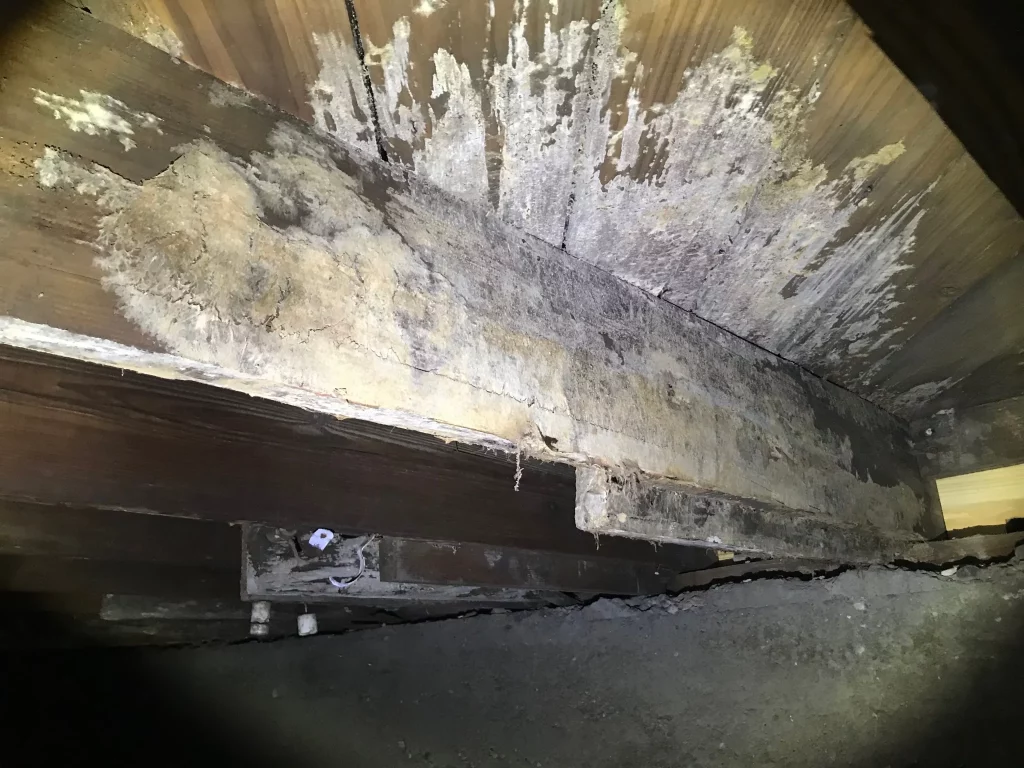
Regional Climate Factors and Mold Growth
Climate plays a major role in how insurance companies assess risk in different regions. In the Southeast, high humidity creates a constant challenge for crawl spaces. Insurers in these regions often include specific riders or limitations in policies regarding humidity-related mold, simply because the environmental risk is so high.
According to data from the Centers for Disease Control and Prevention, humidity control is the most critical factor in preventing mold growth in any home. In humid climates, the ground stays wetter for longer periods. If a crawl space lacks a proper vapor barrier or dehumidification, mold can grow without any specific water leak event. When a claim is filed in these areas, adjusters look closely at whether the homeowner installed adequate ventilation or encapsulation. If the infrastructure was missing, the denial letter often cites failure to maintain proper humidity levels as the cause of the mold, rather than a specific accident.
Bonus Tip
Premier Insulation recommends checking crawl spaces at least seasonally. Catching a damp spot before it turns black is the best way to ensure a future claim is not denied due to “long-term neglect.”
Things to Consider Before Making a Decision
Filing a claim is not always the right financial move. Homeowners must weigh the cost of remediation against the deductible and the potential for increased premiums.
First, calculate the math. If the remediation quote is $1,500 and the insurance deductible is $2,000, filing a claim makes zero sense. The payout is zero, but the claim remains on the record. Second, consider CLUE reports. The Comprehensive Loss Underwriting Exchange database tracks home insurance claims. A mold claim, even a small one, stays on the record for five to seven years and can make the home harder to insure or sell in the future. Third, think about the scope of work. If the issue is purely encapsulation or dehumidifier installation to prevent future mold, insurance will not pay. These are considered home improvements, not repairs.
Bonus Tip
Ask the contractor to break down the invoice. If they list “water extraction” separately from “mold remediation,” it might help the adjuster see that a covered water event occurred, increasing the chances of approval for the water damage portion.
Market Data and Remediation Costs
Understanding the financial stakes helps in deciding whether to involve an insurer. The cost to remove mold varies wildly based on the extent of the infestation and the accessibility of the crawl space.
Market research from Angi indicates that the national average for professional mold remediation ranges between $1,100 and $3,400, with extensive crawl space projects potentially exceeding $10,000 if structural drying is required. Because these costs can escalate quickly, homeowners often panic and file claims immediately. However, roughly 20 to 25 percent of water-damage claims result in increased premiums or policy non-renewal, depending on the state and the carrier’s risk appetite.
Final Thoughts on Coverage
Mold remediation coverage is rarely guaranteed. It relies heavily on the specific cause of the moisture and the exact wording of the insurance policy. Sudden accidents usually trigger coverage, while maintenance issues do not. Homeowners should document everything, understand their deductibles, and consult with their agent before filing a claim for minor issues. Preventive maintenance remains the most effective way to avoid both the mold and the insurance headache.
Contact Premier Insulation
If you suspect mold in your crawl space or need help understanding what your insurance policy might cover, reach out to a professional. Premier Insulation provides thorough inspections and honest assessments to help homeowners make informed decisions.
Contact Premier Insulation at premierinsulationga@gmail.com or call (229) 554-3939 for an evaluation of your crawl space.
Frequently Asked Questions
Does flood insurance cover crawl space mold?
Flood insurance covers the direct physical damage caused by the flood. It does not typically cover mold, mildew, or fungus that the homeowner could have prevented after the water receded. The policyholder must take reasonable steps to dry the space to prevent mold growth for coverage to apply.
Can I sell my home with unresolved mold issues?
Disclosing mold issues is a legal requirement in most real estate transactions. Selling a home with unresolved mold is difficult because lenders often refuse to finance properties with active fungal infestations. It is generally better to remediate before listing.
Will encapsulating my crawl space lower insurance premiums?
Encapsulation improves the home’s risk profile by preventing moisture damage, but it rarely results in a direct premium discount. However, it drastically reduces the likelihood of having to file a claim in the first place, which protects the homeowner’s long-term insurability.
How long does mold remediation take?
For a standard crawl space, the physical removal process typically takes 1 to 3 days. However, the drying process can take an additional two to five days, depending on humidity levels. Air quality tests after the job add a few more days to the timeline.
What is a mold rider?
A mold rider is an additional endorsement a homeowner can add to a policy to restore some mold coverage. It usually has a separate sublimit, meaning it pays a maximum amount specifically for mold removal, regardless of the main policy limit.
Sources
- Insurance Information Institute – A detailed explanation of how standard homeowners insurance policies handle mold claims, including covered perils and exclusions.
- Centers for Disease Control and Prevention – Provides factual data on the causes of mold growth in homes, specifically highlighting the role of humidity and moisture control.
- Angi – Offers current market data and average cost ranges for professional mold remediation services.