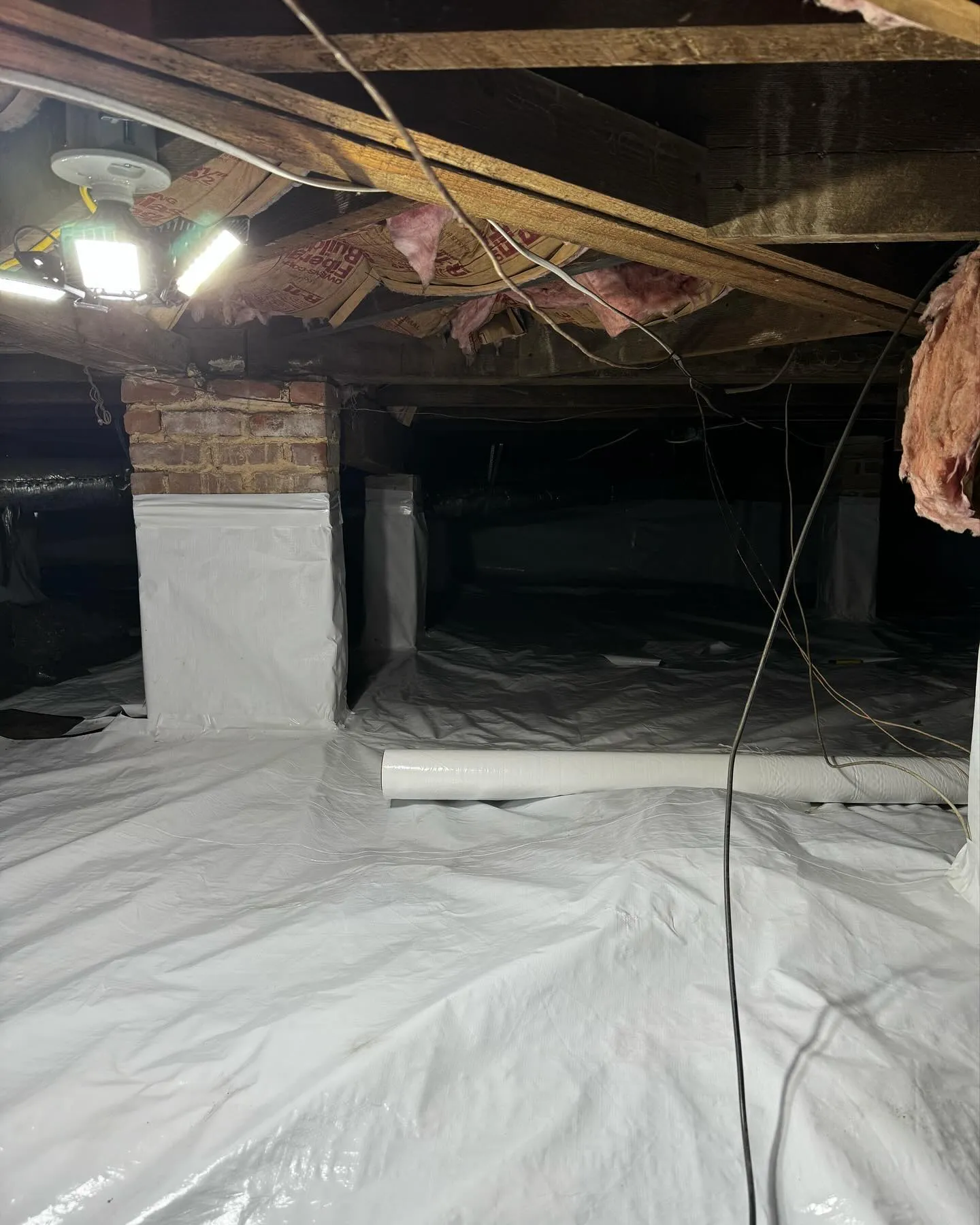
Professional encapsulation provides superior protection by addressing the specific hydrostatic pressure and humidity levels found in Southwest Georgia with industrial-grade materials and integrated drainage systems. DIY approaches typically rely on thin plastic and tape, which fail under Albany’s high soil moisture, leading to recurring mold and wood rot. This guide details the technical differences in materials, installation methods, and long-term performance to explain why expert installation outlasts store-bought solutions.
The Unique Climate Challenge in Albany
Albany experiences high humidity and significant rainfall, with soil that often contains dense clay. This clay holds water like a sponge, creating hydrostatic pressure against crawl space walls and floors. When the air outside is humid, and the crawl space is cooler, condensation forms rapidly on ductwork and floor joists.
Homeowners attempting DIY projects often underestimate this moisture load. A simple layer of plastic from a hardware store cannot stop water vapor from passing through concrete blocks or rising from the saturated soil. According to the University of Georgia Extension, managing ground moisture is essential in Georgia’s climate to prevent structural decay and maintain indoor air quality. Professional installation accounts for these local factors by specifying materials that can withstand constant contact with wet soil and masonry.
Material Quality and Durability
The most visible difference lies in the physical barrier placed on the ground. Retail products sold for home use are generally 6-mil polyethylene. While this might look adequate initially, it tears easily when crawled on and degrades quickly when exposed to soil chemicals.
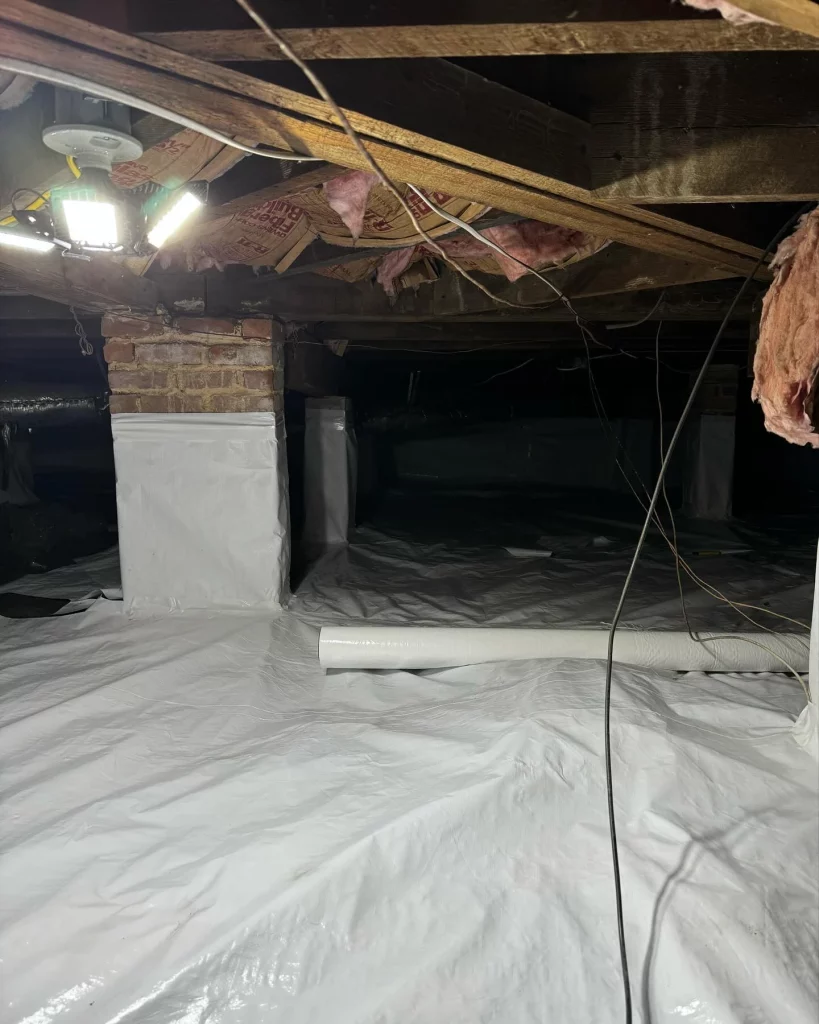
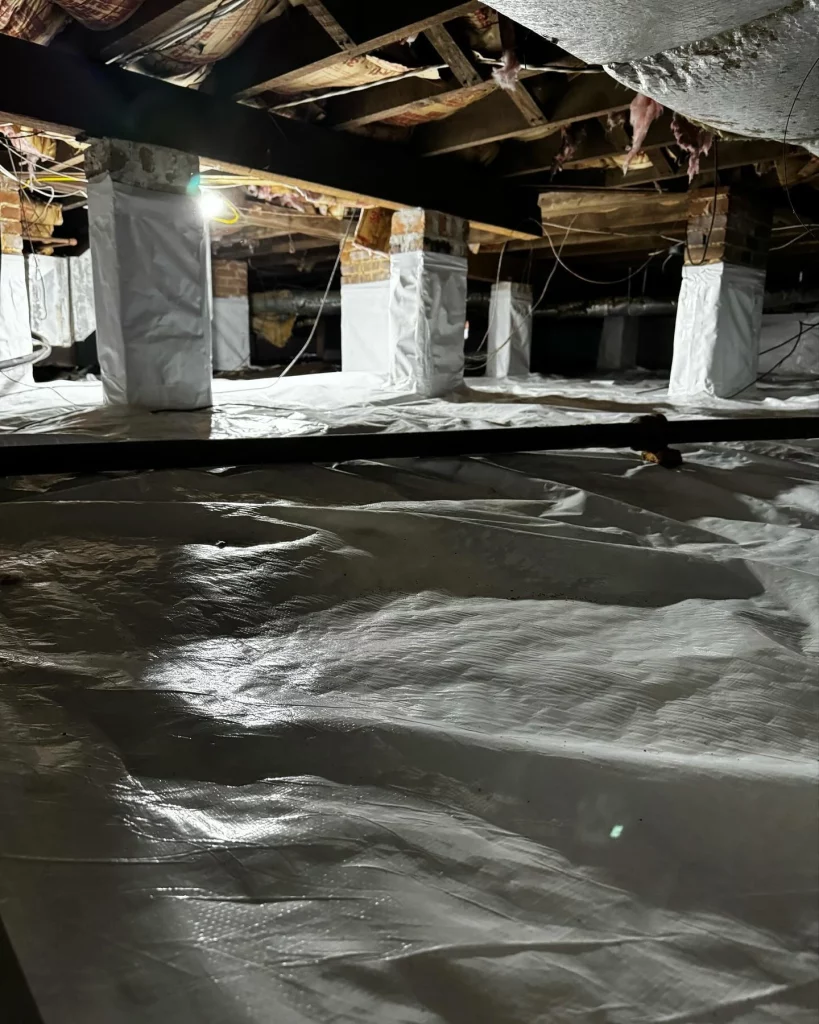
Professionals use reinforced polyethylene with a thickness of 12 to 20 mil. These materials often include a polyester cord reinforcement, making them nearly impossible to tear during installation or future maintenance. The seams in a professional system are sealed with specially designed foundation tape that remains sticky despite high humidity, whereas DIY attempts often fail when standard duct tape dries out and peels away.
- Bonus Tip: Check the string in the plastic. Professional liners have a visible cord or mesh running through them. If you stretch a piece of the material and it rips easily, it will not hold up in a crawl space.
The Importance of Drainage Planning
A vapor barrier is only effective if the area underneath it stays dry. Many DIY enthusiasts lay plastic over standing water or muddy soil. This traps moisture against the foundation walls, eventually leading to mold growth behind the barrier.
Professional installation always begins with drainage. If water seeps into the crawl space, a system must be in place to remove it. This often involves an interior drain trench leading to a sump pump. Without this step, encapsulation can actually make problems worse by locking moisture in.
| Feature | DIY Method | Professional Method |
|---|---|---|
| Plastic Thickness | 6 mil polyethylene | 12 to 20 mil reinforced polyethylene |
| Seaming | Standard duct tape | 4-inch wide foundation tape or welding |
| Wall Coverage | Usually, just the dirt floor | Extended 6 to 12 inches up walls and sealed |
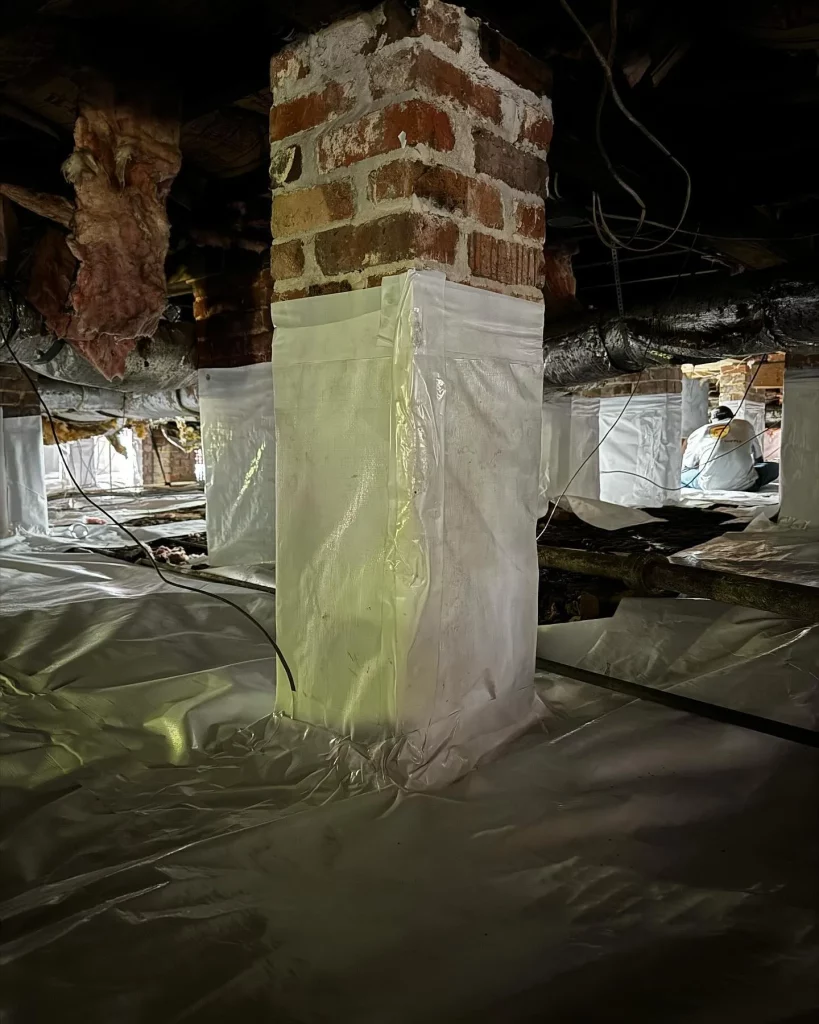
| Pillar Wrapping | Rarely done or taped loosely | Wrapped tightly and mechanically fastened |
| Dehumidification | Relies on passive vents | Commercial-grade dehumidifier installed |
| Warranty | None | Material and labor warranties (10+ years) |
Air Sealing and Structural Integrity
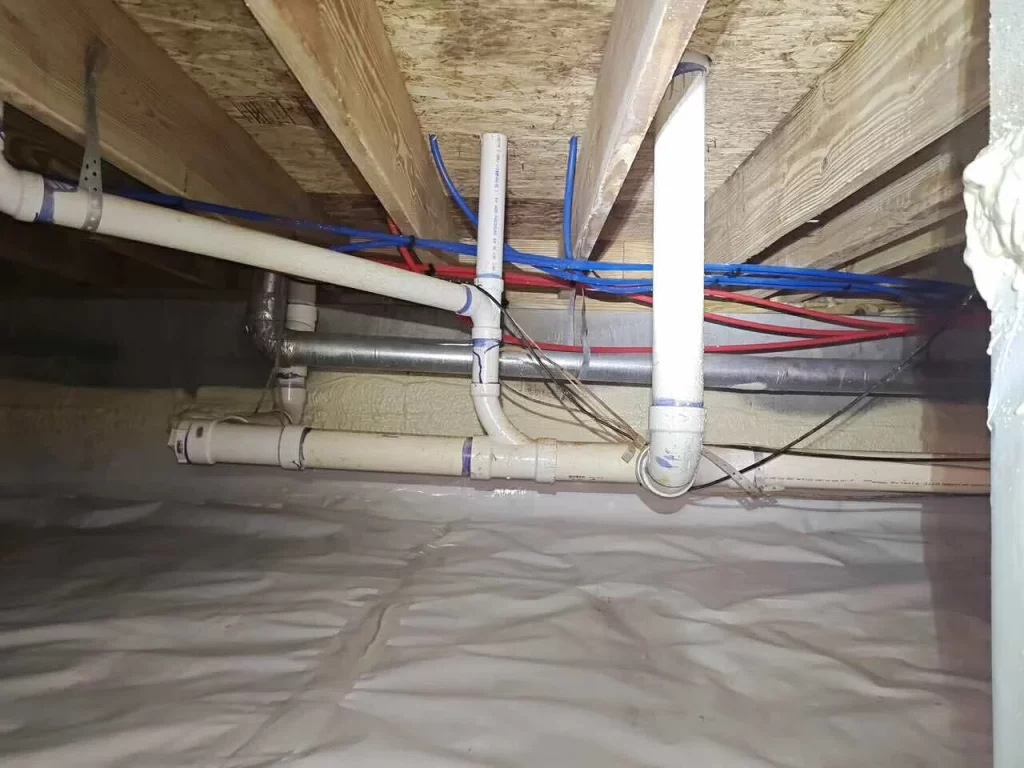
Stopping moisture is not just about covering the dirt. Air carries moisture vapor through leaks in the floor above. Gaps around plumbing pipes, HVAC ducts, and the rim joist act as highways for humid air.
A professional approach treats the crawl space as part of the conditioned living space. Installers mechanically seal these penetrations with spray foam or rigid foam board. This stops the “stack effect,” where warm, humid air from the crawl space is pulled into the home. Data from Energy Star indicates that sealing crawl spaces can lead to significant energy savings by reducing the load on heating and cooling systems. DIY projects rarely address these air leaks, leaving the primary source of moisture intrusion untouched.
Market Data and Long-Term Value
The financial implications of choosing professional installation over DIY extend beyond the initial cost. Replacing a failed DIY system involves labor costs to remove the moldy, torn plastic and clean the surface again.
Reports suggest that fixing a moisture problem after the fact can cost significantly more than preventing it. The EPA notes that controlling moisture is the key to controlling mold, and mold remediation can become expensive if structural damage occurs. A properly encapsulated crawl space protects the floor joists and subfloor from rot, preserving the structural integrity of the home. Real estate data also shows that homes with documented moisture issues often sell for less and stay on the market longer than those with clean, dry crawl spaces.
Things to Consider Before Making a Decision
Before deciding on a method, evaluate the current state of the crawl space.
- Existing Mold: If mold is already present on the joists, simply covering it with plastic will not solve the problem. Professional remediation is required first.
- Standing Water: If water pools in the crawl space after rain, a drainage system is mandatory before any barrier is laid.
- Access: Consider how often the space needs to be accessed. Professional installations create service corridors that allow technicians to move through the barrier without damaging it.
- Structural Repairs: If there are sagging joists or failing support piers, these must be addressed before encapsulation to ensure the system performs correctly.
Final Thoughts
The difference between professional and DIY encapsulation comes down to longevity and moisture control strategy. A DIY approach temporarily hides the problem but fails to address the drainage and air sealing needed to stop wood rot and mold. Professional installation creates a semi-conditioned space that protects the home’s structure and improves air quality. Assess the specific moisture challenges of the property, including soil saturation and air leakage, before choosing a path. Investing in a system that includes drainage, thick reinforced liners, and dehumidification ensures the home stays dry for decades.
Get a Professional Assessment
For homeowners in Albany looking to protect their investment, Premier Insulation provides thorough inspections to determine the specific moisture control needs of your property. Contact the team at premierinsulationga@gmail.com or call (229) 554-3939 to discuss crawl space conditions and solutions. A professional evaluation can identify drainage issues and structural concerns that a DIY check might miss.
FAQ
How long does a professional encapsulation last?
A professionally installed system using 20-mil reinforced material typically lasts over 20 years with no maintenance, whereas DIY plastic often degrades within 3 to 5 years due to soil acidity and traffic.
Will this lower my energy bills?
Yes. By sealing out humid air and insulating the rim joists, the HVAC system does not have to work as hard to combat the heat and dampness coming from below. This can result in noticeable savings during Albany’s hot summers.
Can I install a dehumidifier instead of a full encapsulation?
A dehumidifier alone cannot handle the massive moisture load from open soil vents in a humid climate. Encapsulation reduces the moisture load so the dehumidifier can manage the remaining humidity effectively.
Is it bad to seal the vents in my crawl space?
Building science has shifted away from venting crawl spaces in humid climates like South Georgia. Sealing vents prevents the introduction of hot, humid outside air, which condenses on cool surfaces inside the crawl space.
What happens if a plumbing leak occurs under the barrier?
Professional installers create access wells for plumbing cleanouts. In the event of a leak, the water will pool on top of the durable liner where it is easily visible and can be drained or pumped out, protecting the wood from direct contact with standing water.
Sources
- University of Georgia Extension – UGA Cooperative Extension bulletin on managing home moisture and mold prevention in Georgia’s climate.
- Energy Star – Information on crawl space encapsulation and its impact on home energy efficiency.
- EPA – United States Environmental Protection Agency resources on mold prevention and moisture control in residential buildings.