
The right spray foam setup for full home air sealing in Ashford, AL depends on your home’s construction type, your budget, and whether you are building new or retrofitting an existing structure. Ashford sits in a humid, warm climate zone where both cooling efficiency and moisture control matter equally. A well-designed spray foam strategy that combines open-cell and closed-cell products in the right locations can significantly reduce energy costs, improve indoor comfort, and protect your home from moisture damage. We will walk through the main approaches, cost expectations, and what to look for when planning a full home air sealing project.
Key Takeaways
- Homeowners who air seal and insulate properly can save an average of 15% on heating and cooling costs, according to the EPA (ENERGY STAR).
- Open-cell spray foam (R-3.5 to R-3.7 per inch) is best for large cavities like attics and walls where cost efficiency matters.
- Closed-cell spray foam (R-6.0 to R-7.0 per inch) serves best in basements, crawlspaces, and rim joists where moisture resistance and structural strength are priorities.
- Alabama’s energy code requires air barrier performance of 5 ACH50 or better in most climate zones, making spray foam a practical compliance tool.
- Full home spray foam projects in Ashford typically range from $4,000 to $15,000 depending on home size and foam type selected.
- Nine out of ten U.S. homes are under-insulated, meaning most Ashford homeowners stand to benefit from air sealing upgrades.
Why Air Sealing Matters in Ashford’s Climate
Ashford, Alabama falls within USDA Hardiness Zone 9a, with hot, humid summers and mild winters. Homes in this region face two primary challenges: keeping conditioned air inside during long cooling seasons and preventing outdoor humidity from infiltrating the building envelope. Air leakage accounts for a significant portion of energy waste in homes, with the Department of Energy noting that reducing uncontrolled air movement is one of the most cost-effective ways to improve efficiency and comfort.
When outside air enters through gaps around windows, doors, plumbing penetrations, and wall cavities, your HVAC system works harder to maintain indoor temperatures. In a humid climate like Ashford, that infiltrating air also carries moisture, which can lead to mold growth, wood rot, and reduced indoor air quality. Spray foam insulation addresses both problems at once by expanding to fill gaps and crevices while creating a continuous air barrier.
Open-Cell vs. Closed-Cell Spray Foam: Which to Use Where
| Feature | Open-Cell Spray Foam | Closed-Cell Spray Foam |
|---|---|---|
| R-value per inch | R-3.5 to R-3.7 | R-6.0 to R-7.0 |
| Density | Low (0.5 lbs/ft³) | High (2.0 lbs/ft³) |
| Air barrier | Yes (when applied at sufficient thickness) | Yes (at any practical thickness) |
| Vapor barrier | No (vapor permeable) | Yes (Class II vapor retarder) |
| Cost per square foot | $1.00 to $3.00 | $2.00 to $5.00 |
| Best applications | Attics, walls, crawlspaces (vented) | Basements, rim joists, exterior sheathing, metal buildings |
| Expansion | 100x original volume | 30-40x original volume |
Neither product is universally better. The most effective full home air sealing setup uses each type where its strengths matter most.
Open-Cell for Wall Cavities and Attics
Open-cell foam is the more economical choice for large, enclosed cavities. When sprayed into wall stud bays or across an attic floor, it expands to fill irregular shapes and gaps that fiberglass batts cannot reach. Its vapor-permeable nature allows any trapped moisture to dry through the foam, which is important in Ashford’s humid climate. For attic applications, open-cell foam sprayed to the roof deck (creating an unvented attic assembly) keeps ductwork and HVAC equipment within the conditioned envelope, reducing energy losses significantly.
Closed-Cell for Below-Grade and Moisture-Prone Areas
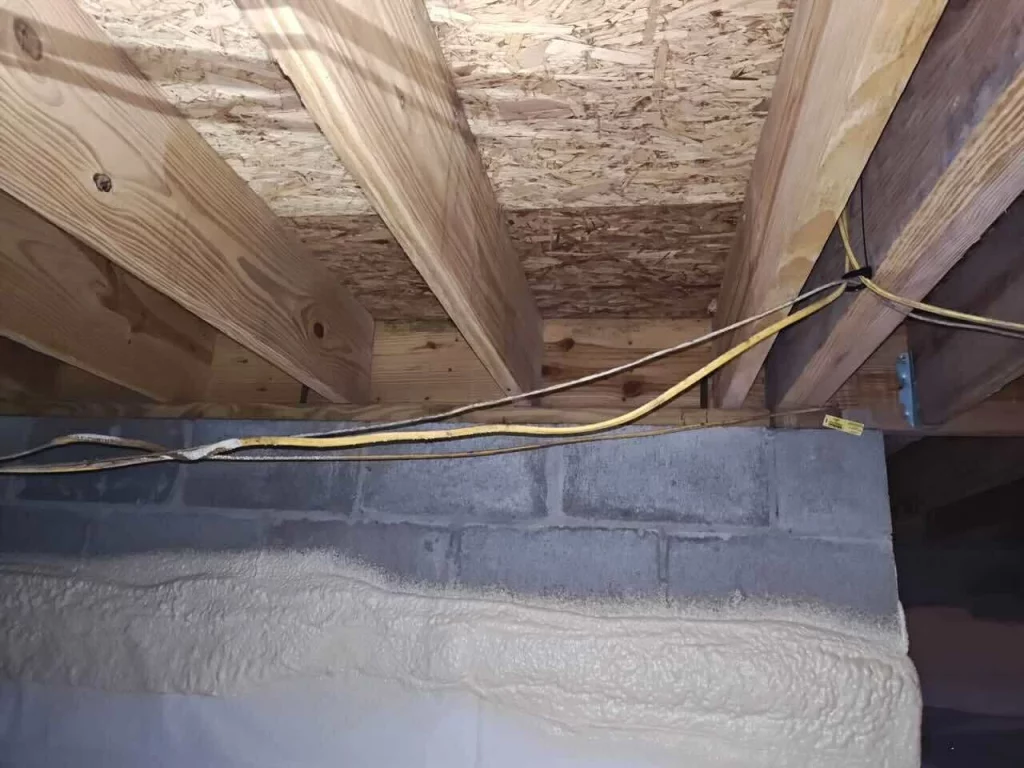
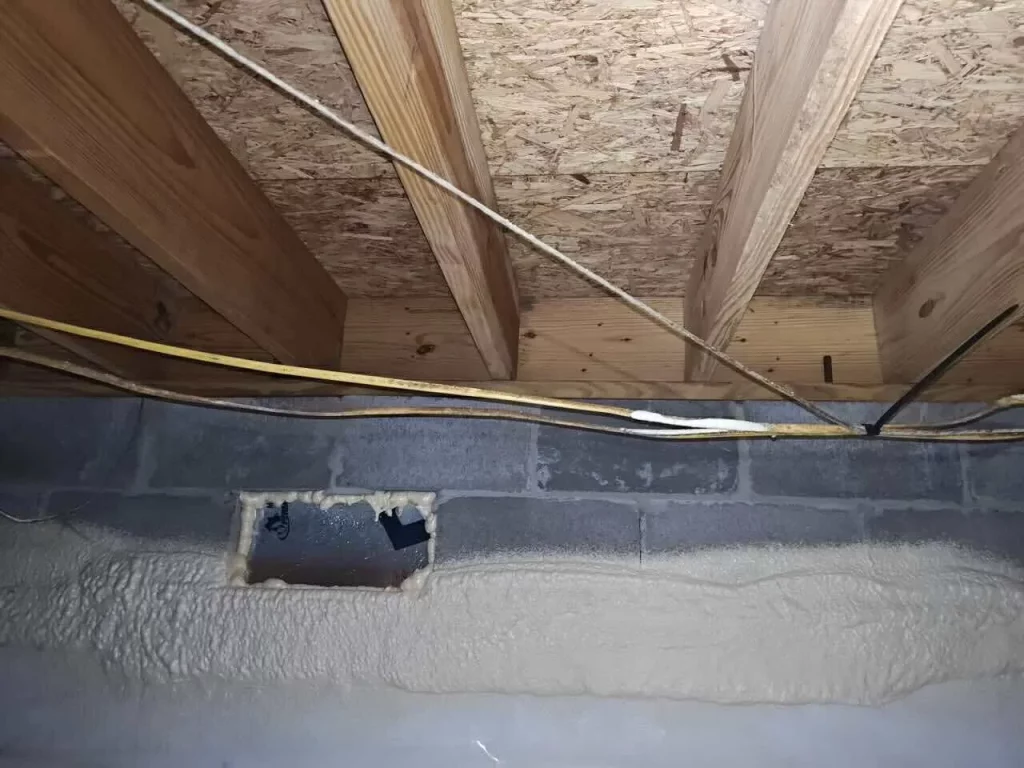
Closed-cell foam is the right call anywhere water intrusion or ground moisture is a concern. Its dense, rigid structure adds shear strength to wall assemblies and acts as a vapor retarder, keeping ground moisture from seeping into living spaces. In Ashford homes with basements or crawlspaces, closed-cell applied to rim joists and foundation walls provides both insulation and a moisture barrier in a single application.
Three Proven Spray Foam Setup Strategies for Ashford Homes
Strategy 1: Full Open-Cell Envelope
Best for: New construction and full gut renovations on a moderate budget.
This approach applies open-cell spray foam to all exterior wall cavities, the attic roof deck, and band joists. The goal is a continuous sealed envelope at roughly half the cost of a full closed-cell application. The attic becomes an unvented, conditioned space, which is especially beneficial in hot climates where attic temperatures regularly exceed 130 degrees.
- Typical cost: $6,000 to $12,000 for a 1,800 to 2,500 sq ft home
- Target R-value: R-13 to R-19 in walls, R-30+ in attic roof deck
- Moisture strategy: Relies on the home’s HVAC system for dehumidification
Strategy 2: Hybrid Open-Cell and Closed-Cell
Best for: Homes with basements, crawlspaces, or mixed foundation types.
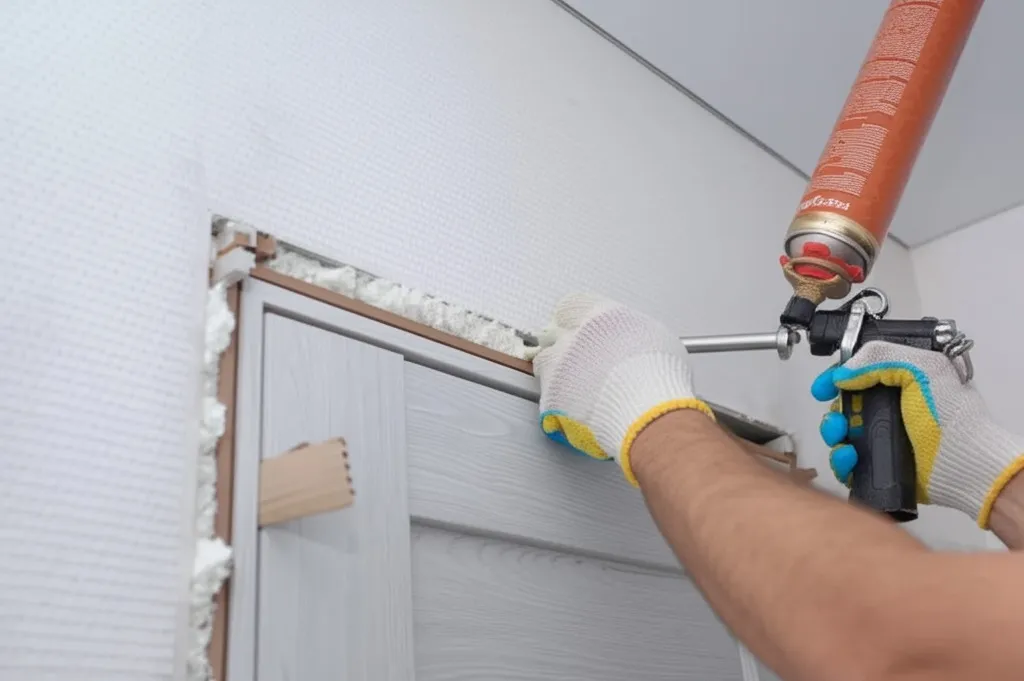
This is the most common approach we recommend for Ashford homeowners. Open-cell foam goes into wall cavities and the attic, while closed-cell is applied to below-grade walls, rim joists, and any areas exposed to ground moisture. This strategy balances cost with performance by using the more expensive product only where its properties are necessary.
- Typical cost: $8,000 to $15,000 for a 1,800 to 2,500 sq ft home
- Target R-value: Varies by zone (R-15 walls, R-19 basement/crawlspace, R-30+ attic)
- Moisture strategy: Closed-cell handles ground moisture; open-cell allows wall drying
Strategy 3: Full Closed-Cell Envelope
Best for: High-performance builds, metal buildings, and homes in flood-prone areas.
Every exterior surface receives closed-cell foam, creating an exceptionally tight building envelope with the highest R-value per inch. This approach is the most expensive but delivers superior moisture control, structural rigidity, and resistance to air infiltration. It is well suited for homes near Ashford’s low-lying areas where humidity and ground moisture are persistent concerns.
- Typical cost: $12,000 to $25,000+ for a 1,800 to 2,500 sq ft home
- Target R-value: Achieves R-30+ in attic with less thickness than open-cell
- Moisture strategy: Full vapor retarder protection on all exterior surfaces
Real-World Results: What Homeowners Experience
| Home Type | Strategy Used | Investment | Outcome |
|---|---|---|---|
| 1970s ranch, 1,400 sq ft, vented attic | Hybrid (open-cell attic + closed-cell rim joists) | $5,800 | 22% reduction in summer cooling costs; eliminated attic condensation |
| New construction, 2,200 sq ft, crawlspace foundation | Full open-cell envelope (vented crawlspace) | $9,500 | Consistent indoor temps; HVAC system sized 1.5 tons smaller than standard |
| 1990s two-story, 2,800 sq ft, partial basement | Hybrid (open-cell walls/attic, closed-cell basement walls) | $14,200 | Draft-free living spaces; basement humidity dropped from 68% to 42% |
| Existing home, 1,600 sq ft, pier-and-beam | Full open-cell (floor underside + attic roof deck) | $7,100 | Floors 10 degrees warmer in winter; reduced dust and allergens |
| Metal building home, 1,900 sq ft | Full closed-cell envelope | $16,800 | Near-zero air infiltration; indoor noise from rain and wind reduced significantly |
How to Evaluate a Spray Foam Contractor in Ashford
Choosing the right contractor is as important as choosing the right foam. Here are the questions we suggest asking:
- Are you licensed and insured in Alabama? Verify their license status and ask for a copy of their insurance certificate.
- What manufacturers’ products do you install? Established brands like Demilec, BASF, and Johns Manville have documented performance data.
- Can you provide a blower door test before and after installation? This is the only objective way to measure the improvement in air tightness.
- How do you handle ventilation after air sealing? Tightening a home without addressing fresh air requirements can cause indoor air quality problems.
- What is your warranty and what does it cover? Look for coverage on both materials and labor, with specific terms on adhesion failure and shrinkage.
Common Mistakes to Avoid
- Skipping ventilation planning: Sealing a home tight without adding mechanical ventilation can trap pollutants, excess moisture, and radon indoors.
- Using only one foam type everywhere: Applying open-cell in a wet crawlspace or closed-cell in a large attic wastes money and may cause moisture issues.
- Ignoring existing insulation removal: Spraying over old, damp fiberglass in an attic traps moisture against the roof deck and can cause rot.
- Choosing based on price alone: Low bids often reflect shortcuts in preparation, insufficient thickness, or inferior materials.
- Not getting a written scope of work: Verbal agreements leave room for misunderstanding. Every project should have a detailed written proposal.
Recommendations by Home Type
| Home Type | Recommended Setup | Why |
|---|---|---|
| New construction, slab-on-grade | Full open-cell envelope | Most cost-effective for large cavity areas; no below-grade moisture concerns |
| Existing home, vented attic | Open-cell attic roof deck + caulking/sealing penetrations | Addresses the single largest source of air leakage in most homes |
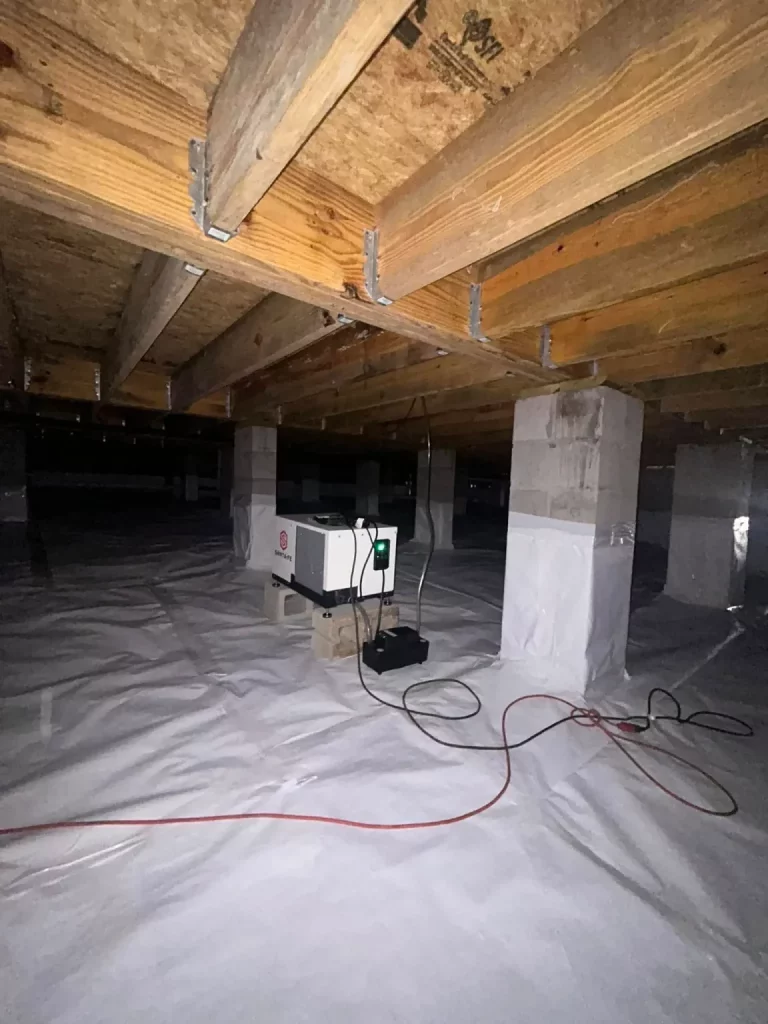
| Crawlspace foundation | Closed-cell crawlspace walls + rim joists + open-cell attic | Controls ground moisture where it enters; seals the attic envelope above |
| Basement foundation | Closed-cell basement walls and rim joists + open-cell above grade | Prevents moisture migration from soil; cost-effective insulation for living areas |
| Metal building or barndominium | Full closed-cell envelope | Metal buildings conduct heat rapidly and have many air-leak-prone joints; closed-cell provides the best thermal and air barrier |
Signs You Have Found the Right Spray Foam Setup
- Your contractor performed a thorough inspection of your home’s attic, crawlspace, and exterior walls before quoting.
- The proposal specifies foam type, thickness, and target R-value for each area of the home.
- Ventilation upgrades (such as an ERV or HRV system) are discussed as part of the plan.
- A post-installation blower door test is included to verify that the home meets or exceeds Alabama’s air barrier requirements.
- The warranty covers both product and workmanship for a minimum of several years.
- You receive clear documentation showing the difference in air leakage rates before and after the project.
Get Started on Your Home Air Sealing Project
Premier Insulation has the experience and local knowledge to recommend and install the right spray foam setup for your Ashford home. Whether you are building new, retrofitting an older home, or dealing with persistent comfort and moisture issues, our team evaluates your specific conditions and designs a solution that fits your goals and budget.
Call us at (229) 554-3939 or email premiereinsulationga@gmail.com to discuss your project.
Frequently Asked Questions
Q: How long does a full home spray foam installation take?
A: Most full home projects take one to three days depending on the home’s size and the complexity of the work, including prep and cleanup.
Q: Is spray foam safe for my family after installation?
A: Once cured, typically within 24 to 48 hours, spray foam is inert and non-toxic. During installation, occupants should vacate the home until the foam has fully expanded and the area has been ventilated.
Q: Can spray foam be installed in an existing home with drywall already up?
A: Yes, our team can access wall cavities and attics through small openings or by carefully removing and replacing sections of drywall. Attic and crawlspace applications typically require no interior modifications.
Q: Does spray foam require any special maintenance over time?
A: Spray foam insulation does not settle, compress, or degrade over time and requires no maintenance. The air seal it creates remains effective for the life of the home.
Q: Will adding spray foam insulation qualify me for any tax credits or rebates?
A: Under the Inflation Reduction Act, homeowners may qualify for federal tax credits of up to 30% of insulation costs, capped at $1,200 per year. Check with your tax professional for current eligibility requirements.
Sources
- Department of Energy – Air Sealing Your Home – Comprehensive guide from the DOE on air leakage detection, sealing techniques, and the relationship between air sealing and home energy performance.
- ENERGY STAR – Why Seal and Insulate? – EPA data showing that homeowners can save an average of 15% on heating and cooling costs through proper sealing and insulation.
- Insulation Institute – Alabama Energy Code Summary – Summary of Alabama’s residential energy code requirements including air leakage rates and insulation R-value mandates.
- Fine Homebuilding – Understanding R-Value and Spray Foam – Technical comparison of open-cell versus closed-cell spray foam R-values and practical application guidance.
- EIA – Degree Days Explained – Explanation of heating and cooling degree days, which determine insulation and air sealing needs by geographic region.