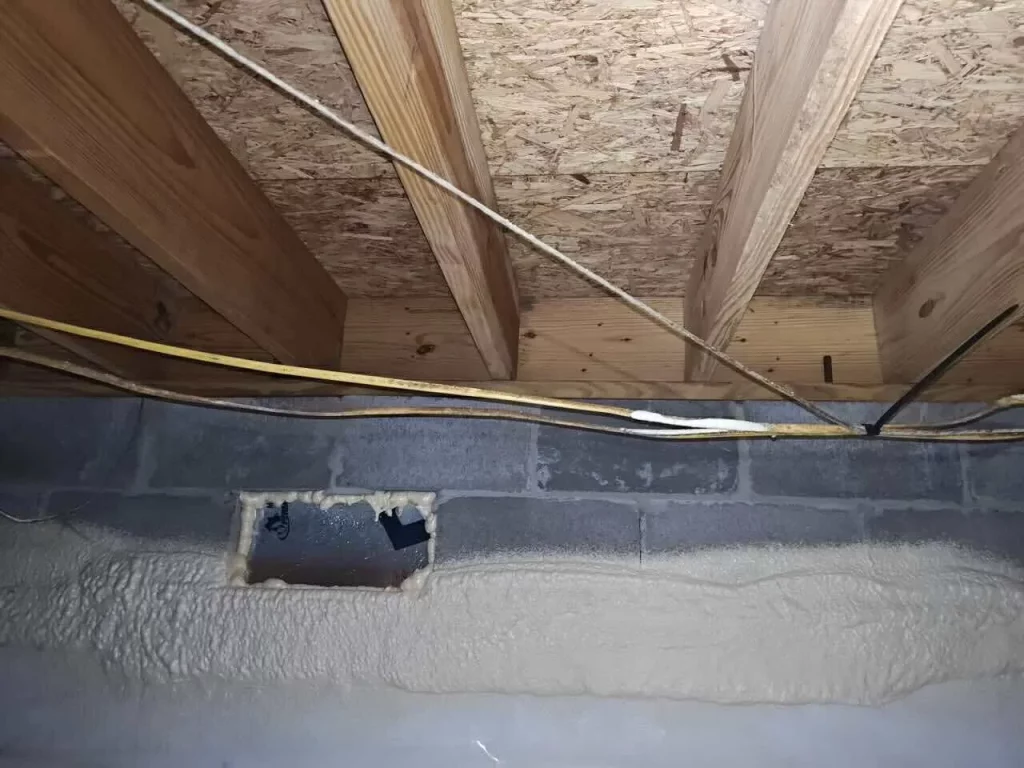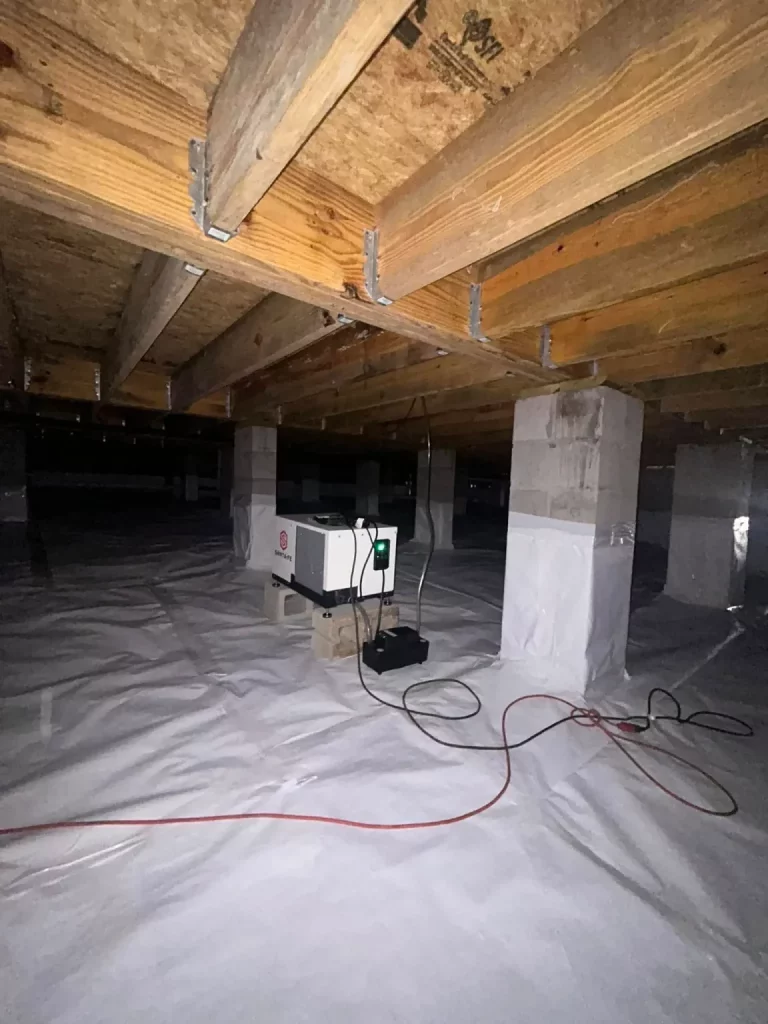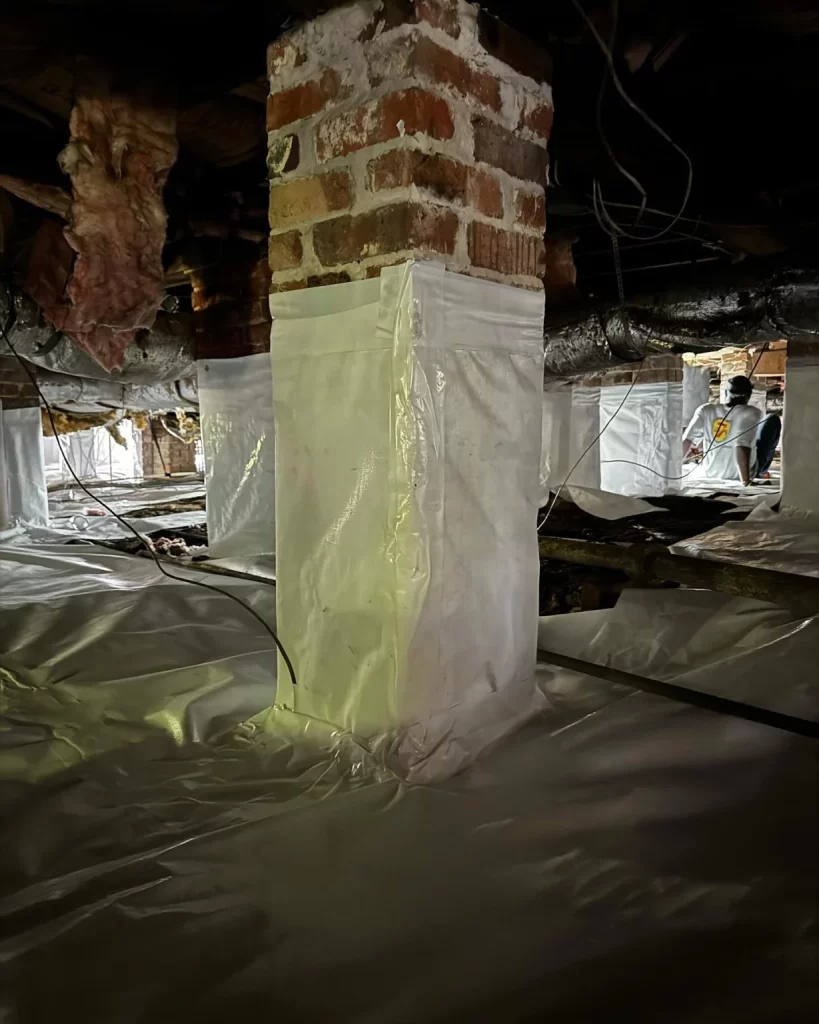

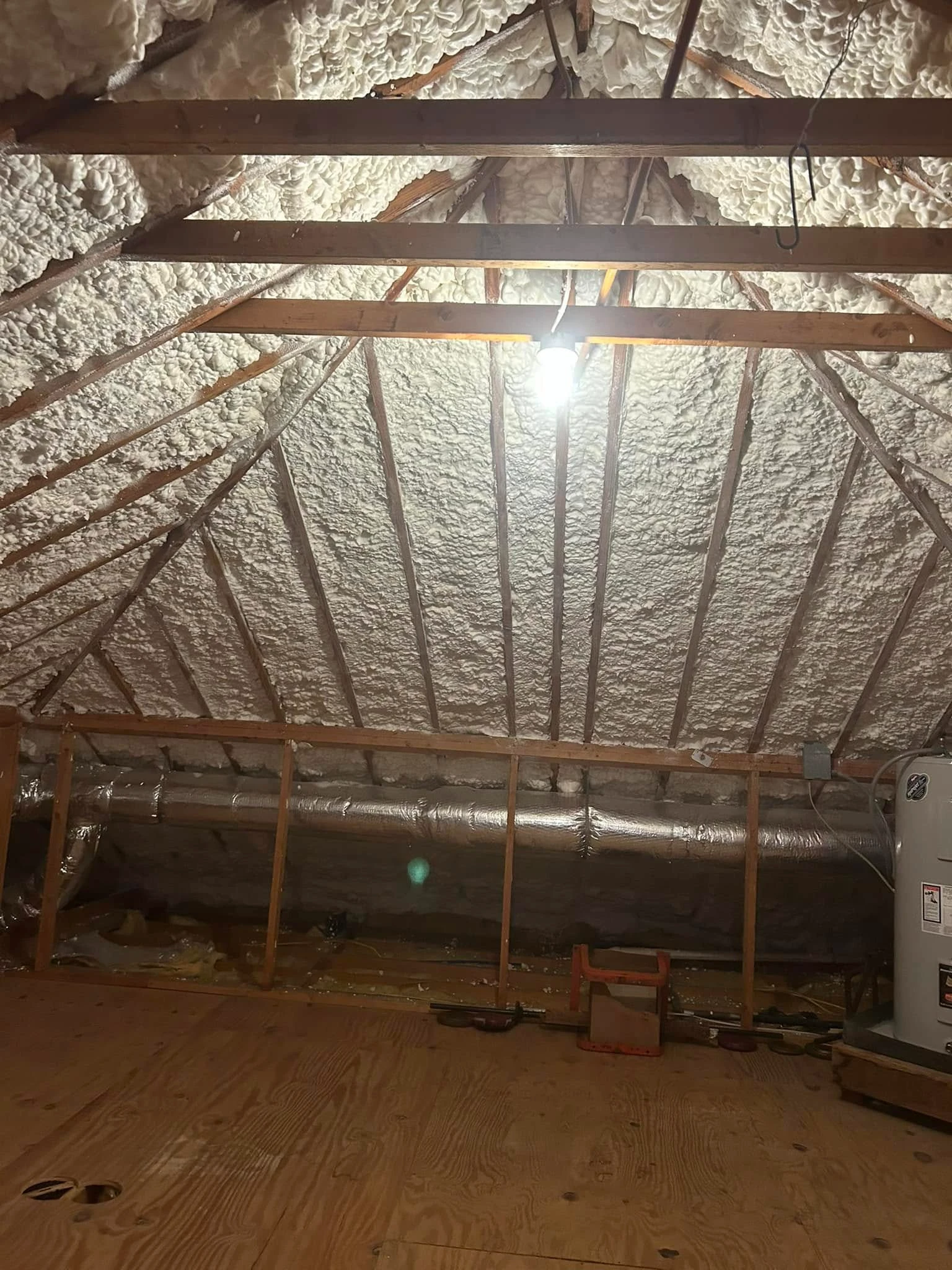
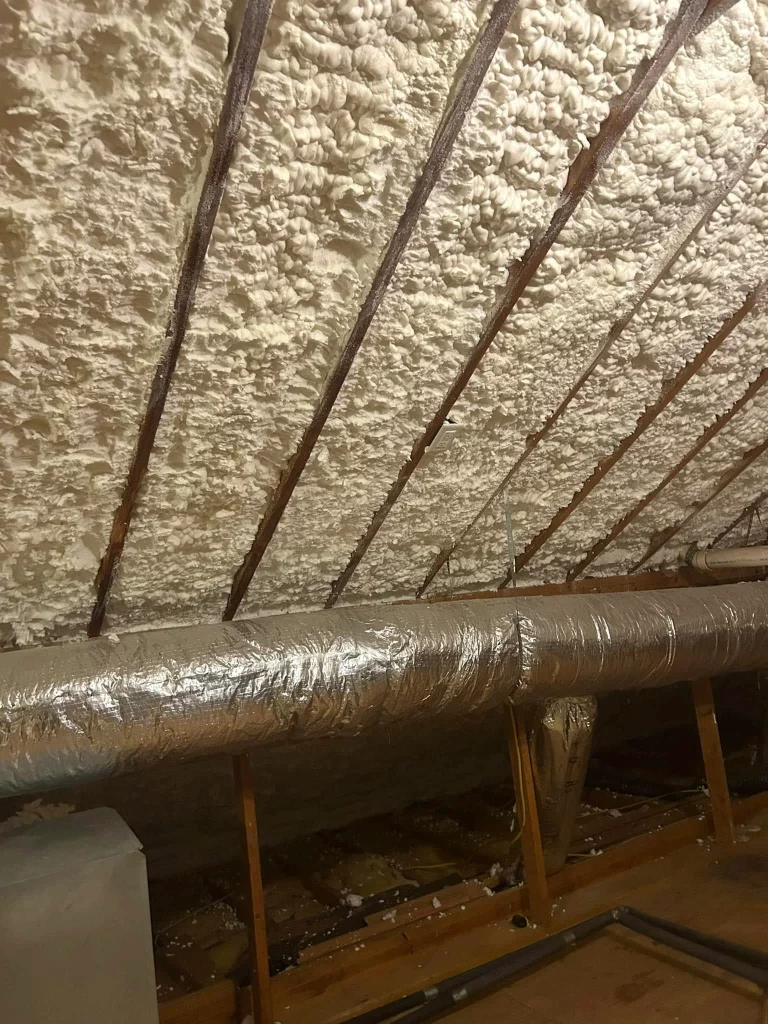
Spray foam insulation excels in oddly shaped spaces because it expands to fill every gap, crack, and cavity, creating a complete thermal barrier that traditional insulation materials simply cannot achieve. This ability to conform to irregular surfaces makes it particularly valuable for homes in Tallahassee’s humid subtropical climate, where preventing air infiltration and moisture issues is essential for energy efficiency and structural integrity.
This article breaks down exactly why spray foam stands out for challenging spaces, provides practical considerations for homeowners, and answers the most common questions about this insulation method. The information comes from extensive hands-on experience with insulation projects throughout the Tallahassee area, where unique architectural features present daily challenges that require specialized solutions.
The problem with traditional insulation in odd spaces
Traditional insulation, like fiberglass batts and rigid boards struggle in areas with unusual geometry. These materials come in fixed dimensions and cannot adapt to curves, tight corners, or irregular surfaces without extensive cutting and fitting, which often leaves gaps and cold spots. In Tallahassee homes, where many properties feature unique architectural elements like cathedral ceilings, dormer windows, and bonus rooms with knee walls, these gaps become significant energy losses.
The National Insulation Association reports that proper insulation can reduce heating and cooling costs by up to 20%, but this benefit only materializes when the insulation provides complete coverage. Gaps as small as 3% can reduce the overall R-value of an insulation system by as much as 25%, rendering even well-installed traditional materials ineffective in challenging spaces. Air movement through these gaps also allows moisture to penetrate, potentially leading to mold growth and wood rot in Florida’s humid conditions.
Why spray foam works where others fail
Spray foam insulation’s unique properties make it ideally suited for complex spaces. When applied, the liquid mixture expands 30-100 times its original volume, conforming perfectly to whatever surface it contacts. This expansion creates an airtight seal that eliminates the gaps and voids common with other insulation types. The foam also adheres to virtually any building material, including wood, concrete, metal, and drywall, making it versatile for different applications in Tallahassee homes.
Technical performance data from the Spray Polyurethane Foam Alliance highlights that two primary types of spray foam exist: open-cell and closed-cell. Open-cell foam has a density of about 0.5 pounds per cubic foot and provides an R-value of approximately 3.5 per inch. Closed-cell foam is denser at 2.0 pounds per cubic foot and delivers about 6.5 R-value per inch while adding structural strength to the building assembly. Both types effectively seal against air infiltration, but closed-cell foam also acts as a vapor barrier, which can be particularly beneficial in Florida’s humid climate when properly installed.
Regional considerations for Tallahassee homes
Tallahassee’s climate presents specific challenges that make spray foam particularly valuable. The city experiences hot, humid summers with average July temperatures around 92°F and mild winters that occasionally drop below freezing. This climate variation requires insulation that performs well across both temperature extremes and effectively manages moisture.
Local building codes have evolved to address these conditions. According to data from the Florida Building Commission, current requirements for Tallahassee (Climate Zone 2A) specify minimum R-values of R-13 for walls and R-30 for ceilings. Spray foam easily exceeds these requirements while providing the additional air sealing benefits that traditional materials lack. The material’s moisture resistance helps prevent the mold problems that commonly affect homes in North Florida’s humidity-prone environment.
Comparison of insulation types for odd spaces
| Insulation Type | Best Fit for Odd Spaces | Air Sealing | Moisture Resistance | Installation Complexity |
|---|---|---|---|---|
| Spray Foam | Excellent | Complete air barrier | Vapor barrier (closed-cell) | Requires professional equipment |
| Fiberglass Batts | Poor | Multiple gaps | Absorbs moisture | Simple but often incomplete |
| Blown Cellulose | Fair | Some air sealing | Treated for moisture | Requires specialized equipment |
| Rigid Foam Boards | Poor | Seams need taping | Moisture resistant | Labor-intensive cutting and fitting |
This comparison highlights why spray foam consistently outperforms other options when dealing with irregular cavities. While the initial cost may be higher, the long-term energy savings and performance benefits often justify the investment, especially in challenging applications where traditional materials would fail.
Things to Consider Before Making a Decision
Several factors influence whether spray foam is the right choice for your specific situation. The age and condition of your home matter significantly. Older homes with existing moisture problems or air quality issues may need repairs before foam installation. The budget also plays a role, as spray foam typically costs 2-3 times more than traditional insulation upfront, though this difference decreases when factoring in long-term energy savings.
Bonus Tip: Have a professional energy audit conducted before deciding. This will identify exactly where you’re losing energy and help determine if spray foam in those odd spaces will provide the best return on investment.
The application area itself affects the decision. Spray foam makes the most sense in areas that are difficult to insulate properly with other materials – cathedral ceilings, crawl spaces, bonus rooms, and areas with numerous pipes or electrical penetrations. In standard rectangular wall cavities, the cost-benefit analysis might favor traditional insulation unless you’re specifically targeting air sealing benefits.
Bonus Tip: Consider combining insulation types. Many Tallahassee homeowners use spray foam in the most challenging areas (attic rim joists, crawl spaces, odd cavities) while using more cost-effective insulation elsewhere.
Bonus Tip: Ask contractors about their certification and experience specifically with spray foam, not just general insulation. Proper application technique significantly affects performance and safety.
Making Your Decision
Spray foam insulation clearly offers superior performance in oddly shaped spaces, providing complete coverage and air sealing that traditional materials cannot match. For Tallahassee homeowners dealing with cathedral ceilings, bonus rooms, crawl spaces, or other challenging areas, the benefits often outweigh the higher initial cost. The energy savings, improved comfort, and moisture protection make it a practical solution for our local climate.
Before deciding, evaluate your specific problem areas, consider your long-term goals for the property, and get quotes from certified professionals who have experience with spray foam applications in similar homes. The right choice depends on your particular situation, but for those tricky spaces where traditional insulation falls short, spray foam frequently provides the most effective and lasting solution.
Get Expert Help with Your Insulation Project
If you’re struggling with oddly shaped spaces in your Tallahassee home and want to explore whether spray foam is right for your situation, Premier Insulation offers consultations to assess your specific needs. Contact the team at premierinsulationga@gmail.com or call (229) 554-3939 to schedule an evaluation. Experienced professionals can identify problem areas and recommend solutions that balance performance with your budget considerations.
Frequently Asked Questions
Does spray foam attract pests?
No, spray foam does not provide any food value to pests and actually deters many insects and rodents because it’s not a suitable nesting material. However, pests can still tunnel through foam if determined, so it’s important to seal entry points around pipes and wires.
How long does spray foam last?
When properly installed, spray foam insulation lasts the lifetime of the building without degrading. It doesn’t settle, compress, or lose its insulating properties over time like some traditional materials.
Can spray foam be installed over existing insulation?
Yes, in many cases. Spray foam can be applied over existing insulation in attics and walls, but the installation requires assessment of the current conditions and proper preparation to ensure optimal performance.
Is spray foam affected by Florida’s humidity?
Closed-cell spray foam actually performs exceptionally well in humid climates because it serves as both an air barrier and vapor barrier. This dual function prevents humid air from entering the building envelope and causing condensation problems.
Sources
- National Insulation Association – Industry organization providing research data on insulation performance and energy savings
- Florida Building Commission – State regulatory body with climate-specific insulation requirements for Florida buildings
- Spray Polyurethane Foam Alliance – Technical resource for spray foam properties, applications, and performance data