
Spray foam insulation outperforms many traditional options because it combines high thermal resistance (R-value) with a built-in air barrier, moisture control, and the ability to conform to any cavity shape. While fiberglass batts and blown-in cellulose still serve specific needs and budgets, spray foam addresses all four environmental control layers that building enclosures must handle: water, air, vapor, and heat. The right choice for your home depends on climate zone, existing construction, budget, and whether the project is new construction or a retrofit. Below, we break down exactly where spray foam excels, how it compares to traditional materials, and which homeowners benefit most from making the switch.
TLDR: Key Takeaways
- Spray foam delivers higher R-value per inch than fiberglass batts or cellulose, meaning less material is needed to achieve the same thermal resistance.
- Both open-cell and closed-cell spray foam act as air barriers when applied at minimum classified depths, something traditional batt insulation cannot do on its own.
- Closed-cell spray foam doubles as a Class II vapor retarder, providing condensation control in cold climates that fiberglass and cellulose require separate products to achieve.
- Spray foam expands to fill irregular cavities, gaps, and penetrations, eliminating voids and compression issues that reduce the effectiveness of batts and loose-fill.
- Properly installed spray foam insulation systems can lower heating and cooling energy demand by sealing air leaks that account for a significant portion of residential energy loss.
- Hybrid approaches, combining spray foam with fiberglass or cellulose, offer a cost-effective middle ground for homeowners seeking high performance without full spray foam application.
- Older homes with poorly insulated walls, drafty attic floors, and vented crawlspaces stand to gain the most from a spray foam retrofit.
- Installation requires trained professionals with specialized equipment and knowledge of building science principles.
How Spray Foam Compares to Traditional Insulation
The core difference between spray foam and traditional materials comes down to what each material actually does. Fiberglass batts and blown-in cellulose primarily resist conductive heat flow. They slow heat transfer but do not stop air movement through the insulation itself. Spray foam, on the other hand, insulates while simultaneously sealing air leaks and controlling moisture vapor diffusion.
According to the U.S. Department of Energy, sprayed foam and foamed-in-place insulation can “fill even the smallest cavities, creating an effective air barrier,” a capability that distinguishes it from blanket batts and loose-fill materials. Foam insulation products also “yield a higher R-value than traditional batt insulation for the same thickness.”
R-Value Per Inch: A Direct Comparison
R-value measures thermal resistance, and the per-inch rating tells you how efficiently a material resists heat flow at a given thickness.
| Insulation Material | R-Value Per Inch | Air Barrier | Vapor Control |
|---|---|---|---|
| Closed-cell spray foam | R-5.5 to R-6.5 | Yes (when applied at minimum depth) | Yes, Class II vapor retarder above 1.5 inches |
| Open-cell spray foam | R-3.5 to R-3.8 | Yes (when applied at minimum depth) | No, vapor permeable |
| Fiberglass batts | R-2.9 to R-3.8 | No | No |
| Cellulose (blown-in) | R-3.2 to R-3.8 | No | No |
Data sourced from the U.S. Department of Energy Insulation Materials guide and Building Science Corporation.
The numbers make the advantage clear. Closed-cell spray foam delivers nearly twice the thermal resistance per inch compared to standard fiberglass batts. In a 2×6 wall cavity where fiberglass maxes out around R-21, closed-cell spray foam achieves approximately R-30 at installed depth while also serving as both the air barrier and vapor retarder.
The Four Control Layers: Where Spray Foam Has No Equal
Building Science Corporation describes spray foam as “unique in that it can handle all four” environmental control layers: water, air, vapor, and heat. While most residential applications do not require spray foam to handle water control directly, rain is managed by the exterior cladding system. The remaining three layers are where spray foam separates itself from every traditional insulation option.
Air Leakage Control
Air leakage is one of the largest sources of energy waste in residential buildings. Gaps around framing, wiring penetrations, rim joists, and window rough openings allow conditioned air to escape and unconditioned air to enter. Traditional insulation materials like fiberglass and cellulose are air-permeable, meaning air passes through them easily. Even when installed correctly, batts leave gaps around plumbing and electrical penetrations.
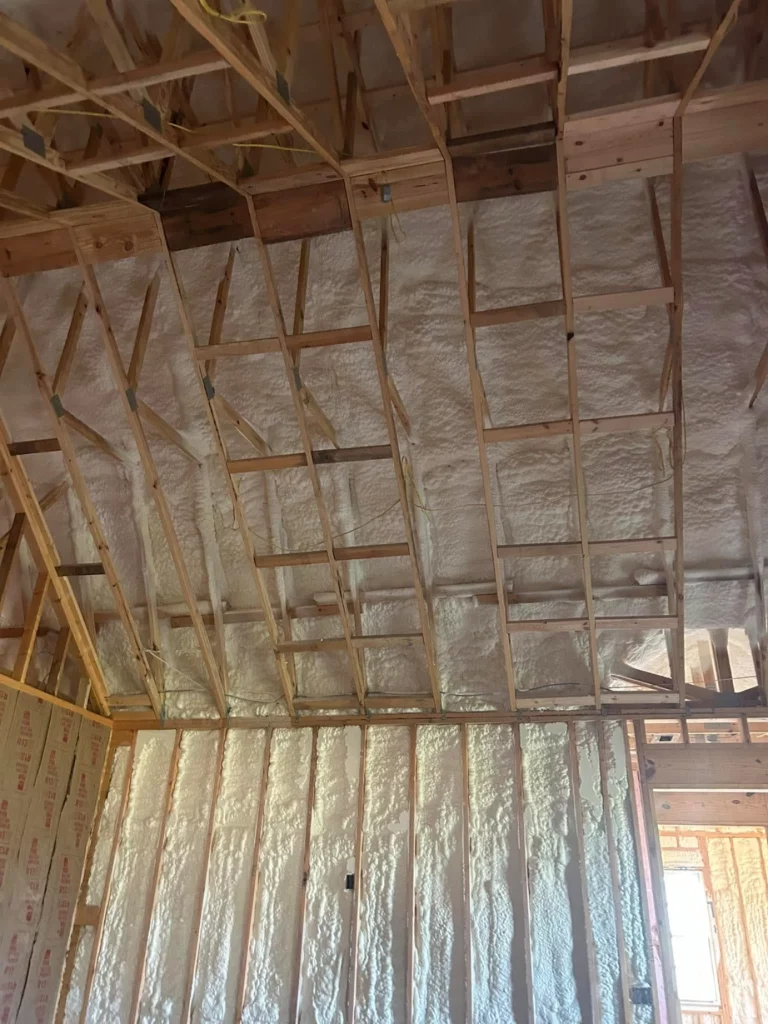
High-performance spray foam insulation expands into and seals these penetrations during installation. Both open-cell and closed-cell formulations are classified as air-impermeable insulation when sprayed to their minimum required depth.
Vapor Control and Condensation Resistance
In cold climates, warm indoor air carrying moisture vapor can condense inside wall cavities when it reaches cold surfaces, leading to mold growth and wood rot. Closed-cell spray foam provides this vapor control as part of the insulation itself, eliminating the need for a separate vapor retarder product. At thicknesses above 1.5 inches, high-density closed-cell spray foam qualifies as a Class II vapor retarder per the International Residential Code (IRC) section R702.7.
This built-in vapor control simplifies construction and reduces the chance of installation errors. With fiberglass or cellulose walls, a separate vapor barrier must be installed perfectly on the warm side of the cavity. Any gaps, tears, or misalignments in that barrier create paths for moisture to enter and condense.
Thermal Performance Without Gaps
One of the most common failures in traditional insulation is poor installation. Fiberglass batts that are compressed, gaps between batts and framing, and uninsulated areas around obstructions all degrade real-world R-value. The DOE notes that “the maximum thermal performance or R-value of insulation is very dependent on proper installation.”
Spray foam is applied as a liquid that expands and hardens in place, conforming to every surface it contacts. It fills around wiring, plumbing, irregular framing, and complex junctions without cutting, fitting, or compressing. This complete cavity fill means the installed R-value closely matches the rated R-value, a claim few traditional materials can make.
Open-Cell vs. Closed-Cell: Which Performs Better Where?
Not all spray foam is the same, and the choice between open-cell and closed-cell depends on the application and climate.
| Feature | Open-Cell Spray Foam | Closed-Cell Spray Foam |
|---|---|---|
| Density | 0.5 lb/ft³ | 2.0 lb/ft³ |
| R-value per inch | ~R-3.5 | ~R-6.5 |
| Vapor permeability | ~50 perms/inch (vapor open) | ~3 perms/inch (vapor retarder) |
| Best application | Walls, attics in warm-mixed climates | Foundations, crawlspaces, cold climate walls and roofs |
| Structural benefit | None | Adds wall racking strength |
Closed-cell foam is the stronger all-around performer. Its higher R-value per inch means less thickness is needed to meet code requirements, and its low vapor permeability provides condensation control without additional materials. The Building America Solution Center recommends that only high-density closed-cell spray foam be used for vented crawlspaces across all climate zones, and that closed-cell foam is preferred for IECC Climate Zones 5 and above.
Open-cell foam has its place as well. It costs less per square foot, provides effective air sealing, and fills cavities completely. In warm climates where condensation risk is lower, open-cell spray foam applied to attic roof decks allows homeowners to convert vented unconditioned attics into conditioned space, protecting ductwork and mechanical systems from extreme temperatures.
Where Spray Foam Makes the Biggest Impact
Attics and Roof Assemblies
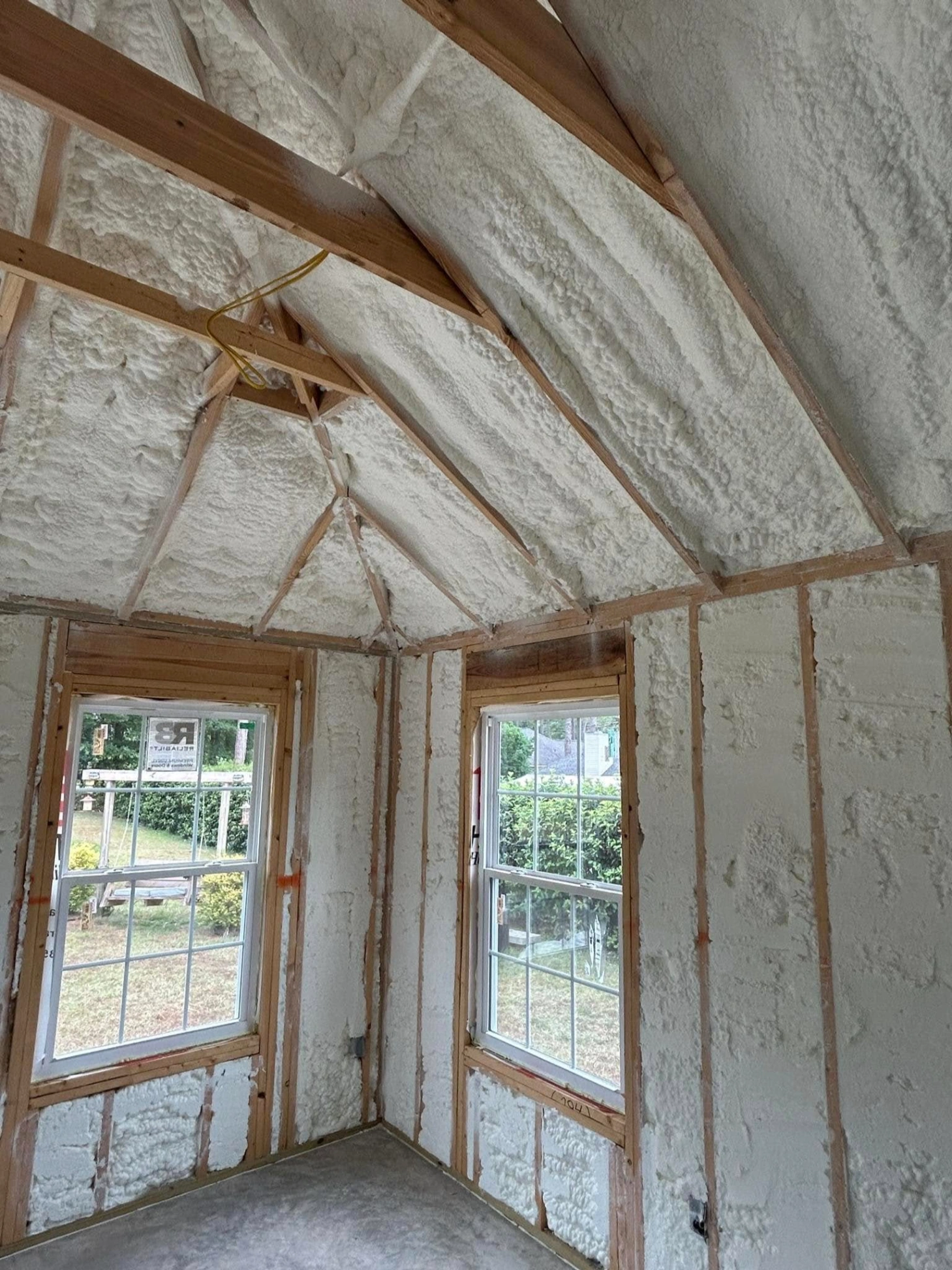
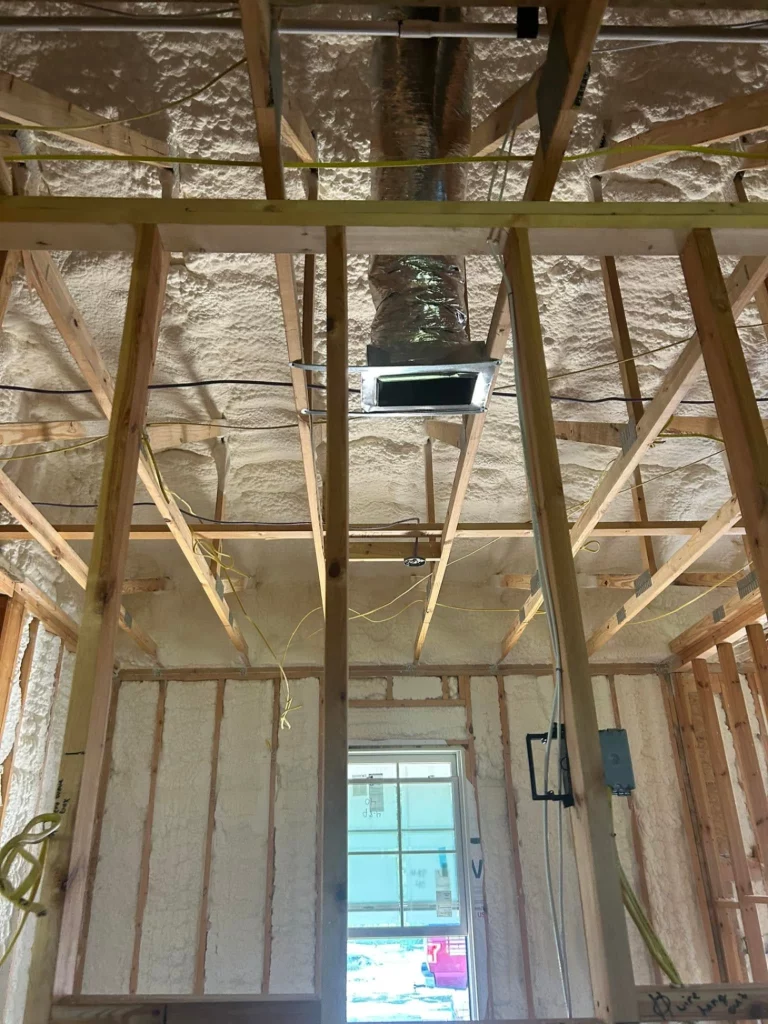
Homes with HVAC ductwork and air handlers located in unconditioned vented attics suffer a significant thermal penalty. Spray foam applied directly to the underside of the roof deck converts that space into a conditioned attic, bringing ductwork inside the thermal envelope. In hot-humid climates, this also eliminates condensation risk on duct surfaces, a widespread problem in southern construction.
Rim Joists and Floor Assemblies
The rim joist area where the floor framing meets the exterior wall is notoriously difficult to insulate with batts or rigid foam. The irregular framing, numerous penetrations, and limited cavity depth make it a major source of air leakage. Spray foam seals and insulates this area in a single application, addressing one of the weakest points in most building envelopes.
Existing Wall Retrofits
For older homes with empty or poorly insulated wall cavities, spray foam can be injected after removing interior finishes. The Building America Solution Center provides a detailed process for this approach: existing drywall is removed, wall cavities are inspected for moisture damage, spray foam is applied, and new drywall is installed. This approach simultaneously insulates and air seals walls that have been leaking energy for decades.
Crawlspaces and Basements
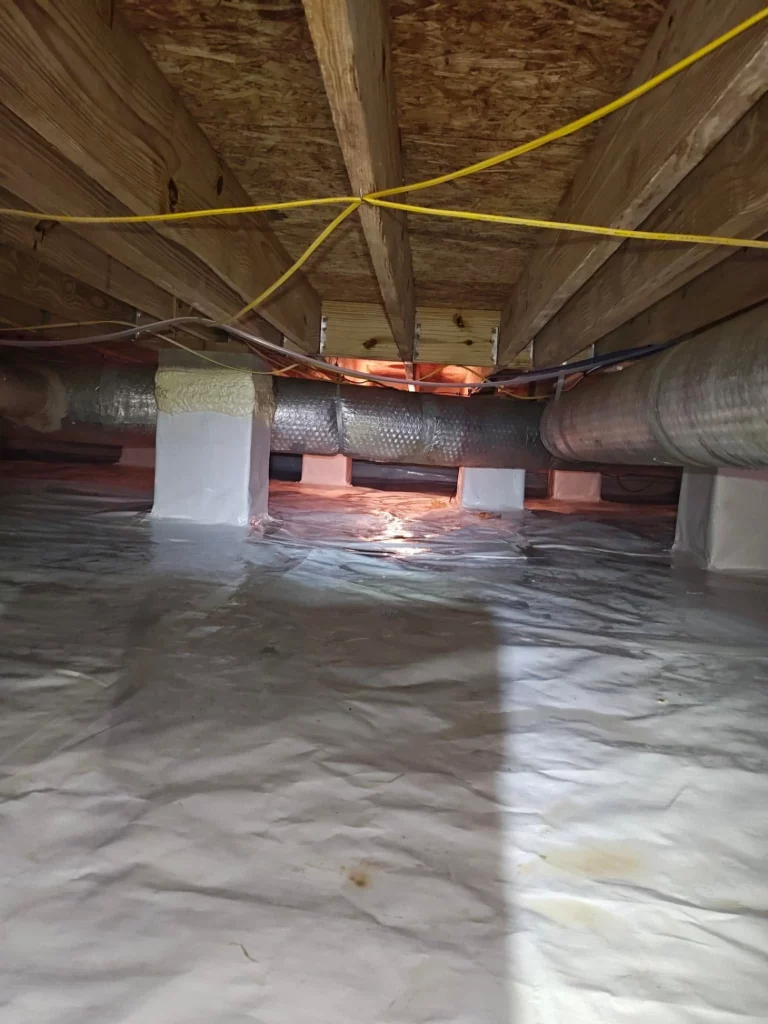
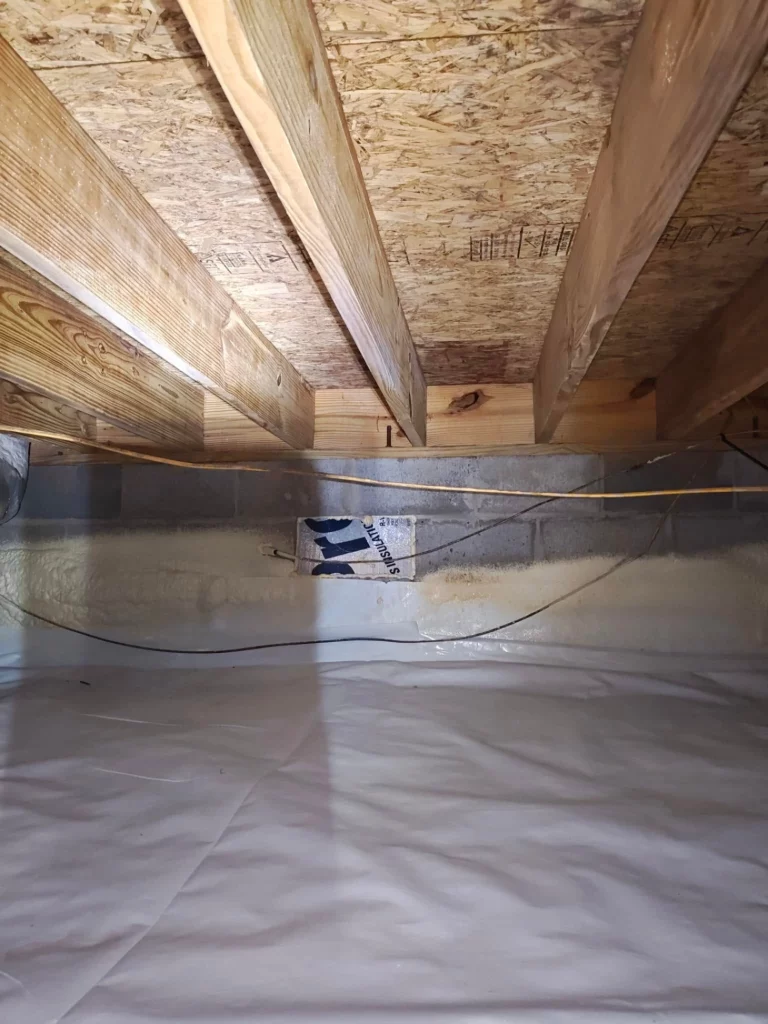
Below-grade applications demand moisture resistance that fiberglass cannot provide. Closed-cell spray foam applied to interior foundation walls and crawlspaces seals against both air infiltration and ground moisture vapor, creating a dry, conditioned space that improves indoor air quality and reduces the risk of mold.
Hybrid Approaches: Getting High Performance at Lower Cost
Full spray foam insulation across every cavity in a home delivers the highest performance, but it is not always necessary or budget-friendly. Hybrid assemblies combine spray foam with fiberglass or cellulose to balance performance and cost.
A common hybrid strategy in cold climates applies a layer of closed-cell spray foam to the interior face of the wall sheathing, then fills the remaining cavity depth with blown fiberglass or cellulose. The closed-cell foam provides the air barrier and vapor retarder at the sheathing surface, while the less expensive fibrous insulation adds bulk thermal resistance.
Building Science Corporation describes this approach in its Interior Spray Foam guide, noting that the IRC specifies the minimum ratio of spray foam to total insulation based on climate zone. This hybrid method delivers most of the air sealing and moisture control benefits of full spray foam at a lower overall project cost.
Which Homeowners Benefit Most from Spray Foam
| Homeowner Scenario | Recommended Approach | Why |
|---|---|---|
| New construction in mixed/hot climate | Full open-cell or hybrid spray foam | Maximizes air sealing at lower material cost; conditioned attic option protects ductwork |
| New construction in cold climate | Closed-cell spray foam or hybrid with fiberglass | Vapor control at sheathing prevents condensation; higher R-value per inch in limited cavity space |
| Retrofitting older home walls | Closed-cell spray foam injection | Simultaneously insulates and air seals walls that have been underperforming for years |
| Home with vented crawlspace | Closed-cell spray foam only | Required across all climate zones for moisture and air control in vented crawlspaces |
| Attic with ductwork in unconditioned space | Spray foam on roof deck (open or closed cell) | Converts attic to conditioned space, eliminating duct thermal losses and condensation risk |
Signs You Have Found the Right Insulation Contractor
Choosing the right insulation professional matters as much as choosing the right material. Look for these indicators:
- Building science knowledge: The contractor explains why a specific foam type and thickness is recommended for your climate zone and application, rather than offering a one-size-fits-all approach.
- Air sealing focus: The contractor discusses air sealing details at rim joists, framing connections, and penetrations, not just insulation R-values.
- Moisture awareness: The contractor inspects for existing water damage and discusses vapor control requirements based on your climate zone.
- Code references: The contractor references IECC and IRC requirements for insulation levels and condensation control, demonstrating familiarity with current building standards.
- Clear scope of work: The proposal specifies foam type, application thickness, target R-value, and areas to be treated, with no ambiguity about what you are paying for.
Ready to Upgrade Your Home’s Insulation?
Ready to seal air leaks, cut energy bills, and make your home more comfortable year-round? Spray foam expands to fill every gap and crack for insulation that outperforms traditional materials. Get a professional assessment tailored to your home’s needs today.
Reach us at premiereinsulationga@gmail.com or call (229) 554-3939 to get started. Our experienced professionals are ready to help you make the most informed insulation decision for your home.
Frequently Asked Questions
Does spray foam insulation really save more energy than fiberglass?
Spray foam delivers higher R-value per inch and acts as a continuous air barrier, which fiberglass batts cannot do. By sealing air leaks that traditional insulation leaves open, spray foam reduces the amount of conditioned air escaping your home, which translates to lower heating and cooling demand over time.
How long does spray foam insulation last?
Spray foam is an inert polymer that does not settle, sag, or degrade over time. Once installed and cured, it maintains its shape and thermal properties for the life of the building without the compression or settling issues that affect loose-fill insulation.
Can spray foam be installed in existing walls?
Spray foam can be injected into existing wall cavities through access holes after removing interior finishes. Our team inspects the cavities for moisture damage, addresses any water control issues, applies the foam, and reinstalls the drywall for a complete insulation and air sealing upgrade.
Is closed-cell spray foam worth the extra cost over open-cell?
Closed-cell foam provides roughly double the R-value per inch, resists moisture absorption, and acts as a vapor retarder. In cold climates, below-grade applications, and vented crawlspaces, closed-cell is the recommended and often code-required choice for long-term durability and condensation control.
Does spray foam require special ventilation in the home?
Homes insulated with spray foam become significantly more airtight, which means mechanical ventilation is needed to maintain indoor air quality. This is a code requirement in many jurisdictions and a best practice for any well-sealed home, ensuring fresh air circulation and moisture removal.
Sources
- U.S. Department of Energy – Types of Insulation – Comprehensive federal guide covering all insulation types, installation methods, advantages, and where each material is applicable in residential construction.
- U.S. Department of Energy – Insulation Materials – Detailed breakdown of insulation material properties including polyurethane spray foam, closed-cell vs. open-cell formulations, R-values, and thermal drift characteristics.
- Building Science Corporation – BSI-116: Interior Spray Foam – Authoritative guide on residential spray foam applications in walls, roofs, and foundations with code references for climate-specific requirements.
- Building Science Corporation – Spray Foam Wall Construction – Technical analysis of spray foam wall assemblies including thermal control, durability, air leakage reduction, and whole-wall R-value calculations.
- Building America Solution Center – Spray Foam for Existing Exterior Walls – DOE-funded technical resource guide on retrofitting existing wall cavities with spray foam, including climate zone requirements, moisture considerations, and installation procedures.