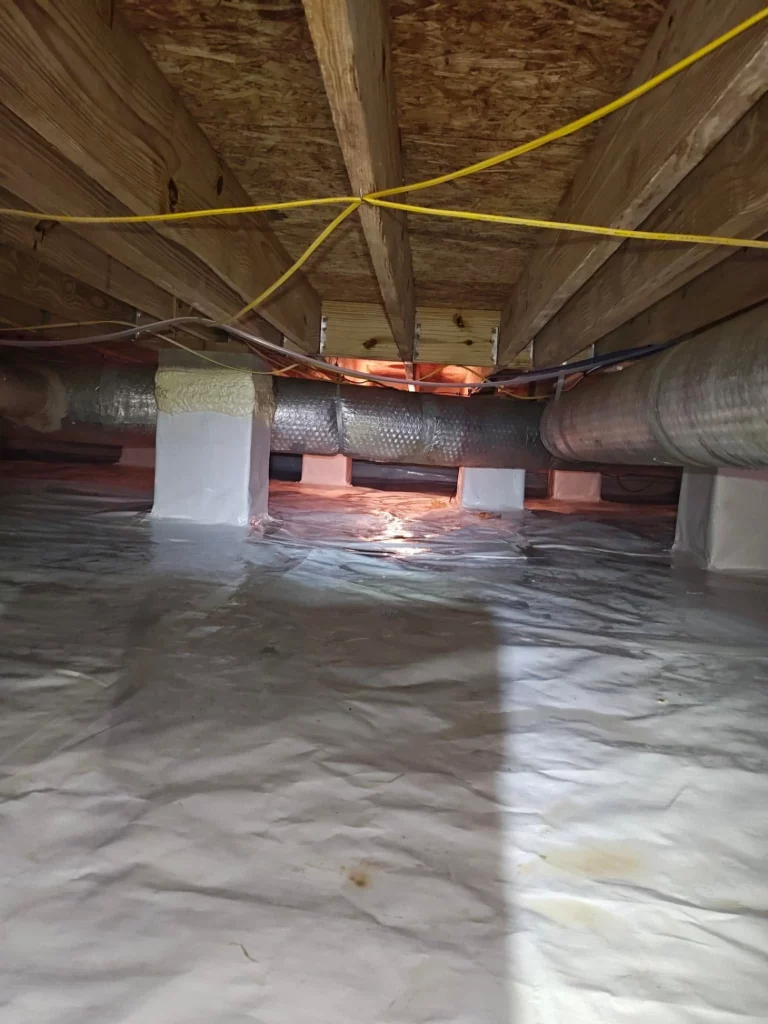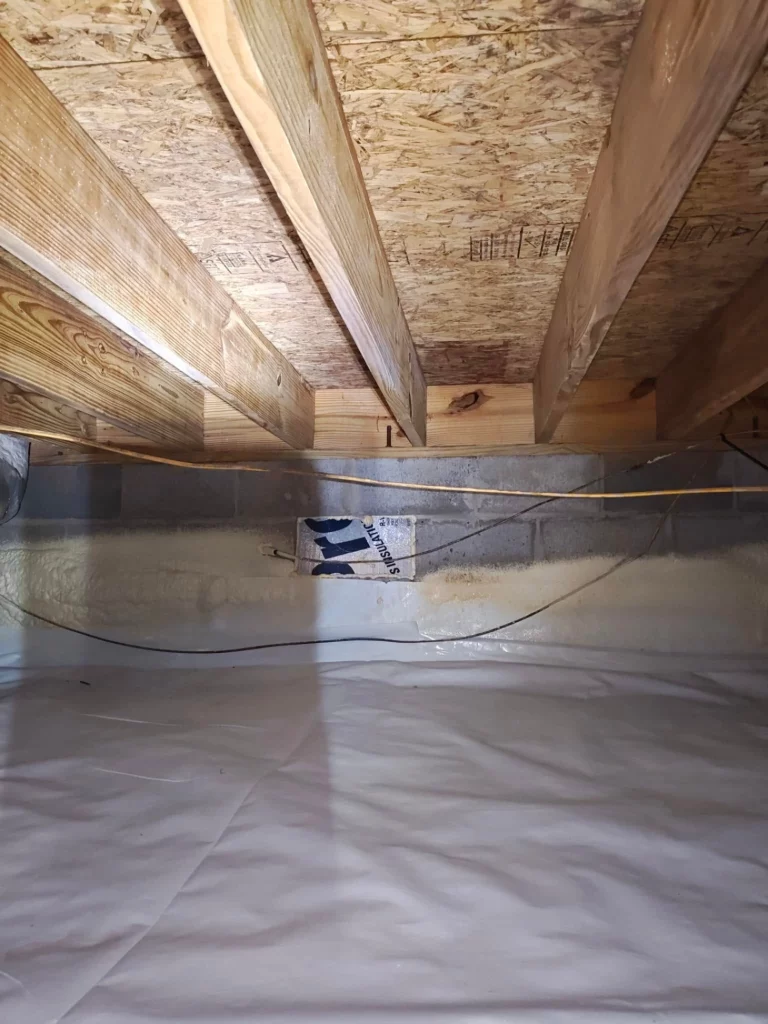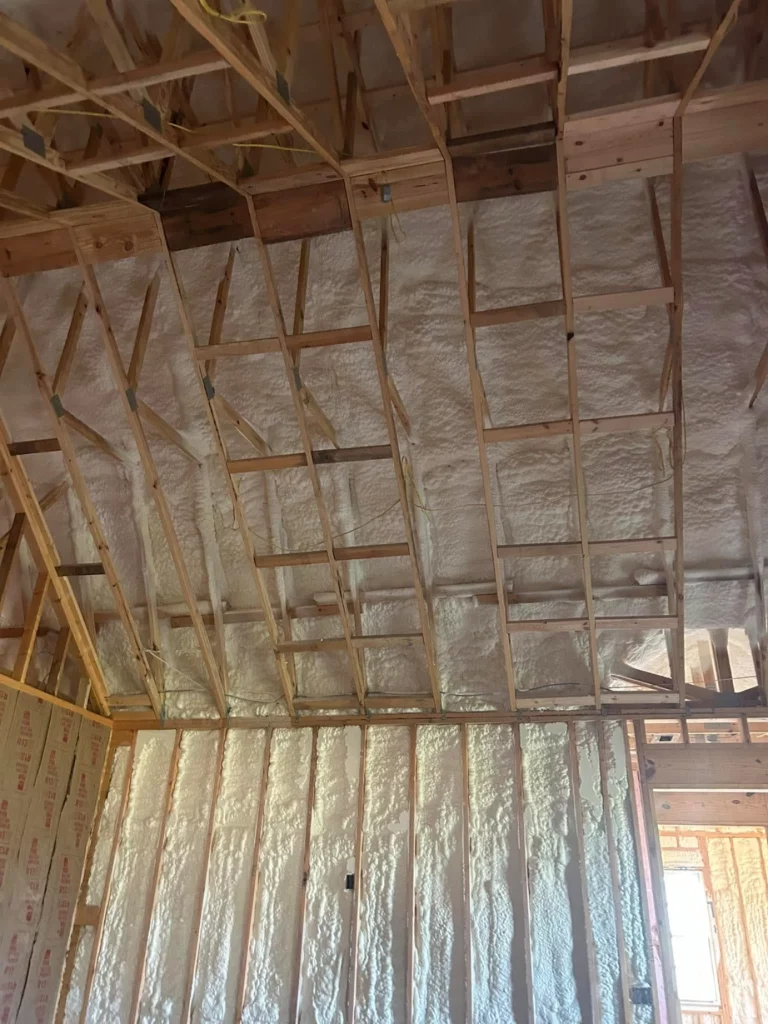

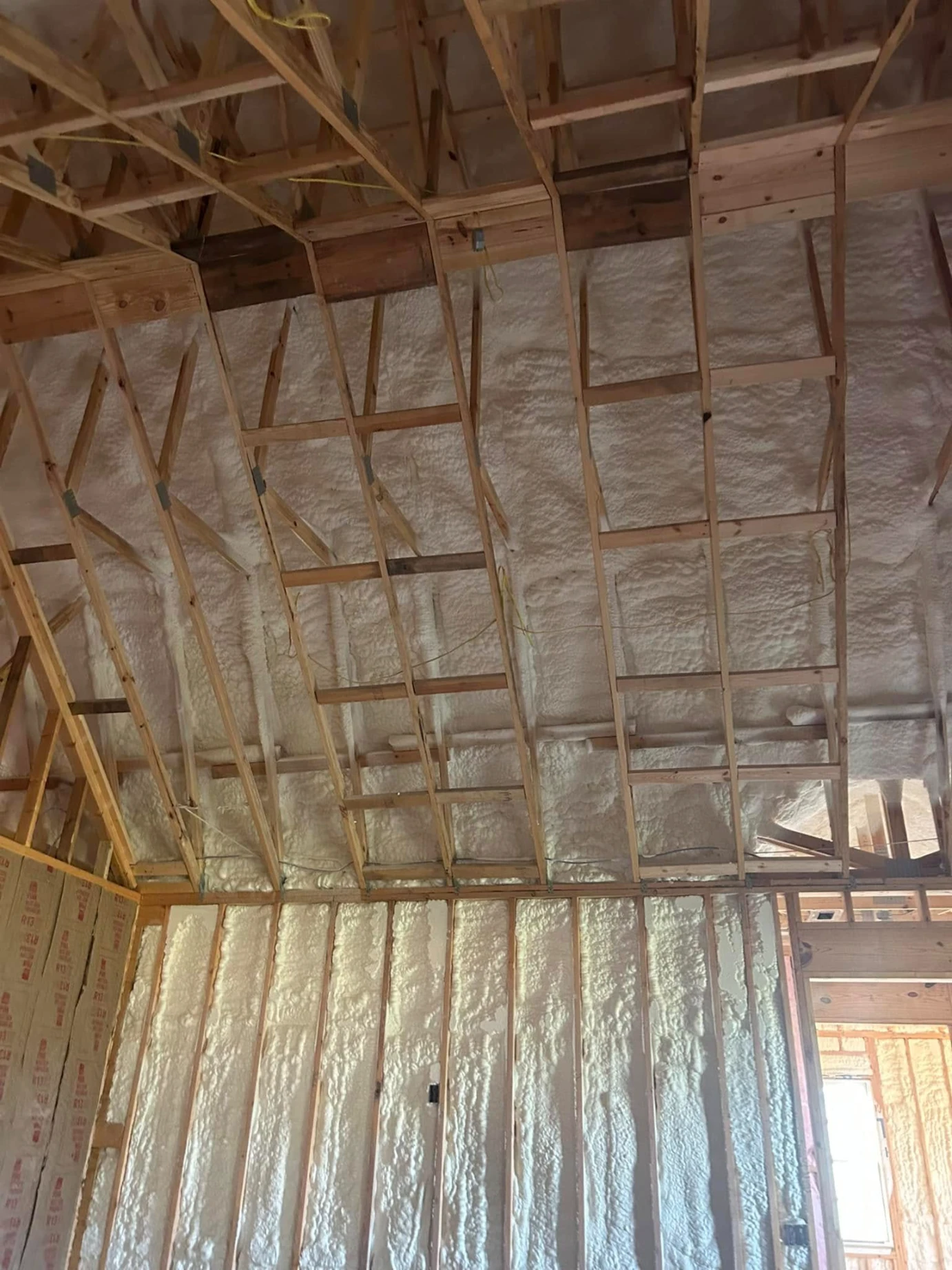
Albany homeowners are increasingly turning to spray foam insulation because it addresses the specific demands of southwest Georgia’s humid subtropical climate in ways that traditional insulation materials cannot. Long, hot summers with frequent afternoon thunderstorms and high humidity make air sealing and moisture control just as important as thermal resistance. Spray polyurethane foam (SPF) insulation tackles all three problems at once by expanding into every gap, crack, and cavity to form a continuous air, thermal, and moisture barrier. According to the U.S. Department of Energy, studies show that 40% of a home’s energy is lost through air infiltration, and buildings treated with spray foam can insulate as much as 50% better than those using traditional insulation products. For Albany homeowners, this translates directly into lower utility bills, fewer hot and cold spots, and better indoor air quality.
TLDR: Key Takeaways
- Spray foam insulation provides an R-value of R-3.4 to R-6.7 per inch, outperforming fiberglass at R-3 to R-4 per inch, making it a better thermal barrier for Albany’s hot, humid climate
- The material expands 30 to 60 times its liquid volume on contact, sealing cracks, gaps, and irregular cavities that other insulation types leave exposed
- EPA estimates homeowners save an average of 15% on heating and cooling costs by air sealing and adding insulation
- Closed-cell spray foam applied at 2 inches or more functions as both an air barrier and a vapor retarder, reducing the risk of moisture damage and mold in humid climates
- Georgia’s energy code field studies found that only 14% of homes met wall insulation quality requirements, indicating widespread air leakage and under-insulation across the state
- Open-cell and closed-cell formulas serve different purposes: closed-cell for high moisture areas like crawl spaces, open-cell for interior walls and sound dampening
- Proper installation requires trained professionals with the right equipment and safety protocols, making contractor selection a critical factor in performance
What Makes Albany’s Climate Different for Insulation Decisions
Albany sits in southwest Georgia, a region that experiences some of the state’s most subtropical weather. Georgia’s climate is classified as humid subtropical, with areas near the Florida border experiencing hot, humid summers with frequent afternoon thunderstorms and mild winters. Summer afternoon temperatures regularly reach near 90 degrees Fahrenheit, and the combination of heat and humidity puts significant demand on air conditioning systems. Winter lows in southern Georgia still dip into the upper 30s, which means homeowners need insulation that performs year-round in both heating and cooling modes.
This climate pattern creates two specific challenges for home insulation. First, the temperature differential between indoor conditioned air and outdoor heat drives constant thermal transfer through walls, ceilings, and attics. Second, high humidity means that any unsealed gaps allow warm, moist air to infiltrate wall cavities, where it can condense on cooler surfaces and lead to mold, rot, and structural damage. Spray foam insulation addresses both challenges simultaneously because it is applied as a liquid that expands and cures into a solid barrier, eliminating the gaps and voids that plague traditional batt insulation. Understanding how spray foam insulation works helps homeowners see why it delivers both insulation and air-sealing benefits in a single application.
How Spray Foam Insulation Works
Spray polyurethane foam is created by mixing two chemical components, isocyanate and polyol resin, at the tip of a spray gun. The reaction causes the mixture to expand and harden within seconds. According to the Spray Polyurethane Foam Alliance, properly installed SPF forms a continuous barrier on walls, around corners, and on contoured surfaces that resists heat transfer and reduces unwanted air infiltration through cracks, seams, and joints.
There are two primary types of SPF insulation, each suited to different applications:
| Property | Closed-Cell SPF | Open-Cell SPF |
|---|---|---|
| R-Value per Inch | Greater than 6.0 | Approximately 3.5 |
| Density | 1.75 to 2.25 lbs/ft3 | 0.4 to 1.2 lbs/ft3 |
| Moisture Barrier | High (low permeability) | Low (high permeability) |
| Air Barrier | Yes | Yes (at full wall thickness) |
| Rigidity | High | Low, flexible |
| Sound Absorption | Moderate | Very good |
| Best Applications | Crawl spaces, rim joists, exterior walls, and roofs | Interior walls, floors, sound-dampening cavities |
Closed-cell foam is the denser and more versatile option. It provides a higher R-value per inch and, when applied at 2 inches or more, functions as a vapor retarder as well as an air barrier. This makes it the preferred choice for crawl spaces, basements, rim joists, and any area exposed to moisture. Open-cell foam is lighter and more flexible, expanding more to fill cavities. It provides effective air sealing at full wall thickness and offers better sound absorption, making it well-suited for interior partitions and floor assemblies. Understanding the best spray foam types for different applications helps property owners choose the right insulation system for their needs.
Air Sealing: The Hidden Advantage Over Traditional Insulation
The single biggest performance difference between spray foam and traditional insulation is air sealing. Fiberglass batts, mineral wool, and even blown cellulose provide thermal resistance, but they do not stop air movement through the building envelope. Gaps around framing, electrical boxes, plumbing penetrations, and window rough openings allow conditioned air to escape and unconditioned air to enter around the clock.
According to ENERGY STAR, the EPA estimates that homeowners can save an average of 15% on heating and cooling costs, or 11% on total energy costs, by air sealing their homes and adding insulation in attics, crawl spaces, and basements. ENERGY STAR also notes that if you added up all the leaks, holes, and gaps in a typical home’s envelope, it would equal having a window open every day of the year. Spray foam eliminates this problem by adhering to surfaces and expanding into every irregular space, creating a sealed building envelope that prevents both convective heat loss and moisture-laden air infiltration.
For Albany homeowners running air conditioning through extended summer months, this air sealing benefit compounds into meaningful energy savings. Every cubic foot of hot, humid outdoor air that does not infiltrate the home is one less cubic foot that the HVAC system has to cool and dehumidify.
Moisture Control in Georgia’s Humid Climate
Humidity management is a major concern for homeowners in southwest Georgia. When warm, moist air enters wall cavities through unsealed penetrations and encounters cooler surfaces, condensation forms. Over time, this moisture accumulation creates conditions for mold growth, wood rot, and degraded insulation performance. Building Science Corporation research has demonstrated that closed-cell spray foam applied at thicknesses over 2 inches controls vapor diffusion to safe levels in a wide range of climates and interior humidity conditions. The research confirmed that closed-cell SPF provides sufficient vapor impermeability to control diffusion condensation, functioning effectively as both the thermal control layer and the vapor control layer in a single application.
This dual function is particularly relevant for Albany’s crawl spaces and exterior wall assemblies, where humidity-driven moisture problems are most common. Closed-cell foam applied to crawl space walls and rim joists prevents ground moisture and outdoor humidity from entering the living space, while simultaneously insulating against heat transfer. For above-grade walls in Albany’s moderate heating climate, closed-cell spray foam at standard stud cavity depths provides ample vapor control without the need for additional polyethylene sheeting or vapor-retarder paint.
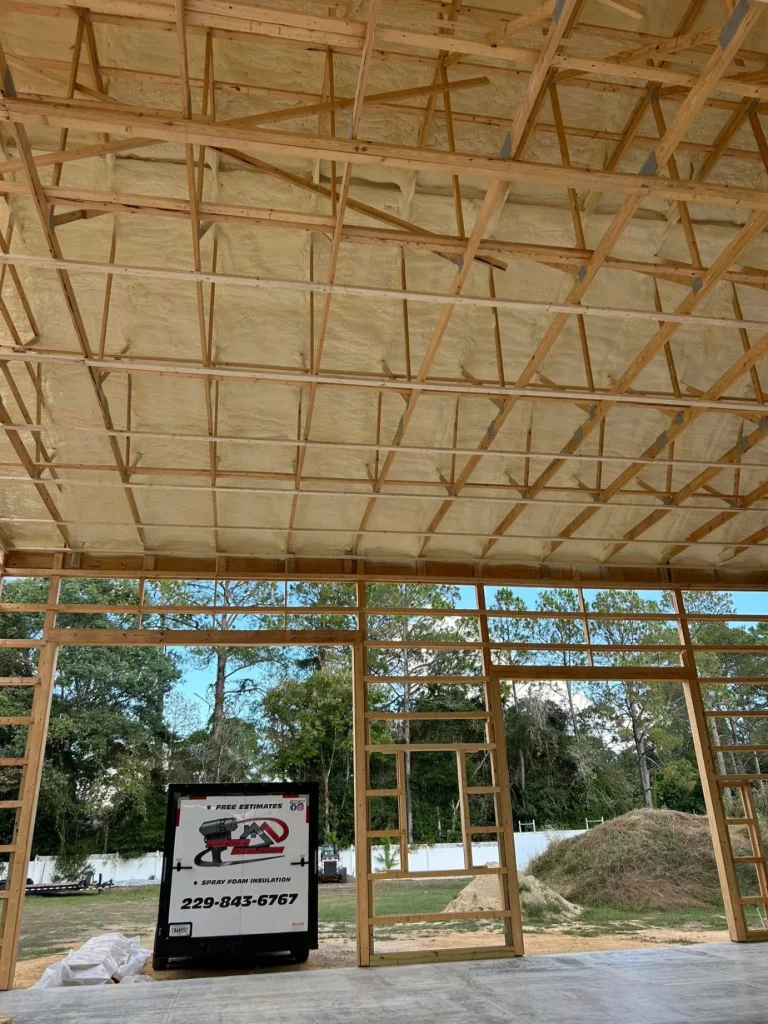
Georgia Energy Code Compliance and Real-World Gaps
Georgia follows the International Energy Conservation Code with state-specific amendments. For Climate Zone 2A and 3A, which covers southwest Georgia, including Albany, the state code requires a minimum of R-30 ceiling insulation and R-13 wall insulation. However, compliance data tells a different story about actual installation quality.
A Georgia energy code field study conducted by the Georgia Department of Community Affairs found that only 14% of homes met wall insulation quality requirements and just 19% met ceiling insulation quality standards. The study identified insulation installation in walls and ceilings as one of the top three areas needing improvement, alongside duct sealing and lighting efficiency. Common deficiencies included gaps, voids, compression, and misalignment of insulation, all of which reduce effective R-value below code requirements.
Spray foam insulation helps address this quality gap because the application process inherently eliminates the defects that plague batt insulation. The material cannot be compressed; it fills voids completely, and it adheres to framing members to maintain full contact with the air barrier. For homeowners in Albany, choosing spray foam means bypassing the installation quality issues that affect the majority of traditionally insulated homes in Georgia.
Choosing the Right Insulation Approach for Your Home
The decision between open-cell and closed-cell spray foam, or whether to combine spray foam with other insulation types, depends on several factors specific to each home. Below is a guide to help Albany homeowners match the right approach to their situation and determine whether spray foam insulation in Albany, GA, is the best fit for their property.
| Home Scenario | Recommended Approach | Key Reasons |
|---|---|---|
| Crawl space encapsulation | Closed-cell SPF on walls and rim joist | Vapor retarder needed, moisture exposure high |
| Attic with existing insulation | Air seal with SPF, then add blown-in over top | Addresses gaps, maximizes total R-value efficiently |
| New construction walls | Closed-cell SPF in full cavity or hybrid with batts | Highest air sealing, code compliance, and moisture control |
| Interior partition walls | Open-cell SPF for sound control | Lower cost, excellent sound absorption in normal frequency ranges |
| Existing retrofit, limited budget | SPF air sealing at critical points only (rim joist, penetrations) | Targets the worst air leakage areas at lower material volume |
| Basement or below-grade walls | Closed-cell SPF | Vapor barrier, moisture resistance, structural rigidity |
Signs You Have Found the Right Insulation Contractor
The performance of spray foam insulation depends heavily on proper installation. A few indicators that distinguish qualified installers from inexperienced ones:
- Transparent material selection: The contractor explains the differences between open-cell and closed-cell foam and recommends the appropriate type for each area of your home rather than applying a one-size-fits-all solution
- Warranty and documentation: The contractor provides written warranties covering both materials and labor, along with documentation of the foam product used and its manufacturer specifications
- Safety protocols: The team uses proper personal protective equipment and communicates clearly about occupancy timelines during and after the installation
- Code knowledge: The contractor demonstrates familiarity with Georgia energy code requirements and can explain how the proposed installation meets or exceeds those standards
- Thorough assessment: The installer conducts an on-site evaluation of your home’s specific needs rather than providing a quote over the phone without seeing the property
Get a Professional Spray Foam Insulation Assessment in Albany, GA
Premier Insulation helps Albany homeowners upgrade their home’s comfort and energy efficiency with professional spray foam insulation installation. Our team evaluates each home’s unique needs, recommends the right open-cell or closed-cell solution for every area, and completes every project to meet or exceed Georgia energy code requirements. Whether you need crawl space encapsulation, attic insulation, or full-home air sealing, we have the experience and equipment to deliver lasting results.
Call us at (229) 843-6767 or email premiereinsulationga@gmail.com to get started. Better comfort and lower energy bills are within reach, and our team is ready to help you achieve both.
Frequently Asked Questions
Is spray foam insulation worth it for older homes in Albany?
Yes. Older homes typically have more air leakage through gaps and penetrations, and spray foam’s air-sealing capability addresses exactly that problem, often delivering noticeable comfort improvements quickly.
How long does spray foam insulation last?
Spray foam is a durable, rigid material that does not settle, sag, or degrade over time. When properly installed, it maintains its thermal and air-sealing performance for the life of the building.
Can spray foam insulation help reduce my cooling bills during Albany summers?
Spray foam reduces cooling costs by sealing air leaks that allow hot, humid air to infiltrate and by providing a higher R-value per inch than traditional insulation, reducing the load on your air conditioning system.
Does spray foam insulation prevent mold and moisture problems?
Closed-cell spray foam applied at sufficient thickness acts as a vapor retarder and air barrier, significantly reducing moisture infiltration that leads to mold and wood rot in wall cavities and crawl spaces.
Do I need to leave my home during spray foam installation?
For interior applications, occupants typically need to vacate during installation and for a specified reentry period afterward while the foam cures and off-gassing dissipates. Your installer will provide specific guidance based on the product used.
Sources
- Spray Foam – Wikipedia – Comprehensive overview of spray foam insulation types, properties, R-values, thermal resistance, and historical development of spray polyurethane foam as a building material.
- Climate of Georgia (U.S. State) – Wikipedia – Detailed climate data for Georgia, including temperature ranges, humidity levels, precipitation patterns, and descriptions of the humid subtropical climate affecting southwest Georgia and the Albany area.
- SPF Insulation Basics – Spray Polyurethane Foam Alliance – Technical overview of spray polyurethane foam insulation, including how SPF works, the differences between closed-cell and open-cell foam, chemical components, and installation considerations.
- Why Seal and Insulate? – ENERGY STAR – EPA and ENERGY STAR guidance on the benefits of air sealing and insulation, including the estimated 15% savings on heating and cooling costs and information on home envelope air leakage.
- Spray Polyurethane Foam: The Need for Vapor Retarders in Above-Grade Residential Walls – Building Science Corporation – Peer-reviewed research on the vapor control and moisture management performance of closed-cell and open-cell spray polyurethane foam in framed wall assemblies across various climate conditions.