
Open-cell spray foam insulation combines air sealing, sound dampening, and moisture vapor permeability into a single material that is specifically well-suited for the hot, humid climate of Thomasville, GA. When homeowners and builders in this region evaluate insulation options, the right choice depends on climate zone requirements, the building assembly in question, and whether the project is new construction or a retrofit. Open-cell spray foam stands out because it serves as both an air barrier and a thermal insulator while allowing walls and roof assemblies to dry through vapor diffusion, a feature that matters enormously in South Georgia’s warm, humid environment.
TLDR / Key Takeaways
- Open-cell spray foam delivers an R-value of approximately R-3.5 to R-3.7 per inch and serves as an effective air barrier when sprayed to the minimum classified depth.
- Thomasville sits in IECC Climate Zone 2, where ENERGY STAR recommends R-49 for attics and R-13 for walls, targets that open-cell foam achieves efficiently in standard cavities.
- The material’s vapor permeability allows building assemblies to dry, which helps prevent mold and moisture damage in humid southern climates.
- Open-cell foam expands up to 100 times its applied volume, sealing gaps, cracks, and hard-to-reach areas that fiberglass batts and blown-in cellulose cannot reach.
- Sound attenuation is a built-in advantage, with the open-cell structure absorbing airborne noise far better than most competing insulation types.
- The EPA recognizes spray polyurethane foam as a highly effective insulation and air sealant when installed by trained professionals using proper ventilation protocols.
- Building Science Corporation confirms that both open-cell and closed-cell spray foam work effectively in most wall assemblies, with open-cell providing particular advantages in warm and mixed-humid climates.
How Thomasville’s Climate Zone Shapes Insulation Performance
Thomasville, Georgia, falls within IECC Climate Zone 2, the warmest designation in the state, covering South Georgia and the coastal lowlands. In this zone, cooling loads dominate, and moisture control is a primary concern for building durability. The Georgia State Minimum Standard Energy Code, based on the 2015 IECC with state-specific amendments, requires a minimum of R-13 for wood-framed walls and R-38 for ceilings in residential construction across climate zones 2, 3, and 4. These requirements make open-cell spray foam insulation a practical option for meeting energy-efficiency and moisture-control goals in residential construction.
The combination of high summer temperatures and elevated humidity levels means insulation in Thomasville must do more than slow heat transfer. It must also allow building assemblies to manage moisture without trapping it, which is where open-cell spray foam has a distinct advantage over impermeable alternatives.
What Makes Open-Cell Spray Foam Different
According to the U.S. Department of Energy, open-cell foam cells are not as dense and are filled with air, which gives the insulation a spongy texture and a lower R-value compared to closed-cell foam. The low-density structure uses air as the blowing agent rather than chemical gases, so the R-value does not degrade over time through thermal drift, unlike closed-cell polyurethane and polyisocyanurate foams that can lose performance as blowing agents escape.
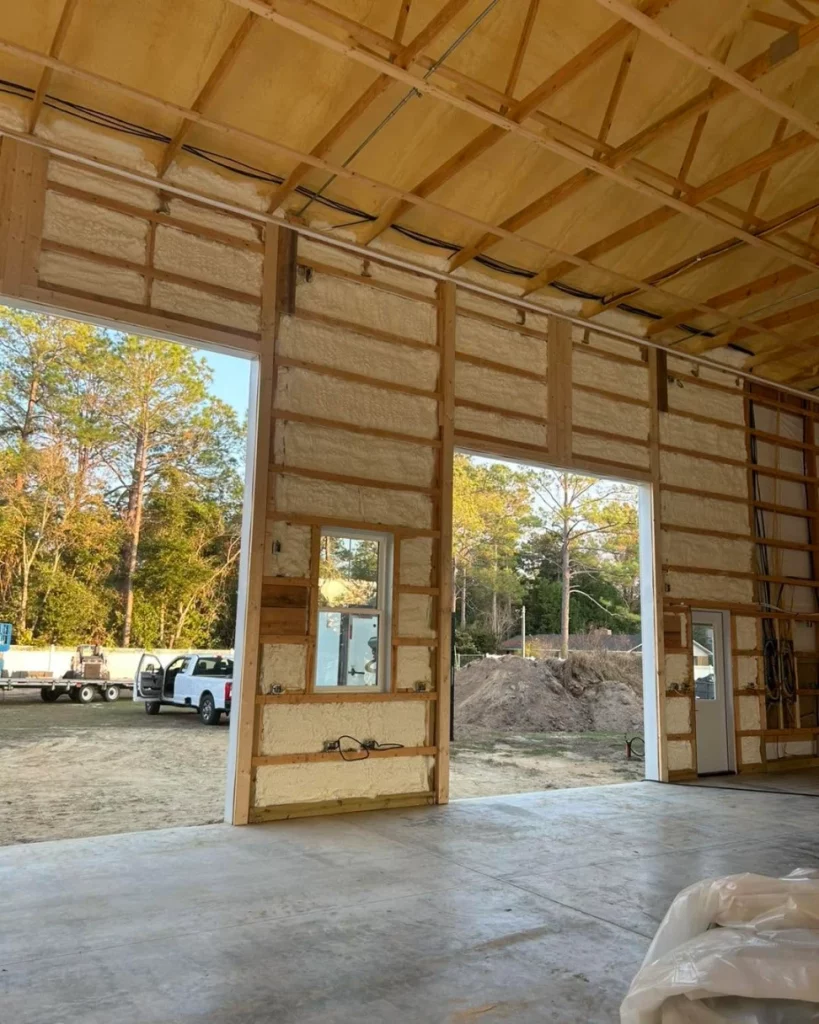
The Department of Energy also notes that sprayed foam and foamed-in-place insulation can fill even the smallest cavities, creating an effective air barrier. This dual function, insulation plus air sealing, is what separates spray foam from traditional materials like fiberglass batts or cellulose, which require separate air-sealing steps and still leave gaps around framing, wiring, and plumbing penetrations.
Air Sealing: The Hidden Performance Multiplier
Air leakage accounts for a significant portion of energy waste in residential buildings. When conditioned air escapes through gaps around windows, doors, electrical boxes, and framing intersections, insulation performance drops regardless of the R-value stamped on the product. The Department of Energy identifies air sealing as a critical step in weatherization and recommends sealing air leaks before installing insulation for maximum effectiveness. This is one reason many homeowners consider air-sealing insulation solutions when evaluating long-term energy savings.
Open-cell spray foam eliminates this two-step process by expanding into and sealing those gaps during a single application. The foam adheres to framing, sheathing, and obstruction surfaces, forming a continuous air barrier that prevents conditioned air from escaping and unconditioned air from infiltrating. In Thomasville’s cooling-dominated climate, this means less work for HVAC systems during the long summer months and improved indoor comfort year-round.
Vapor Permeability: Why Breathability Matters in South Georgia
One of the most frequently misunderstood properties of open-cell spray foam is its vapor permeability. Building Science Corporation classifies open-cell spray foam as an air barrier but confirms it is vapor-permeable. This means the material stops air movement, which carries heat and moisture, but allows water vapor to diffuse through slowly. In a humid climate like Thomasville’s, this is beneficial because any moisture that enters a wall or roof assembly from the interior or exterior can dry through the foam rather than becoming trapped against an impermeable layer.
Closed-cell spray foam, by contrast, acts as a vapor barrier. While this is advantageous in cold climates where interior moisture drives outward through walls, it can create condensation risks in hot, humid climates when exterior moisture is driven inward by air conditioning. Building Science Corporation’s residential spray foam guide recommends low-density open-cell spray foam for unvented conditioned attics in IECC Climate Zones 4 and below, which directly applies to Thomasville.
Sound Dampening: An Often Overlooked Benefit
The open-cell structure of this foam material creates millions of tiny air pockets that absorb sound energy rather than reflecting it. This gives open-cell spray foam noticeably better acoustic performance compared to closed-cell foam, fiberglass batts, and rigid foam boards. For Thomasville homeowners near busy roads, commercial districts, or with interior noise concerns between rooms and floors, this sound attenuation adds a layer of comfort that standard insulation simply cannot match.
| Insulation Type | Air Barrier | Vapor Permeable | Sound Dampening | R-Value Per Inch | Best Application in Thomasville |
|---|---|---|---|---|---|
| Open-Cell Spray Foam | Yes | Yes | Excellent | ~3.5-3.7 | Walls, attics, and floor cavities |
| Closed-Cell Spray Foam | Yes | No (vapor barrier) | Moderate | ~6.0-6.5 | Below-grade, flood-prone areas |
| Fiberglass Batts | No | Yes (with facing) | Low | ~3.1-3.4 | Standard budget applications |
| Blown Cellulose | No | Yes | Moderate | ~3.2-3.8 | Attic floors, retrofits |
| Rigid Foam Board | Yes (when taped) | Varies | Low | ~3.8-6.5 | Continuous exterior insulation |
Recommended Applications for Open-Cell Spray Foam in Thomasville
Unvented Conditioned Attics
Building Science Corporation explicitly recommends unvented conditioned attics for hot and humid climates where mechanical systems and ductwork are located in attic spaces. Open-cell spray foam applied directly to the underside of the roof deck converts an inefficient vented attic into a conditioned space, eliminating the thermal penalty of ductwork running through extreme heat. This approach also prevents condensation on duct surfaces, a common problem in South Georgia attics, making spray foam insulation in Thomasville, GA, a practical solution for improving energy efficiency and indoor comfort.
Wall Cavities in New Construction and Retrofits
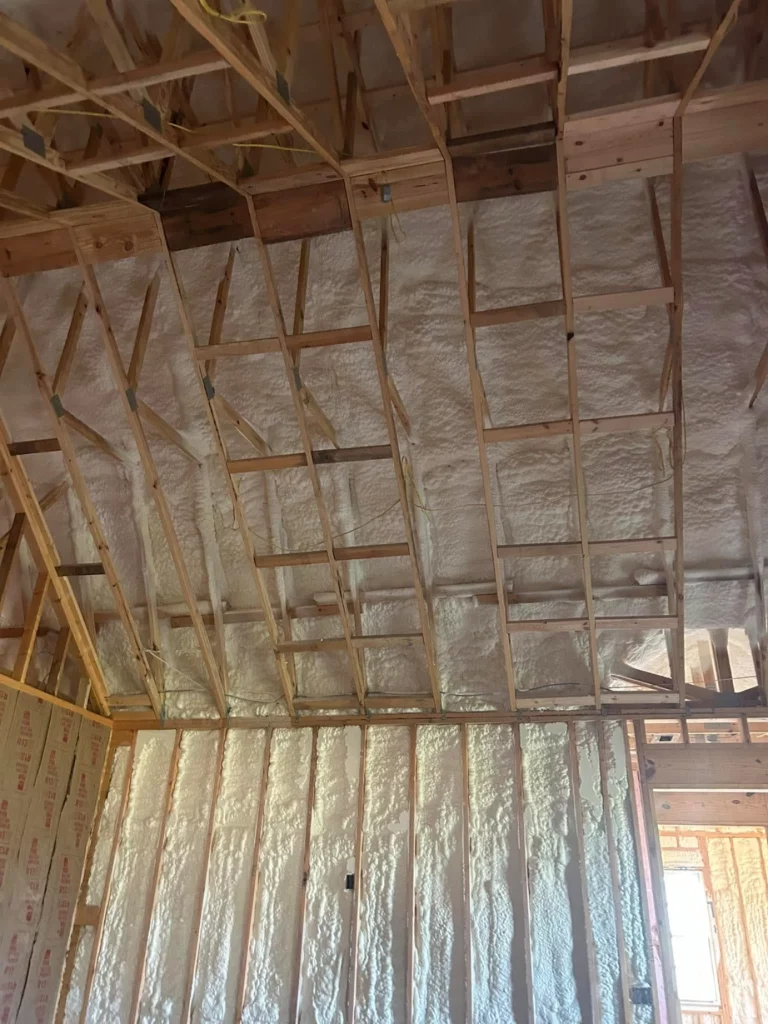
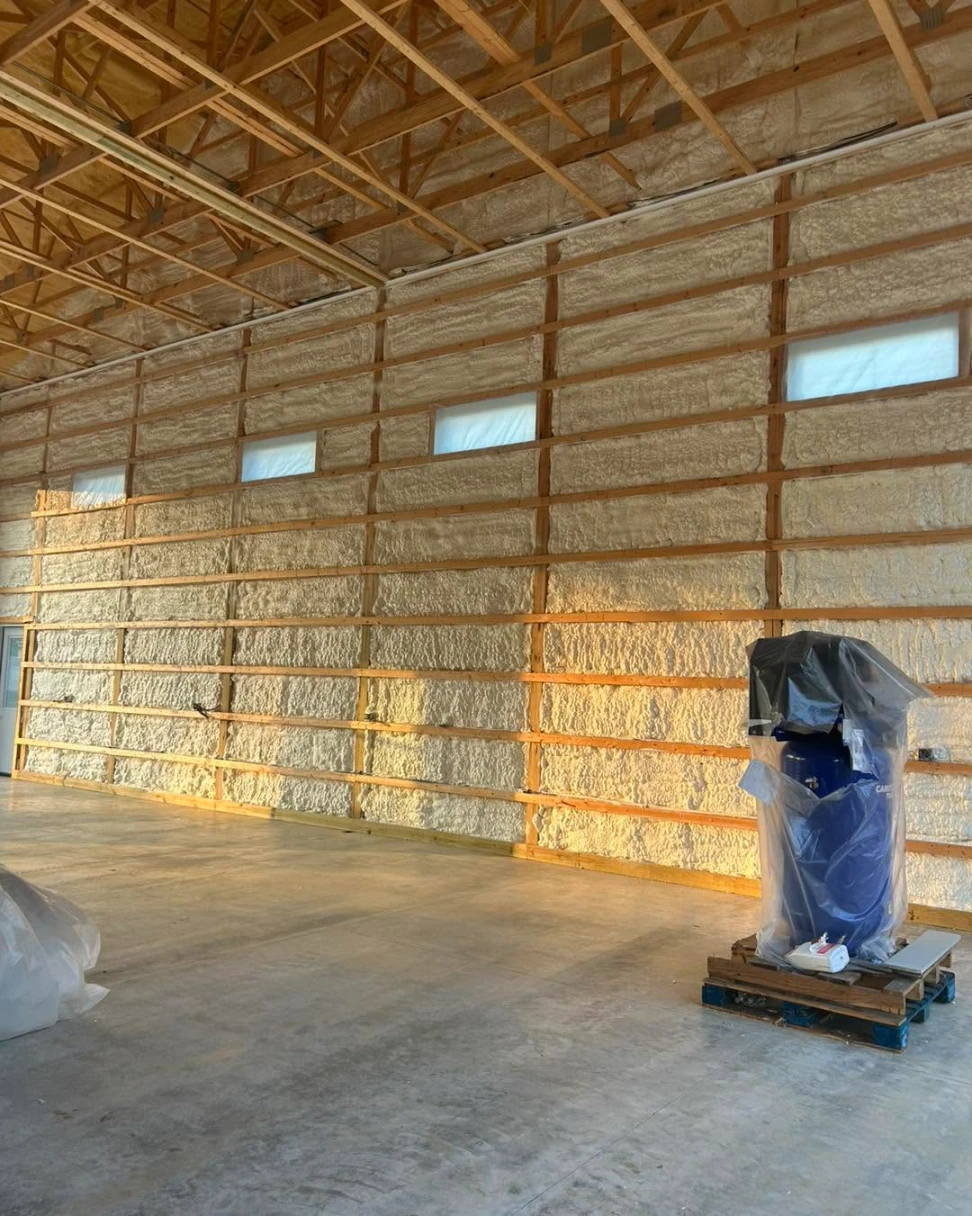
Open-cell foam fills wall cavities, sealing around electrical boxes, plumbing runs, and framing irregularities. In both new construction and existing homes where wall cavities are accessible, open-cell spray foam provides continuous insulation without the gaps and compression issues common with fiberglass batts.
Floor and Ceiling Assemblies
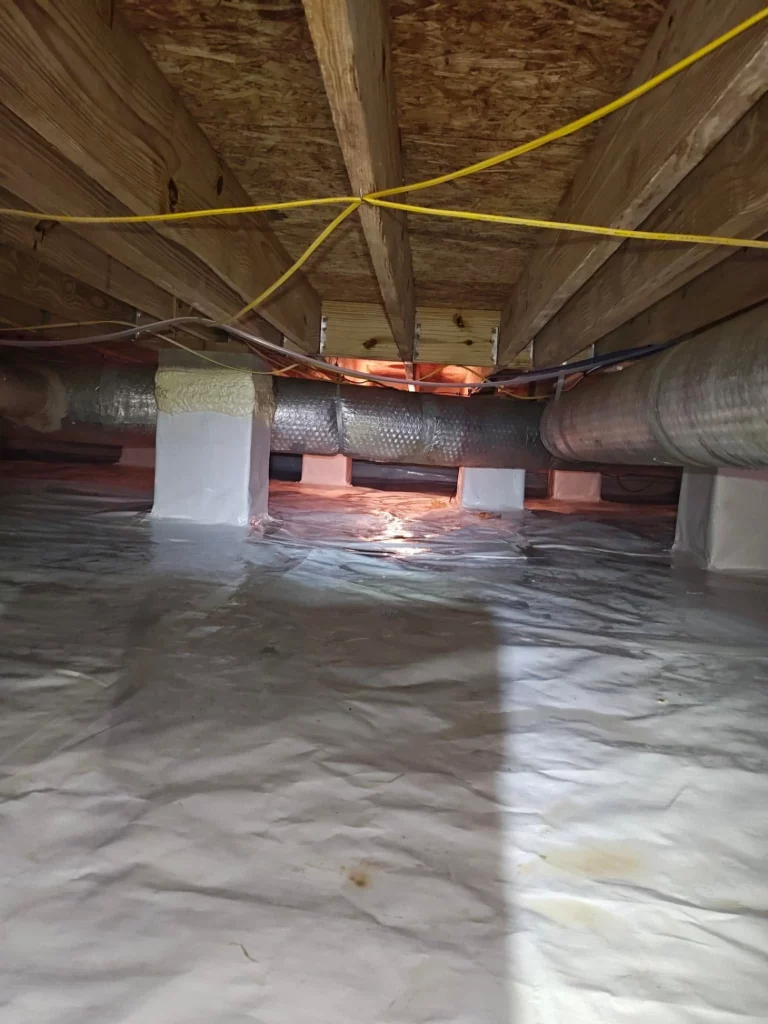
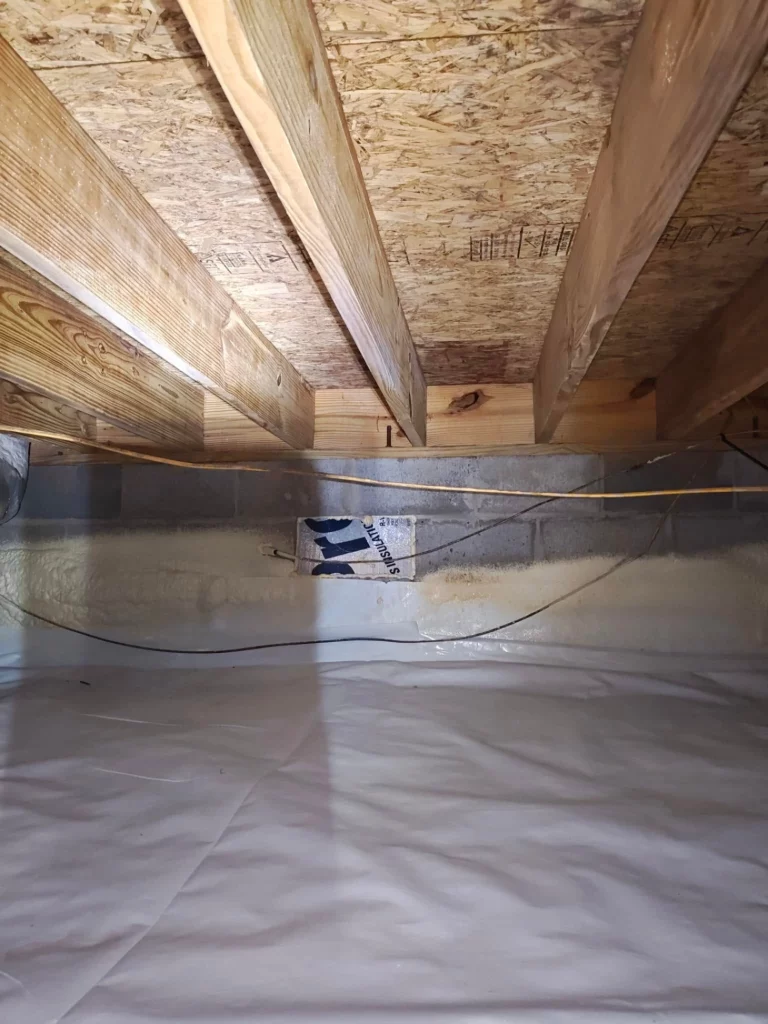
Between conditioned and unconditioned spaces, such as floors over crawlspaces or cantilevered overhangs, open-cell foam seals air leaks while adding thermal resistance. Its flexibility also accommodates building movement and settling without cracking or losing its seal.
Signs You’ve Found the Right Insulation Installer
Choosing the right installer matters as much as choosing the right material. Here are indicators of a qualified professional:
- Thorough assessment before quoting: A reputable installer inspects the building, identifies problem areas, and discusses your specific goals before recommending a solution.
- Clear explanation of foam types: The team explains the differences between open-cell and closed-cell spray foam and recommends based on your home’s assembly and climate zone, not on what costs more.
- EPA-aligned safety practices: The EPA provides detailed guidance on safer work practices for spray polyurethane foam installation, including ventilation requirements and re-entry times. A professional installer follows these protocols without cutting corners.
- References and documentation: The installer provides proof of proper training, insurance, and a track record of completed projects in the local area.
Get Started with Professional Insulation in Thomasville, GA
Our team at Premier Insulation brings deep experience with open-cell spray foam insulation to homes and businesses across Thomasville, GA. We assess every building individually, recommend the right approach for the specific assembly and climate conditions, and install with the precision and safety standards that protect both your investment and your health. Reach out to us at premiereinsulationga@gmail.com or call (229) 843-6767 to discuss your project.
FAQs
Does open-cell spray foam work in Thomasville’s hot, humid summers?
Yes. Open-cell spray foam is particularly effective in hot, humid climates because it acts as an air barrier while remaining vapor permeable, allowing building assemblies to dry properly.
How does open-cell spray foam compare to fiberglass batts for energy savings?
Open-cell spray foam provides both higher thermal performance and superior air sealing in a single application, eliminating the gaps and air leakage inherent in fiberglass batt installations.
Can open-cell spray foam be used in existing homes?
Open-cell spray foam can be applied in existing wall cavities, attics, and floor assemblies where access is available, making it effective for both retrofit and new construction projects.
Is spray foam insulation safe for my family?
The EPA confirms spray polyurethane foam is safe when installed by trained professionals following proper ventilation and re-entry protocols, which we follow on every project.
Will open-cell spray foam help with indoor noise?
The open-cell structure absorbs sound energy effectively, providing noticeably better noise reduction than fiberglass batts, closed-cell foam, or rigid board insulation.
Sources
- U.S. Department of Energy – Types of Insulation – Comprehensive overview of all insulation types, including sprayed foam, with advantages, installation methods, and R-value comparisons for residential applications.
- U.S. Department of Energy – Insulation Materials – Detailed material descriptions for polyurethane spray foam, including open-cell properties, thermal drift characteristics, and vapor permeability.
- ENERGY STAR – Recommended Home Insulation R-Values – Climate zone-specific R-value recommendations based on the 2021 IECC, providing the benchmark for Zone 2 attic and wall insulation targets.
- U.S. EPA – Spray Polyurethane Foam (SPF) Insulation and How to Use it More Safely – Official EPA guidance confirming SPF as a highly effective insulation and air sealant, along with safety requirements for installation and re-entry.
- Building Science Corporation – GM-2102: Residential Spray Foam Guide – Technical guide authored by Joseph Lstiburek covering spray foam applications in walls, roofs, and foundations with climate zone-specific recommendations for open-cell and closed-cell foam.