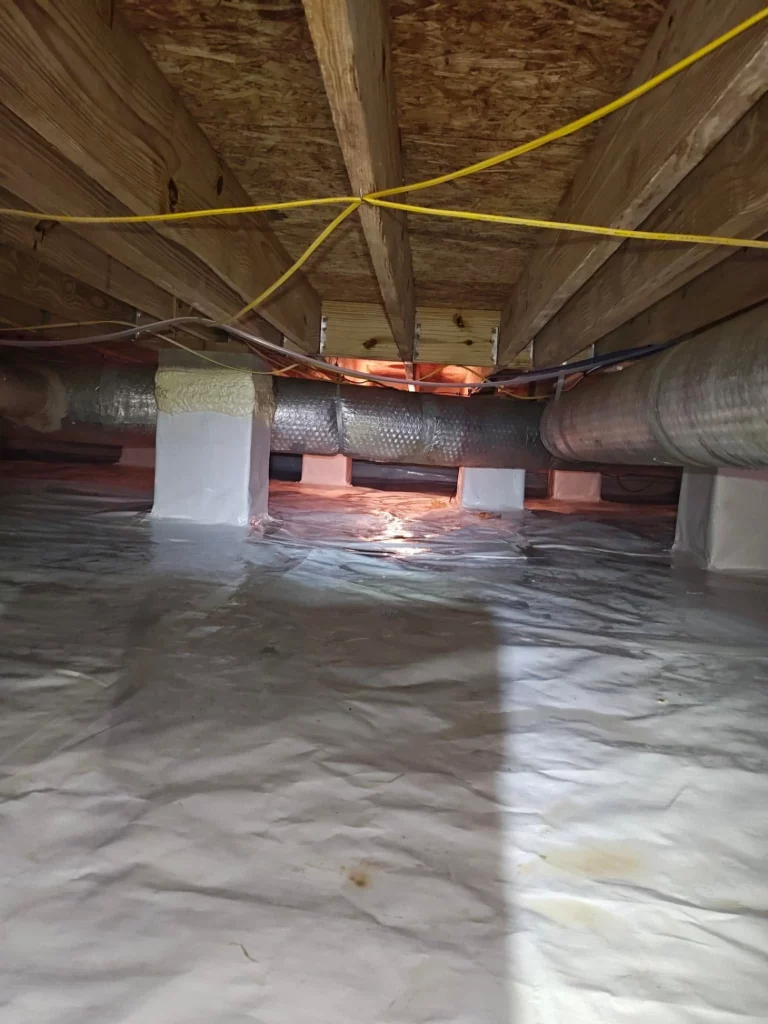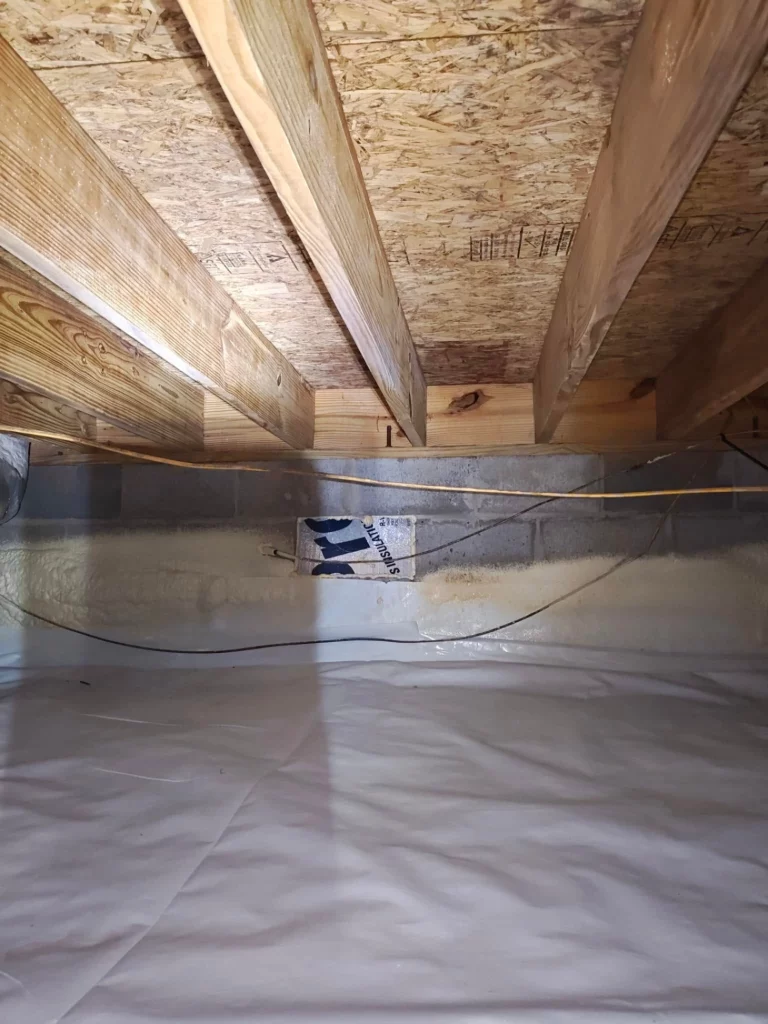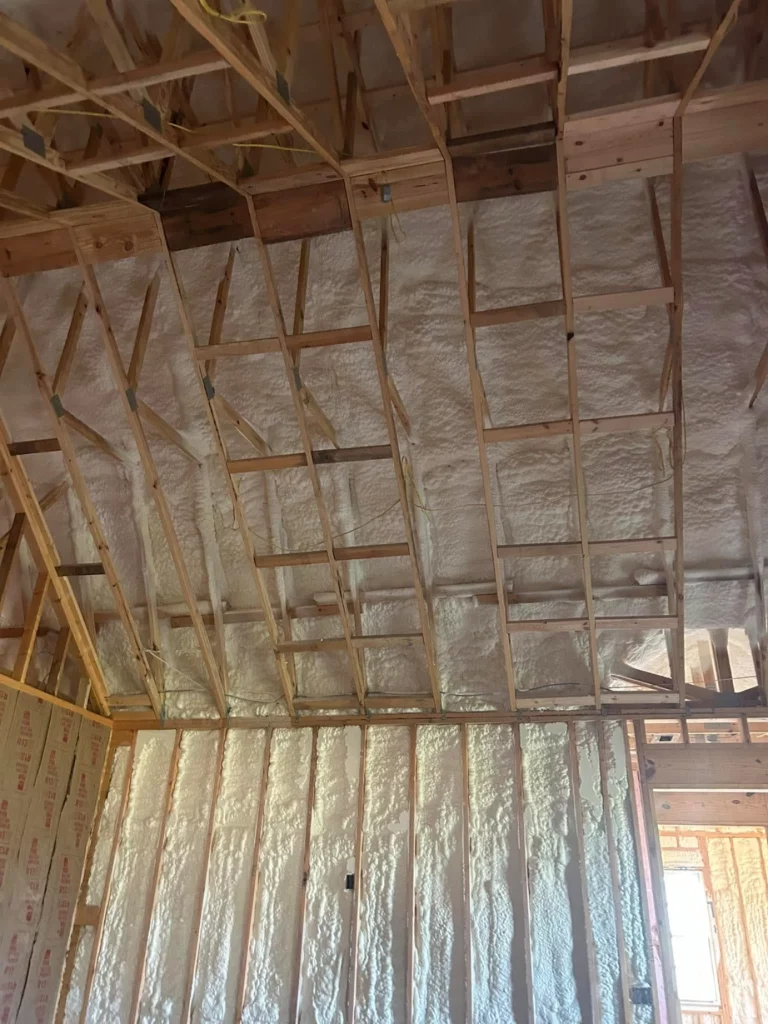

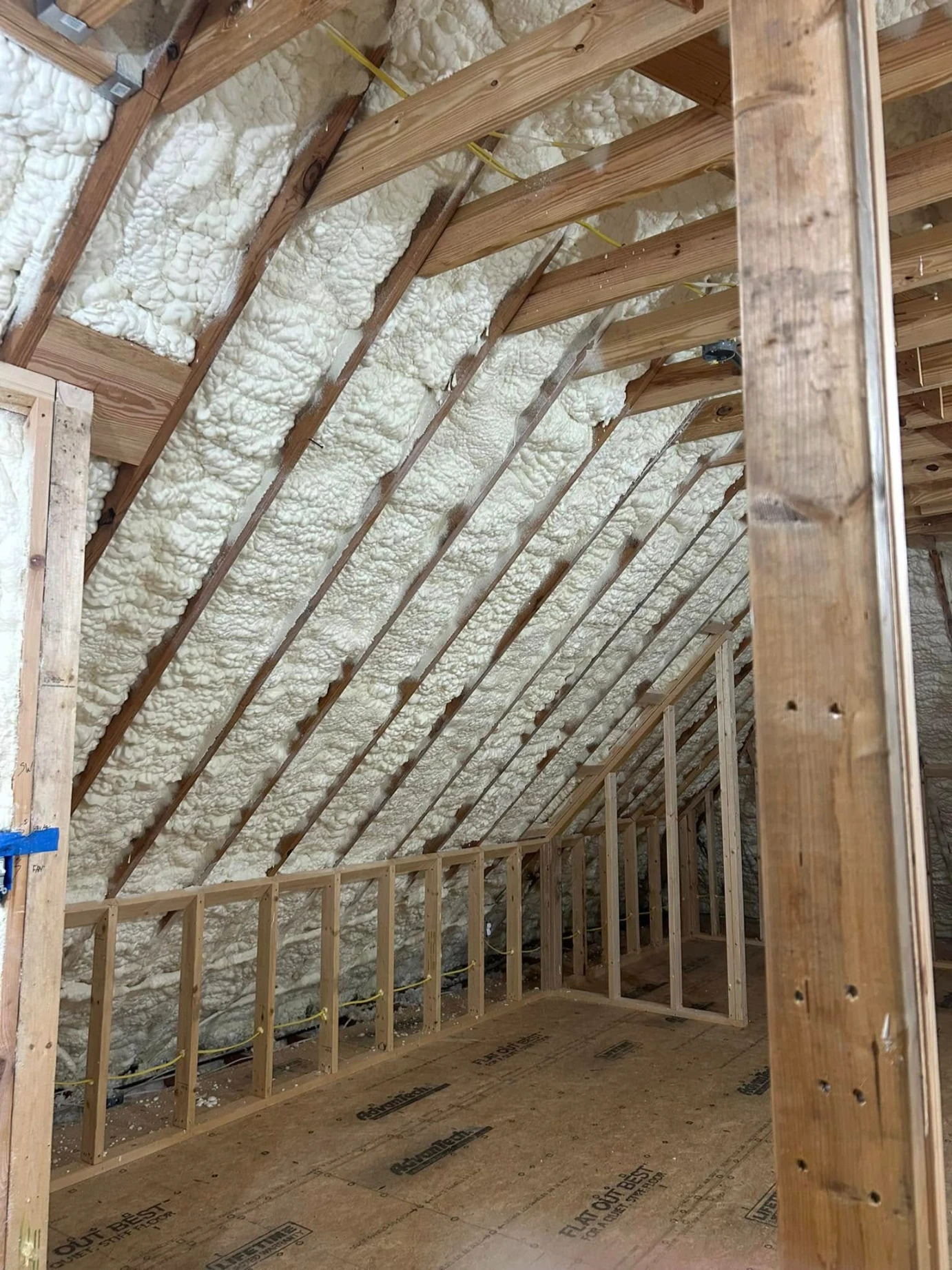
Open-cell spray foam insulation is absolutely worth considering for homeowners in Thomasville, GA, particularly for wall cavities, attics, and cathedral ceilings where its air-sealing and sound-dampening properties deliver real, measurable benefits. Thomasville sits in a hot-humid climate zone, which makes moisture management and HVAC efficiency top priorities. Open-cell foam performs well in this environment by sealing air leaks that drive up cooling costs, while its vapor-permeable nature allows the building assembly to dry outward rather than trapping moisture. The right insulation choice depends on the specific application, the condition of the existing structure, and whether the project involves new construction, a retrofit, or targeted upgrades like band joist sealing. Understanding the benefits of open-cell spray foam insulation can help property owners choose the most effective solution for their building.
TL;DR Key Takeaways
- Open-cell spray foam delivers R-3.6 per inch of thermal resistance and acts as an air-impermeable barrier when sprayed to minimum rated thicknesses, according to the DOE Building America program.
- The EPA estimates homeowners can save an average of 15% on heating and cooling costs by air sealing and adding insulation, a result that spray foam is particularly effective at achieving.
- Thomasville falls in IECC Climate Zone 2, where Georgia code requires ceiling insulation of R-30 and wall insulation of R-13, targets open-cell foam can meet when applied at proper depths.
- Open-cell foam achieves an NRC (Noise Reduction Coefficient) of 70 in standard wall assemblies, making it one of the most effective cavity-fill materials for sound control.
- Its vapor-permeable profile (approximately 10 perms at 5 inches) is well suited to hot-humid climates like south Georgia, allowing assemblies to dry rather than trapping moisture.
- It is not suitable for below-grade or crawlspace applications where water exposure is a risk, as it can absorb and hold significant amounts of liquid water.
How Open-Cell Spray Foam Actually Works
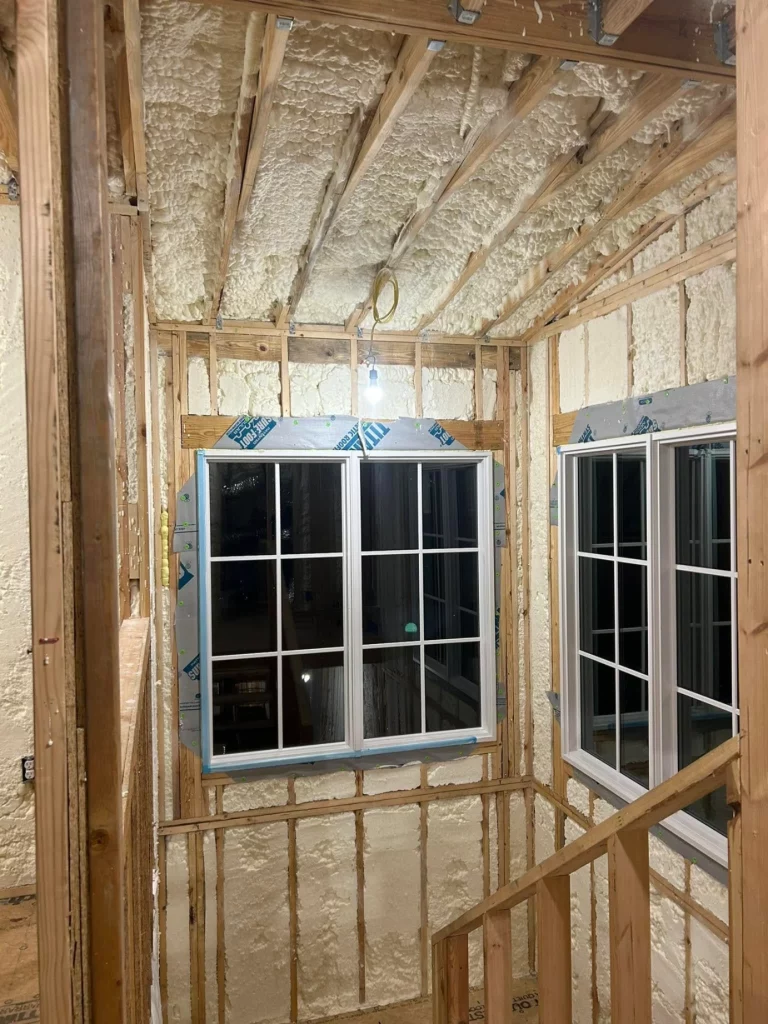
Open-cell spray polyurethane foam is applied as a two-part liquid that expands up to 150 times its original volume, filling every gap, crack, and void in wall cavities, ceiling planes, and roof rafters. As it cures, it forms a continuous three-dimensional matrix of interconnected cells that seals against air infiltration while remaining flexible and lightweight at roughly 0.5 pounds per cubic foot. DOE Building America spray foam guide notes that both open-cell and closed-cell formulations are “excellent at air-sealing, a once overlooked, but critical aspect of insulated assemblies,” with the expanding foam process naturally sealing gaps that traditional insulation like fiberglass or cellulose cannot address. These advantages make it a popular choice for homeowners seeking better home energy performance.
Once installed, the foam delivers R-3.6 per inch of thermal resistance and achieves an air permeance low enough to be classified as an air-impermeable insulation by building codes. This classification matters because it means the foam itself serves as the air control layer, eliminating the need for separate air barrier products.
| Property | Open-Cell SPF | Closed-Cell SPF |
|---|---|---|
| Density | ~0.5 lb/cu ft | ~2.0 lb/cu ft |
| R-Value per Inch | R-3.6 | R-6.1 |
| Vapor Permeance | ~10 perms at 5″ (permeable) | Less than 1 perm (vapor retarder) |
| Air Permeability | Air-impermeable | Air-impermeable |
| Expansion Ratio | Up to 150x | 35-50x |
| NRC (Sound Absorption) | 70 | No data available |
| Water Absorption | Can absorb and hold water | Hydrophobic |
| Max Single-Pass Thickness | Up to 10″ | 2-3″ per layer |
Source: DOE Building America – Which Spray Foam Is Right For You?
Why Thomasville’s Climate Makes This Decision Matter
Thomasville, Georgia, falls within USDA Hardiness Zone 9a and IECC Climate Zone 2, which means long, hot summers with high humidity and mild winters. According to Georgia’s Department of Community Affairs energy code fact sheet, homes in Climate Zones 2 and 3 require a minimum ceiling insulation of R-30 and wall insulation of R-13. The same study found that only 19% of homes met ceiling insulation quality standards and just 14% met wall insulation quality standards, leaving a significant performance gap across the state.
In a hot-humid climate, the primary thermal load is cooling, and the main moisture drive comes from the exterior. This is where open-cell spray foam’s vapor-permeable nature becomes an advantage. Building Science Corporation’s residential spray foam guide confirms that “unvented conditioned attics are common in warm climates” and that both open-cell and closed-cell spray foam “work in most climates” for wall applications. In Climate Zone 2 specifically, the lower temperature differential between indoors and outdoors means the R-value per inch matters less than it would in a cold climate, making open-cell’s lower per-inch R-value less of a limitation.
The Building America program also notes that in hot-humid climates, interior vapor retarders should be avoided when using vapor-permeable insulation like open-cell foam, because a double vapor retarder condition could trap moisture inside the wall cavity. Open-cell foam allows the assembly to dry to the interior, which is precisely the drying direction needed in South Georgia’s climate. These moisture-management benefits make open-cell spray foam insulation in Thomasville, GA, a practical choice for residential and commercial properties.
The Five Benefits That Make Open-Cell Foam Stand Out
1. Superior Air Sealing
Air leakage through the building envelope is the single largest source of energy waste in most homes. ENERGY STAR states that if you added up all the leaks, holes, and gaps in a typical home, it would equal leaving a window open every day of the year. Open-cell foam’s expanding application seals these penetrations in a single step, creating a continuous air barrier that traditional batt insulation simply cannot match. The EPA estimates that homeowners save an average of 15% on heating and cooling costs by combining air sealing with proper insulation levels.
2. Meaningful Sound Control
Open-cell spray foam achieves a Noise Reduction Coefficient (NRC) of 70 in standard 2×4 wood stud wall assemblies, which means it absorbs approximately 70% of the sound energy that reaches it. This makes it particularly effective for interior walls between bedrooms and living spaces, home offices, and media rooms. The DOE Building America guide reports an STC (Sound Transmission Class) rating of 23 for open-cell foam in standard assemblies, and the Building Science Corporation guide confirms that spray foam results in “significant sound attenuation” due to low exterior air leakage.
3. Full Cavity Coverage Without Gaps
Fiberglass batts and blown-in insulation leave gaps around framing members, electrical boxes, plumbing penetrations, and irregular cavity shapes. These gaps create thermal bypasses that reduce the effective R-value of the insulation by 20% or more. Open-cell foam expands to fill the entire cavity, eliminating voids and maintaining consistent thermal performance across the entire insulated area. The Georgia energy code compliance study specifically notes that insulation must be “free of gaps, voids, misalignment, compression, and wind intrusion” to perform as rated.
4. Compatibility with Unvented Attic Assemblies
In Thomasville’s climate zone, unvented conditioned attics are an effective strategy for protecting HVAC ductwork from extreme heat. DOE Building America Solution Center at Pacific Northwest National Laboratory confirms that spray foam applied to the underside of the roof deck “has been used since the mid-1990s” and can provide “a resilient, durable, and efficient” assembly in all climate zones. Open-cell foam sprayed to the roof deck creates a conditioned space that keeps ductwork within the thermal envelope, eliminating conductive losses that occur when ducts sit in a vented, 130-degree attic.
5. Lower Installed Material Volume
Because open-cell foam expands up to 150 times its liquid volume compared to 35-50 times for closed-cell, it requires significantly less raw material to fill the same cavity. This means faster application times for large projects, particularly in attics and open wall cavities where full-depth coverage is needed. The DOE guide notes that open-cell foam “may be applied to full thickness in a single pass, generally up to 10 inches,” while closed-cell foam requires multiple layers.
Where Open-Cell Foam Shines vs. Where It Shouldn’t Go
| Application | Open-Cell Recommendation | Reasoning |
|---|---|---|
| Wall cavities (hot-humid) | Acceptable to preferred | Good R-value for mild winters, excellent air sealing, and vapor permeable for outward drying |
| Unvented attic/roof deck | Acceptable | Effective air and thermal control, code-compliant when installed to minimum depths |
| Cathedral ceilings | Acceptable | Fills rafter bays, seals air leaks at the ceiling plane |
| Band joists/rim joists | Acceptable | Small area, great air sealing value, budget-friendly for targeted application |
| Below-grade / basements | Not acceptable | Can absorb and hold water, incompatible with moisture exposure |
| Crawlspaces (vented) | Not acceptable | Moisture permeable, risk of water absorption in high-humidity environments |
| Brick veneer cavities | Not acceptable | Cannot function as a drainage plane, vulnerable to bulk water loading |
Source: Building Science Corporation – Residential Spray Foam Guide
Which Thomasville Homeowners Benefit Most
New construction builds. If you are building a home in Thomasville, open-cell foam in wall cavities and on the roof deck is a strong option for creating a tight, efficient envelope from day one. The vapor-permeable characteristic aligns with best practices for hot-humid climates and allows the structure to dry naturally.
Homes with existing ductwork in the attic. Unvented attic assemblies using spray foam move HVAC equipment inside the thermal envelope, which in south Georgia’s cooling-dominated climate can reduce duct losses substantially. When ducts run through a sealed, conditioned attic rather than a vented one, every cubic foot of conditioned air reaches the living space.
Homeowners are upgrading interior rooms for sound control. If you are finishing a basement, adding a home theater, or converting a garage into living space, open-cell foam in interior walls provides meaningful noise reduction that fiberglass batts cannot match.
Older homes with drafty wall cavities. Homes built before modern air-sealing practices often have extensive air infiltration through wall penetrations, band joists, and framing gaps. Open-cell foam injected or sprayed into these cavities seals leaks that weather stripping and caulking alone cannot address.
Signs You Have Found the Right Insulation Installer
A qualified spray foam installer in Thomasville should demonstrate several qualities during the evaluation process. They should conduct a thorough assessment of your home’s specific conditions, including existing insulation levels, air leakage pathways, and moisture concerns, rather than quoting a price over the phone without seeing the structure. They should explain the difference between open-cell and closed-cell foam and recommend the appropriate product for each area of your home, not push one product across all applications. Their proposal should reference applicable building codes and specify the target R-value and foam thickness for each treated area. They should discuss moisture management strategies, particularly for attic and roof deck applications, and explain how the assembly will dry. Finally, they should carry appropriate licensing and insurance and be willing to provide manufacturer documentation for the specific foam products they install.
Get a Professional Assessment for Your Thomasville Home
The team at Premier Insulation evaluates every home in Thomasville individually, recommending open-cell spray foam where it delivers the most value and closed-cell where the application demands it. We take into account your home’s age, construction type, existing insulation, and the specific climate demands of South Georgia before proposing any solution. Call us at (229) 843-6767 to schedule a thorough insulation assessment. You can also reach out via email at premiereinsulationga@gmail.com. Let our professionals help you make the right choice for your home, your budget, and your comfort.
FAQs
How does open-cell spray foam compare to fiberglass insulation in hot-humid climates?
Open-cell spray foam provides both continuous air sealing and thermal insulation in one step, whereas fiberglass only provides thermal resistance and leaves gaps around framing and penetrations. In hot-humid climates, that air sealing makes a measurable difference in cooling efficiency and indoor comfort.
Can open-cell spray foam be used on the underside of my roof deck in Thomasville?
Yes. The Building Science Corporation confirms both open-cell and closed-cell spray foam work for unvented conditioned attic assemblies in most climates, including Climate Zone 2. The foam seals the roof deck, creates a conditioned attic space, and keeps HVAC ductwork within the thermal envelope.
Does open-cell spray foam help with noise between rooms?
Open-cell foam achieves an NRC of 70 in standard wall assemblies, meaning it absorbs about 70% of sound energy that contacts it. This makes it a strong choice for interior walls between bedrooms, home offices, and living spaces where noise transfer is a concern.
Why is open-cell foam not recommended for crawlspaces?
Open-cell foam can absorb and hold water by volume, making it unsuitable for below-grade or high-moisture environments where bulk water exposure is possible. Closed-cell foam is the appropriate choice for crawlspace applications because it is hydrophobic and acts as a vapor retarder.
How long does open-cell spray foam last once installed?
Open-cell spray foam maintains its R-value and air-sealing properties for the life of the building when properly installed. It does not settle, sag, or degrade like fiberglass and cellulose, which can lose effectiveness over time as gravity and moisture affect their composition.
Sources
- ENERGY STAR – Why Seal and Insulate? – EPA estimates on energy savings from air sealing and insulation, including the statistic that 9 out of 10 U.S. homes are under-insulated.
- DOE Building America – Which Spray Foam Is Right For You? – Comprehensive comparison of open-cell and closed-cell spray foam physical properties, material data tables, and climate-specific application guidance.
- Building Science Corporation – Residential Spray Foam Guide – Technical guidance on spray foam installation in walls, roofs, and foundations across all IECC climate zones, authored by Joseph Lstiburek.
- DOE Building America Solution Center – Unvented Conditioned Attic with Spray Foam – Installation procedures, code compliance, and moisture management for spray foam applied below roof decking in conditioned attic assemblies.
- Georgia DCA – Energy Code Fact Sheet – Georgia insulation R-value requirements by climate zone and field study data on compliance rates for ceiling, wall, and duct sealing.