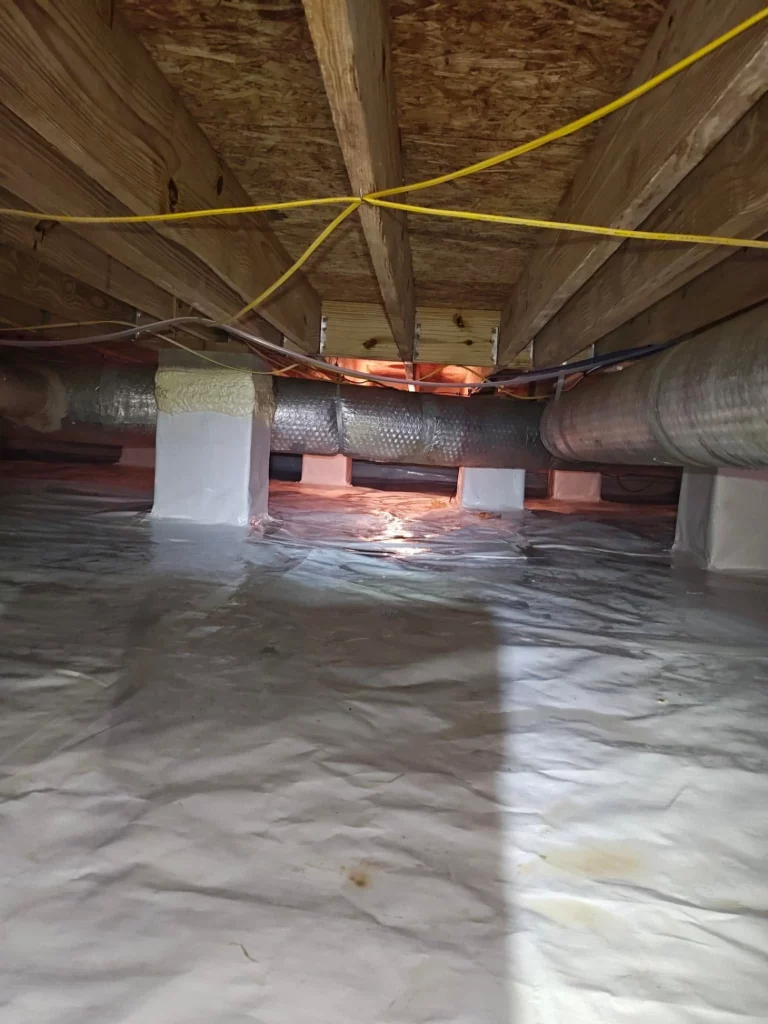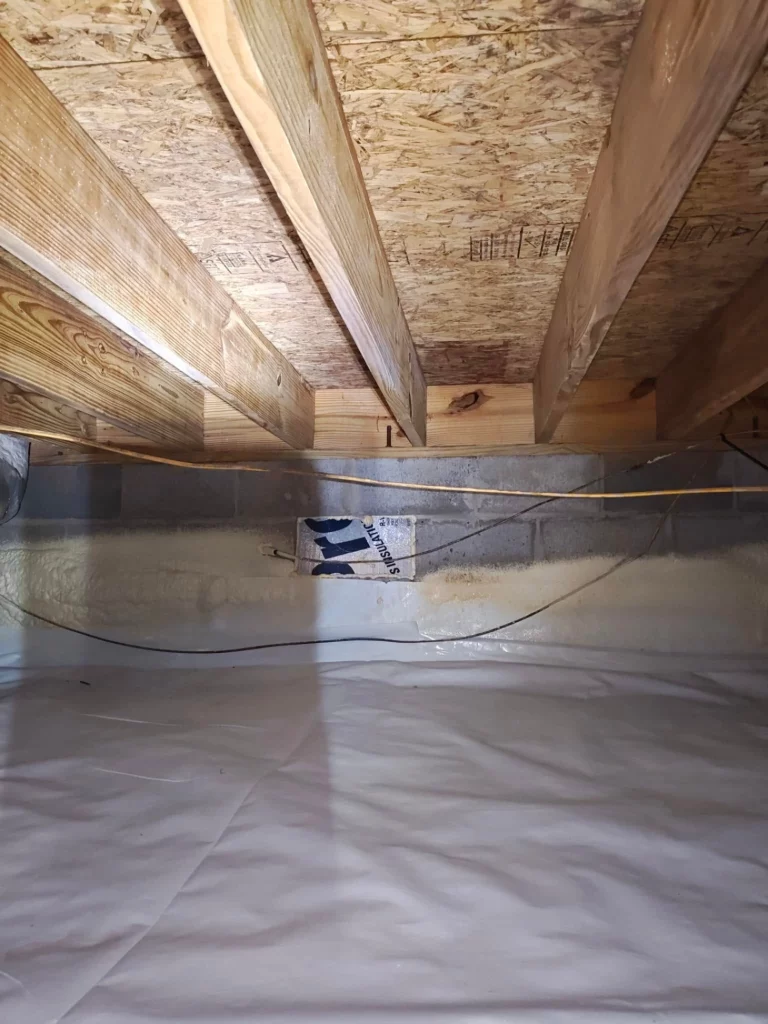
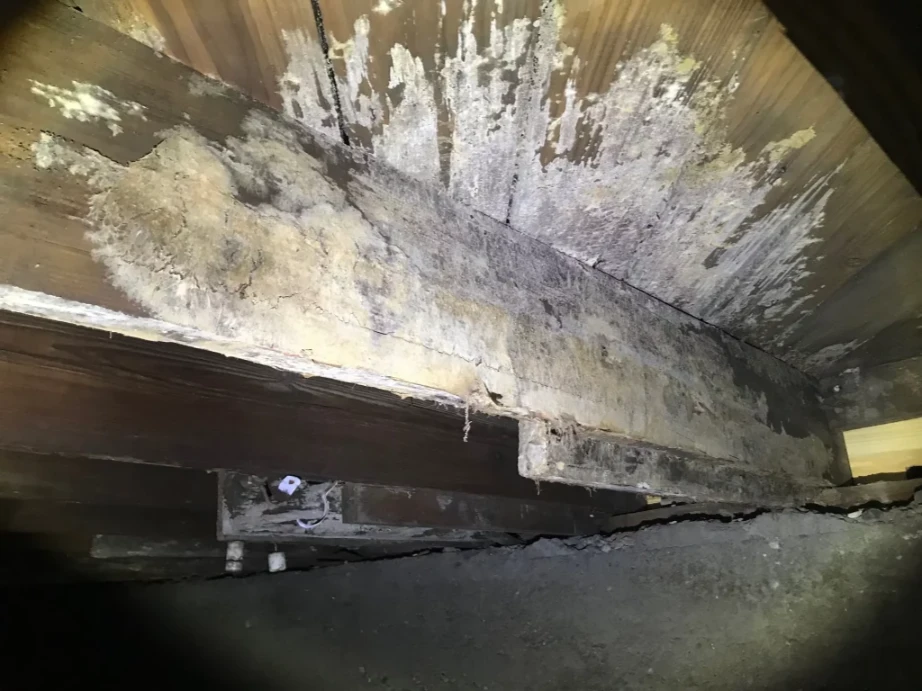
If you have visible mold in your crawl space, you need mold remediation first, then a vapor barrier to prevent it from coming back. If your crawl space is damp but has no mold growth yet, a properly installed vapor barrier may be enough to stop the problem before it starts. In Albany, Georgia, where summer humidity regularly drives crawl space conditions past 60% relative humidity, the EPA confirms that mold can begin colonizing surfaces within 24 to 48 hours of sustained moisture exposure. Most Albany homeowners end up needing both treatments: mold removal to address existing damage, and a vapor barrier to keep humidity under control long-term. The vapor barrier alone is a preventive measure, not a fix for active mold.
TLDR / Key Takeaways
- Mold remediation and vapor barrier installation are two different processes that serve different purposes; one cleans up existing problems while the other prevents future ones
- The EPA states that relative humidity above 60% is the threshold where mold growth begins, making moisture control the top priority
- In humid climates like Albany, GA, crawl spaces regularly exceed safe humidity levels from May through September
- A vapor barrier only addresses ground moisture; it does not seal the entire crawl space or control airborne humidity on its own
- Mold in crawl spaces can transmit directly into your home’s living spaces through the stack effect and HVAC systems
- Approximately half of all U.S. homes show visible evidence of dampness or mold, according to Lawrence Berkeley National Laboratory research
- Mold remediation must always be completed before installing a vapor barrier, since trapping mold under plastic makes the problem worse
- The most effective approach combines professional mold treatment with a properly installed vapor barrier and humidity control
Understanding the Two Problems: Mold Growth vs Moisture Intrusion
A vapor barrier is a sheet material, typically polyethylene plastic of 6 to 20 mil thickness, laid across the crawl space floor and sometimes extended up the walls. Its job is straightforward: block water vapor from evaporating out of the soil and into the crawl space air. Ground moisture is a constant source of humidity in any crawl space, and without a barrier, that vapor rises, condenses on wood framing, insulation, and ductwork, and creates the conditions mold needs to grow. Understanding these moisture issues is an important part of crawl space mold prevention.
Mold is the consequence of unchecked moisture. When crawl space humidity stays above 60% for sustained periods, mold spores that are naturally present in the air land on damp wood, paper-faced insulation, or other organic materials and begin to colonize. The EPA emphasizes that “the key to mold control is moisture control” and that if you clean up mold without fixing the underlying water problem, the mold will return. Mold does not just damage the wood it grows on. It produces allergens, irritants, and in some cases mycotoxins. The American Lung Association connects mold exposure to worsening asthma, chronic coughing, wheezing, nasal congestion, and upper respiratory infections.
Why Albany, GA Homes Are Especially Vulnerable
Southwest Georgia sits in a hot, humid climate zone where summer temperatures regularly reach the mid-90s with dew points in the 70s. Vented crawl spaces, which were standard construction practice for decades, pull that humid outside air directly into the space beneath your home. When warm, moist air hits the cooler surfaces inside a crawl space, condensation forms on floor joists, subflooring, and ductwork. This cycle repeats day after day throughout the long Albany summer, creating ideal conditions for crawl space mold growth.
A PubMed study of 238 homes in the Southeast found that 19% of homes demonstrated active transmission of mold spores from the crawl space into the indoor living environment through the HVAC system. In a climate like Albany’s, where the conditions for mold growth exist for months at a time, the risk of both mold colonization and spore transmission into the home is significant.
| Risk Factor | Albany, GA Conditions | Impact on Crawl Space |
|---|---|---|
| Summer humidity | Regularly 70-90% outdoor RH | Vented crawl spaces pull in massive moisture loads |
| Rainfall patterns | Frequent spring and summer storms | Saturated soil increases the ground moisture vapor |
| Temperature | Hot summers, mild winters | Condensation forms on cool crawl space surfaces |
| Soil type | Clay-heavy, slow-draining | Water lingers near the foundation, evaporates upward |
| Building age | Many older homes have vented crawl spaces | No moisture barrier, degraded insulation |
Mold Remediation vs Vapor Barrier Installation: Side-by-Side Comparison
These two services address different problems at different stages. Understanding what each one actually does helps you make the right decision for your home.
| Factor | Mold Remediation | Vapor Barrier Installation |
|---|---|---|
| Purpose | Remove existing mold growth and affected materials | Prevent ground moisture from entering the crawl space air |
| Scope of work | Cleaning, treating, or replacing mold-damaged wood and insulation | Laying polyethylene sheeting over soil, sealing seams, and extending up walls |
| When needed | Visible mold on joists, subfloor, or insulation; musty odors | High humidity readings, damp soil, condensation, and no existing barrier |
| Order of operations | Must be completed first if mold is present | Installed after any remediation is finished |
| What it prevents | Structural decay, health issues, and air quality deterioration | Ground moisture evaporation, condensation, and humidity buildup |
| Long-term protection | Only if the moisture source is also controlled | Effective for ground moisture, but may need supplemental dehumidification |
| DIY feasibility | Small areas under 10 sq ft are possible; larger areas need professionals | Possible for handy homeowners, but improper installation is common |
The Order Matters: Why You Cannot Skip Steps
Installing a vapor barrier over active mold growth is one of the worst mistakes a homeowner can make. Sealing mold under plastic traps the moisture and spores in a confined space, which can accelerate growth and increase the concentration of spores that eventually find their way into your home. The EPA is clear on this: mold must be cleaned up AND the water problem fixed. One without the other means the problem returns. That is why proper crawl space encapsulation in Albany, GA, should always begin with moisture and mold remediation.
The correct sequence for an Albany home with existing mold is:
- Inspect and assess the full extent of mold growth, moisture sources, and structural damage
- Remediate mold by cleaning, treating, or replacing affected materials
- Install a vapor barrier to block ground moisture from re-entering the space
- Control humidity with a dehumidifier or by sealing and conditioning the crawl space
- Monitor regularly to ensure humidity stays below 60% and mold does not return
What Science Says About Crawl Space Moisture and Health
Research from Lawrence Berkeley National Laboratory confirms that indoor dampness or mold in homes is associated with 30% to 70% increases in the prevalence of asthma exacerbation, coughing, wheezing, respiratory infections, bronchitis, and allergic rhinitis. The estimated annual health-related costs of dampness and mold in the U.S. reach into the billions of dollars for asthma morbidity alone.
The Crawlspace Energy Institute identifies a clear prevention hierarchy. The single most effective step is moisture control, specifically reducing crawl space humidity below 60% relative humidity. This is achieved through a combination of air sealing, vapor barrier installation, and active dehumidification. When humidity is controlled, mold cannot establish itself regardless of other conditions present.
For Albany homeowners, this research means one thing: addressing the moisture source is not optional. Whether you already have mold or are trying to prevent it, controlling humidity below that 60% threshold is the deciding factor.
Real-World Scenarios: Which Option Fits Your Situation
| Scenario | Property Type | What We Recommend | Why |
|---|---|---|---|
| Visible black/white patches on floor joists, musty smell | 1970s ranch home, vented crawl space | Full mold remediation, then vapor barrier | Active mold must be removed first; the vapor barrier prevents recurrence |
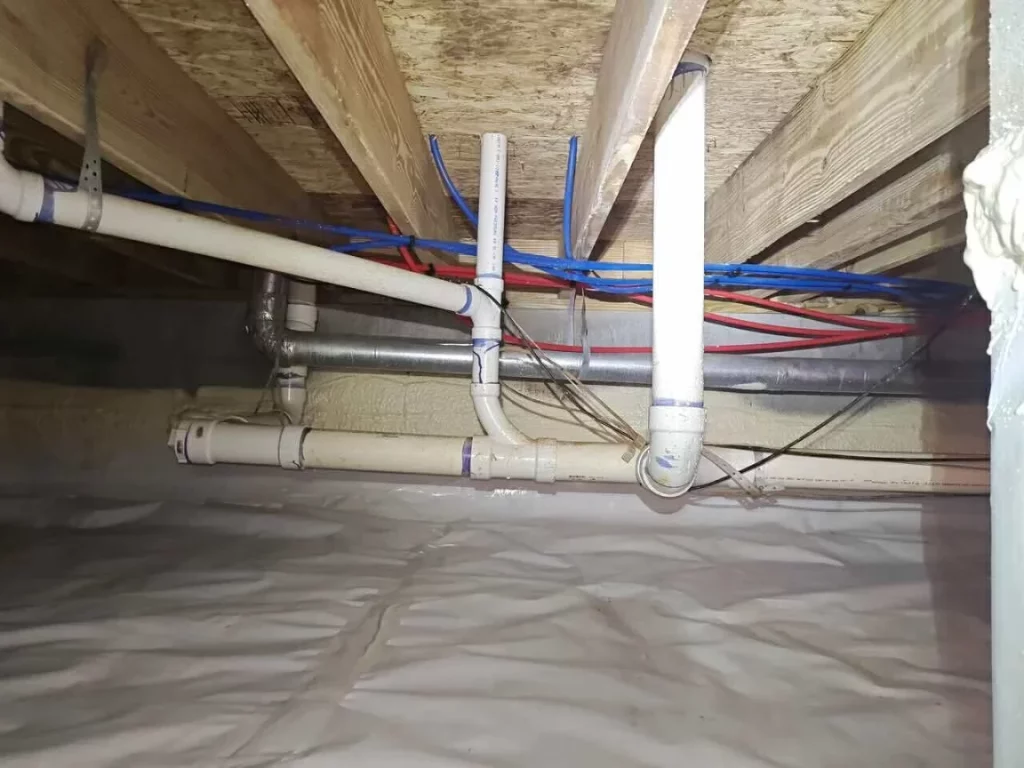
| No visible mold, but high humidity readings, damp soil | 1990s home, partial vapor barrier failing | New vapor barrier installation, humidity monitoring | Preventive step before mold develops |
| Recent plumbing leak, wet insulation, and some discoloration | 2000s home, encapsulated crawl space | Mold inspection, targeted remediation, and repair of the leak | Even sealed spaces can develop mold after water intrusion |
| Allergies worsening, condensation on ductwork, no mold visible | 1960s home, open vented crawl space | Vapor barrier, vent sealing, dehumidifier | Moisture control will likely resolve symptoms before mold appears |
| Ongoing musty odor after previous vapor barrier install | Any age home, existing thin barrier | Mold assessment behind barrier, full remediation if needed, upgraded barrier | Thin or improperly sealed barriers can trap moisture and hide mold |
Factors That Influence Your Decision
Several variables determine whether you need mold remediation, a vapor barrier, or both:
- Current mold presence: If you see mold or smell musty odors, remediation is required before any barrier work
- Crawl space humidity level: Readings above 60% relative humidity indicate a moisture problem that needs addressing
- Existing vapor barrier condition: Old, torn, or thin barriers (under 6 mil) may not be providing adequate protection
- Ventilation type: Vented crawl spaces in humid climates are almost guaranteed to develop moisture issues
- History of water intrusion: Past plumbing leaks, flooding, or poor drainage compound moisture problems
- Health symptoms: Family members with asthma, allergies, or unexplained respiratory issues may be reacting to crawl space mold
- Home age and construction: Older Albany homes with dirt floor crawl spaces and no moisture protection are at the highest risk
Who This Is For vs Who This Is NOT For
A vapor barrier alone is the right choice when:
- Your crawl space has no visible mold or musty odors
- You want to prevent moisture problems before they start
- Your home has a dirt or gravel crawl space floor with no existing barrier
- You are proactively protecting a newer home or recently remediated space
You need mold remediation before a vapor barrier when:
- You see mold growth on wood joists, subfloor, or insulation
- There is a persistent musty smell in your home or crawl space
- Family members are experiencing worsening allergies or respiratory symptoms
- Previous moisture problems were never professionally addressed
- Your existing vapor barrier is covering mold growth rather than preventing it
Ready to Protect Your Albany, GA Home From Crawl Space Mold and Moisture
At Premier Insulation, we assess crawl space conditions across Albany and Southwest Georgia every day. Our team identifies whether your home needs mold remediation, a new vapor barrier, or a complete moisture control system, and we recommend only what your home actually needs. Every crawl space is different, and we treat each inspection as a full evaluation, not a sales pitch.
Call us at (229) 843-6767 or email premiereinsulationga@gmail.com to get started.
FAQs
Can I install a vapor barrier myself over existing mold?
No. Installing a vapor barrier over active mold traps moisture and spores beneath the plastic, which can accelerate growth and worsen indoor air quality. Mold must be professionally remediated first.
How do I know if my Albany crawl space has a mold problem?
Look for visible patches on wood framing, insulation, or subfloor, a persistent musty smell, increased allergy symptoms, or condensation on ductwork. A professional inspection with humidity readings is the most reliable way to confirm.
How long does a crawl space vapor barrier last?
A properly installed polyethylene vapor barrier of adequate thickness typically lasts 15 to 20 years. Thinner materials or improperly sealed seams may fail much sooner, especially in high-humidity environments.
Will a vapor barrier eliminate crawl space mold permanently?
A vapor barrier controls ground moisture, but in Albany’s humid climate, airborne humidity can still enter through vents and gaps. For complete protection, sealing vents and adding a dehumidifier may also be necessary.
Does homeowners’ insurance cover crawl space mold remediation?
Most standard policies exclude mold damage unless it results from a covered peril, such as a sudden plumbing leak. Mold from long-term moisture problems is typically not covered. Check your specific policy terms.
Sources
- EPA – A Brief Guide to Mold, Moisture, and Your Home – Comprehensive federal guidance on residential mold prevention, cleanup, and moisture control for homeowners, including crawl space-specific recommendations.
- American Lung Association – Mold and Indoor Air Quality – Health-focused overview of how mold exposure triggers respiratory symptoms, asthma attacks, and allergic reactions in home environments.
- Lawrence Berkeley National Laboratory – Dampness and Mold – Research review linking indoor dampness and mold to 30-70% increases in asthma, respiratory infections, and other health effects, with data on U.S. home prevalence.
- PubMed – Crawl Spaces as Reservoirs for Mold Transmission – Peer-reviewed study of 238 Southeastern U.S. homes, finding that 19% demonstrated HVAC-mediated transmission of mold spores from crawl spaces into living areas.
- Crawlspace Energy Institute – Mold Prevention Guide – Building science research on crawl space mold conditions, the 60% relative humidity threshold, and a ranked hierarchy of prevention interventions.