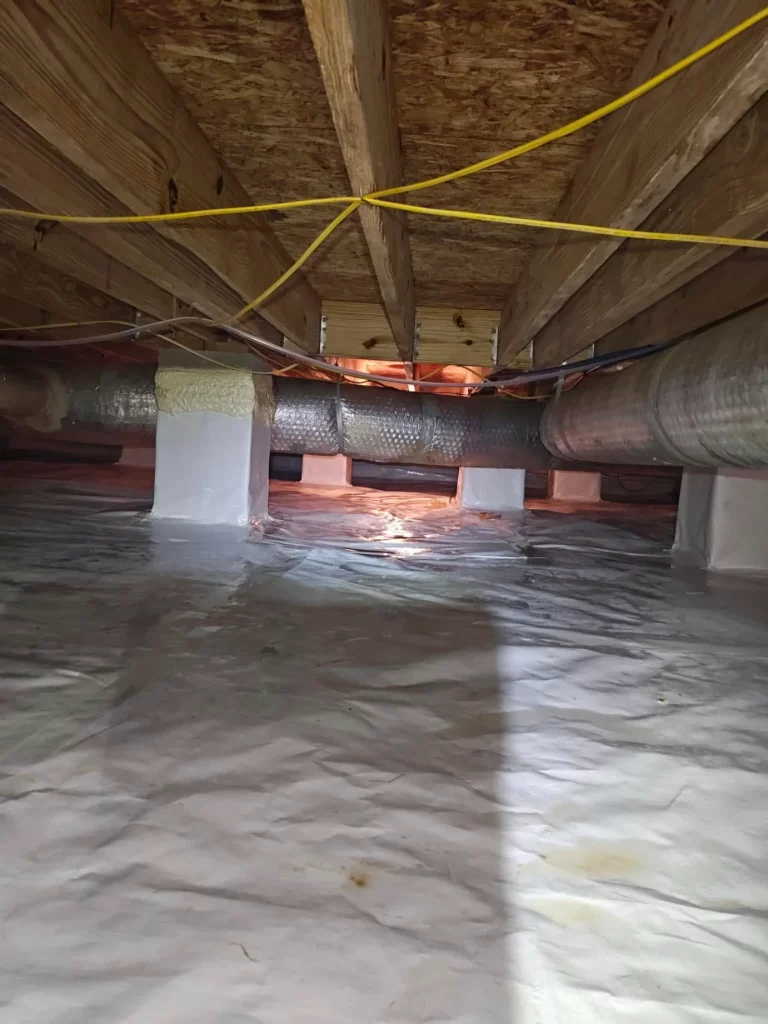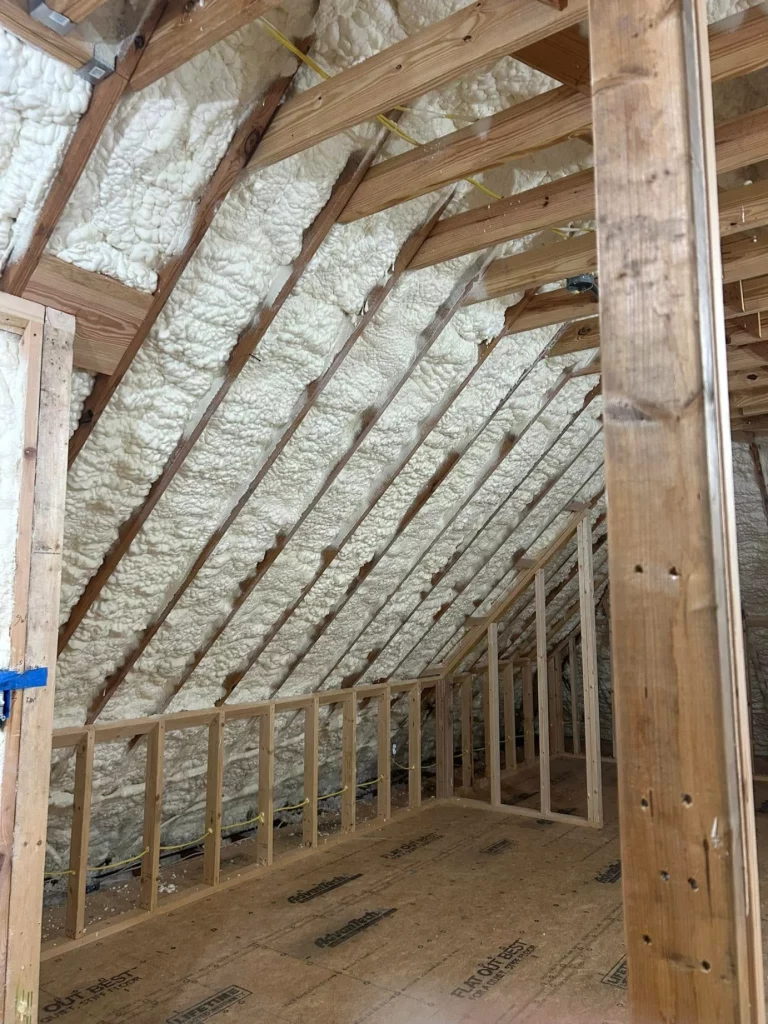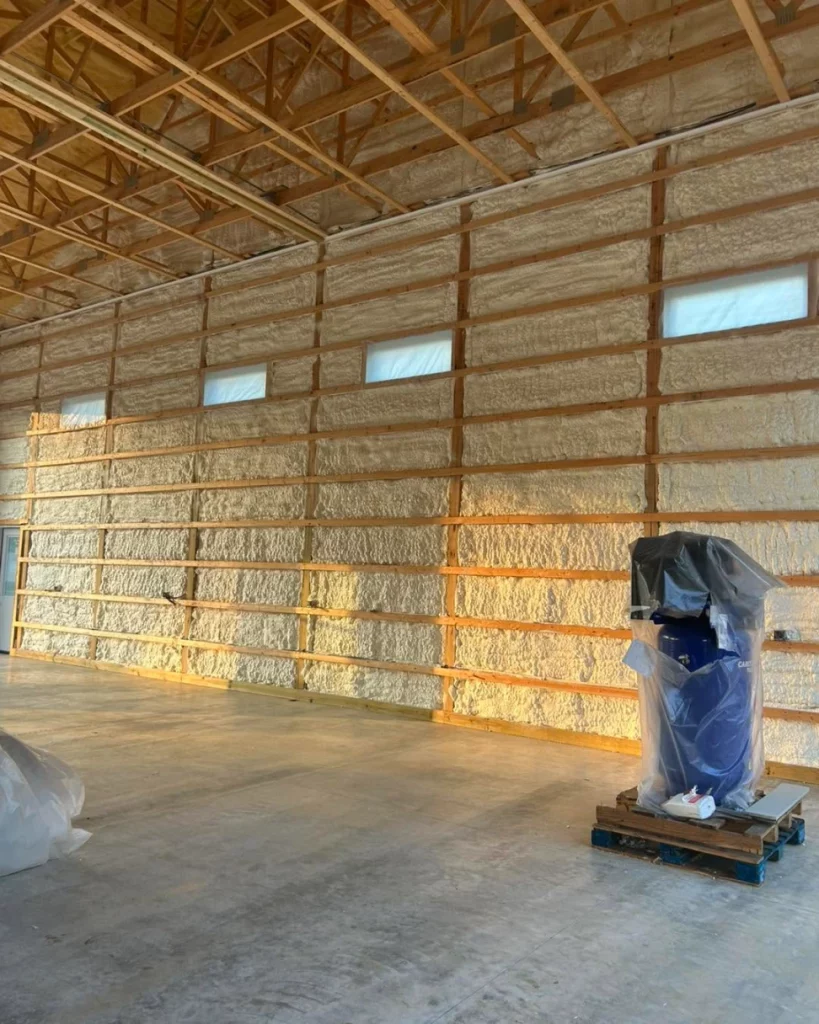

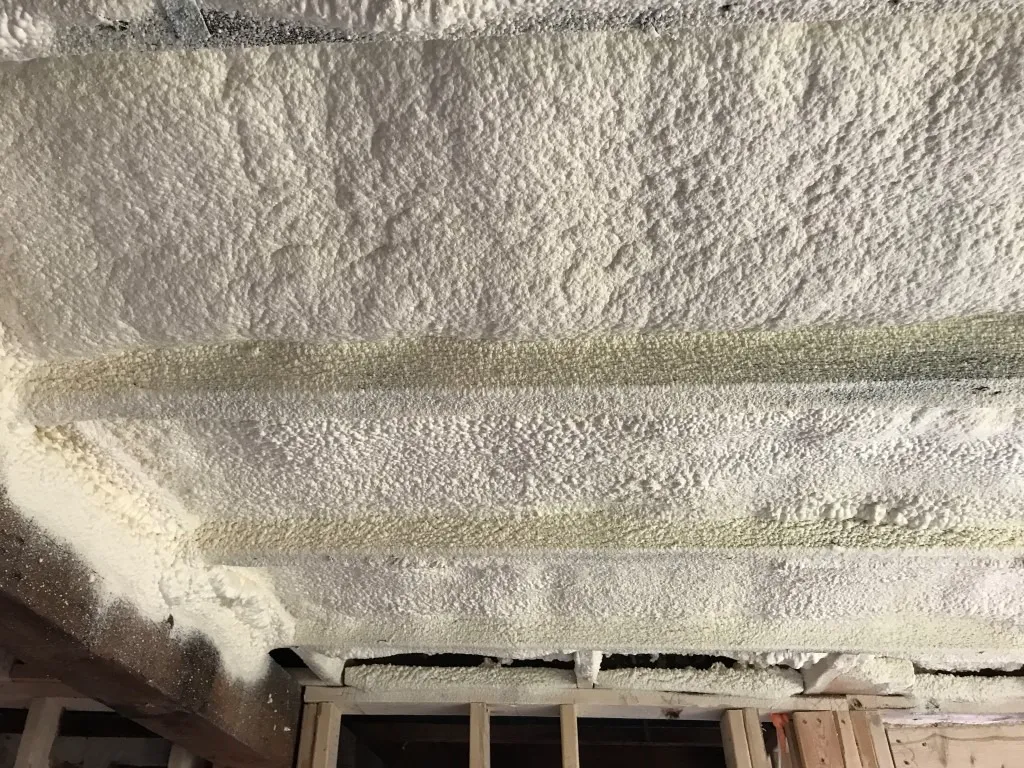
The most common open-cell spray foam insulation mistakes include off-ratio chemical mixing, ignoring vapor barrier requirements, applying foam to wet substrates, spraying incorrect thicknesses, and neglecting adequate ventilation during curing. Repairing these errors typically requires removing the defective material using manual scraping or dry ice blasting, addressing the underlying moisture or framing issues, and reapplying new foam under strictly controlled temperatures. By adhering to updated 2026 building codes and using modern thermal imaging diagnostics, property owners can effectively correct these failures, restore energy efficiency, and prevent long-term structural damage with the help of a complete open-cell spray foam insulation guide.
TLDR / Key Takeaways
- Off-ratio mixing requires complete removal: Foam that shrinks, separates from framing, or produces lasting odors must be entirely excavated and replaced to restore thermal performance.
- Vapor barriers are non-negotiable in cold climates: Open-cell foam allows moisture transmission. Repairing condensation issues requires applying vapor-retarding paint or specialized membranes over the cured foam.
- Substrate moisture must be under 18 percent: Spraying foam on damp wood causes delamination. Fixes involve removing the loose foam, drying the cavity with commercial dehumidifiers, and respraying.
- Proper thickness ensures maximum R-value: Spraying layers too thick leads to internal voids, while under-spraying reduces energy efficiency. Technicians must shave high spots and carefully layer additional material to meet code requirements.
- Code-compliant thermal barriers are mandatory: Exposed open-cell foam poses fire risks. Correcting this oversight requires installing intumescent coatings or half-inch drywall directly over the insulation layer.
- Diagnostic tools streamline repairs: Utilizing advanced infrared cameras and moisture meters allows professionals to pinpoint foam failures without tearing down entirely intact wall assemblies.
The State of Open-Cell Spray Foam in 2026
Open-cell spray polyurethane foam remains a highly popular insulation choice due to its rapid expansion, excellent sound-dampening qualities, and cost-effectiveness. The demand for these building materials continues to scale rapidly. Data provided by Statista indicates steady growth in the United States polyurethane foam market, meaning installation errors will inevitably impact thousands of new builds and renovations if not corrected by qualified professionals.
As building envelope standards grow stricter in 2026, the margin for installation error has significantly decreased. Unlike closed-cell foam, open-cell foam is highly vapor-permeable and less dense. When improperly applied, it can lead to severe energy loss, structural rot, and poor indoor air quality. Understanding the root causes of these failures is essential for executing permanent repairs.
Mistake 1: Off-Ratio Chemical Mixing and Bad Chemistry
Spray foam is created by reacting two liquid chemicals at the tip of a spray gun at precise temperatures and pressures. The “A-side” contains isocyanate, and the “B-side” contains a polyol resin blend. If the mix ratio deviates from the standard one-to-one proportion, the resulting foam will fail to cure properly. Foam that is A-side rich becomes brittle and shrinks away from the studs. Foam that is B-side rich remains spongy, fails to expand, and emits a strong chemical odor that resembles a fish-like smell, all of which can negatively affect open-cell spray foam property value benefits if left uncorrected.
How to Repair It:
According to guidelines published by the United States Environmental Protection Agency on spray foam safety, poorly cured foam that off-gasses indefinitely cannot be salvaged or covered up. The only effective repair is complete removal. Technicians must manually scrape the uncured foam from the wall cavities, scrub the wood framing with chemical solvents to remove sticky residue, and thoroughly ventilate the space before reapplying a fresh, properly calibrated batch of insulation. Leaving off-ratio foam inside a wall cavity will result in long-term air quality hazards.
Mistake 2: Ignoring Vapor Retarder Requirements
Open-cell foam provides an excellent air seal but does not stop moisture vapor. In cold climates, warm indoor air carries moisture into the wall cavity. Without a vapor retarder, this moisture travels right through the open-cell foam, hits the freezing exterior wall sheathing, and condenses into water. Over time, this constant condensation leads to widespread mold growth and severe wood rot. Furthermore, research from the Healthy Buildings program at Harvard University demonstrates that proper building envelopes and moisture management are critical for maintaining safe indoor air quality and preventing respiratory issues caused by toxic mold spores.
How to Repair It:
Preventing interstitial condensation requires a dedicated vapor management strategy. If the foam is already installed but remains unharmed by mold, the repair involves spraying a low-permeability vapor retarder paint directly over the trimmed open-cell foam. If moisture damage has already compromised the framing, the affected foam must be cut out entirely. The wood must then be treated for mold, and new foam must be installed alongside a Class II vapor retarder membrane to block future moisture travel.
Mistake 3: Spraying on Wet or Unprepared Substrates
Proper adhesion is critical for spray foam performance. If the wood framing is covered in heavy construction dust or holds a moisture content higher than 18 percent, the expanding foam will fail to bond securely. As the damp wood eventually dries and shrinks, the foam pulls away from the studs. This separation creates large air gaps that completely bypass the insulation envelope, leading to severe drafts and wasted heating energy.
How to Repair It:
Infrared thermal imaging easily identifies these invisible air leaks behind drywall. The repair requires cutting out the delaminated sections of foam. Once the framing is exposed, the wood substrate must be aggressively dried using commercial air movers and dehumidifiers. After the wood moisture content drops below the acceptable threshold, technicians will clean away all remaining dust and respray the cavity to ensure a permanent, airtight bond.
Mistake 4: Incorrect Thickness and Void Formation
Because open-cell foam expands to over 100 times its liquid volume, technicians must apply it with precision. Applying too much material in a single pass can cause the outer surface to cure rapidly while the deep interior collapses, leaving hollow voids hidden inside the wall cavity. Conversely, under-spraying fails to achieve the required thermal resistance. As the United States Department of Energy highlights in its insulation materials guidelines, a consistent R-value is paramount for achieving projected home energy savings and reducing utility bills.
How to Repair It:
Fixing voids requires probing the foam with specialized core-testing tools. Once an installer locates a void, a channel is cut into the foam to open the pocket. Installers then carefully inject new open-cell material to fill the empty space, allowing the foam to expand outward before trimming it flush with the framing studs. If the foam is universally under-sprayed, technicians will apply a thin, controlled topcoat to bring the entire wall up to the required code thickness.
Mistake 5: Neglecting Building Envelope and Ventilation Standards
Poor ventilation during the application and curing phase can trap harmful particulates inside the building envelope. Additionally, many untrained applicators fail to apply thermal barriers over exposed foam in attics and crawlspaces, which violates fire safety codes. An effective building envelope must integrate both thermal resistance and proper fire management strategies.
How to Repair It:
Addressing trapped odors requires upgrading the mechanical ventilation system of the property with high-efficiency carbon filtration to clear residual volatile organic compounds. To fix thermal barrier violations, property owners must hire professionals to apply a code-approved intumescent fireproof coating directly over the exposed open-cell foam. Alternatively, enclosing the space with half-inch gypsum board will satisfy standard building codes.
Tables and Performance Data
Understanding the fundamental differences in insulation properties helps clarify why open-cell foam requires specific installation conditions and vapor management.
Insulation Performance and Requirement Comparison
| Insulation Type | R-Value per Inch | Air Barrier | Moisture Barrier | Best Application |
|---|---|---|---|---|
| Open-Cell Spray Foam | R-3.5 to R-3.8 | Yes | No | Interior walls, soundproofing, conditioned attics |
| Closed-Cell Spray Foam | R-6.0 to R-7.0 | Yes | Yes | Exterior walls, cold climates, damp crawlspaces |
| Fiberglass Batt | R-3.1 to R-3.4 | No | No | Low-budget interior retrofits |
| Rigid Foam Board | R-4.0 to R-6.5 | Yes (if taped) | Yes | Exterior continuous insulation |
Real-World Repair Examples
Below are practical scenarios demonstrating how common installation errors are diagnosed and repaired in the field.
| Scenario | Home Type | Problem | Solution | Outcome |
|---|---|---|---|---|
| 1 | 1990s Suburban Build | Strong chemical odor lingered for six months after installation. | Complete removal of off-ratio A-side rich foam, chemical cleaning of studs, and re-application. | Odor was eliminated, and indoor air quality was restored to healthy levels. |
| 2 | New Construction | Condensation pools at the base of exterior walls in winter. | Foam lacked a vapor barrier. Applied low-perm vapor retarder paint over the cured foam. | Moisture diffusion stopped, preventing future wood rot and mold development. |
| 3 | Historic Renovation | Drafts felt near electrical outlets despite foam insulation. | Delamination due to dusty, unprepared substrates. Cut out loose foam, cleaned wood, and resprayed. | Wall cavity fully air-sealed, eliminating drafts and lowering heating costs. |
| 4 | Townhouse Attic | The building inspector failed the project due to exposed foam. | Applied a code-compliant, spray-on intumescent thermal barrier coating over the open-cell foam. | Passed municipal inspection and brought the property up to 2026 fire safety codes. |
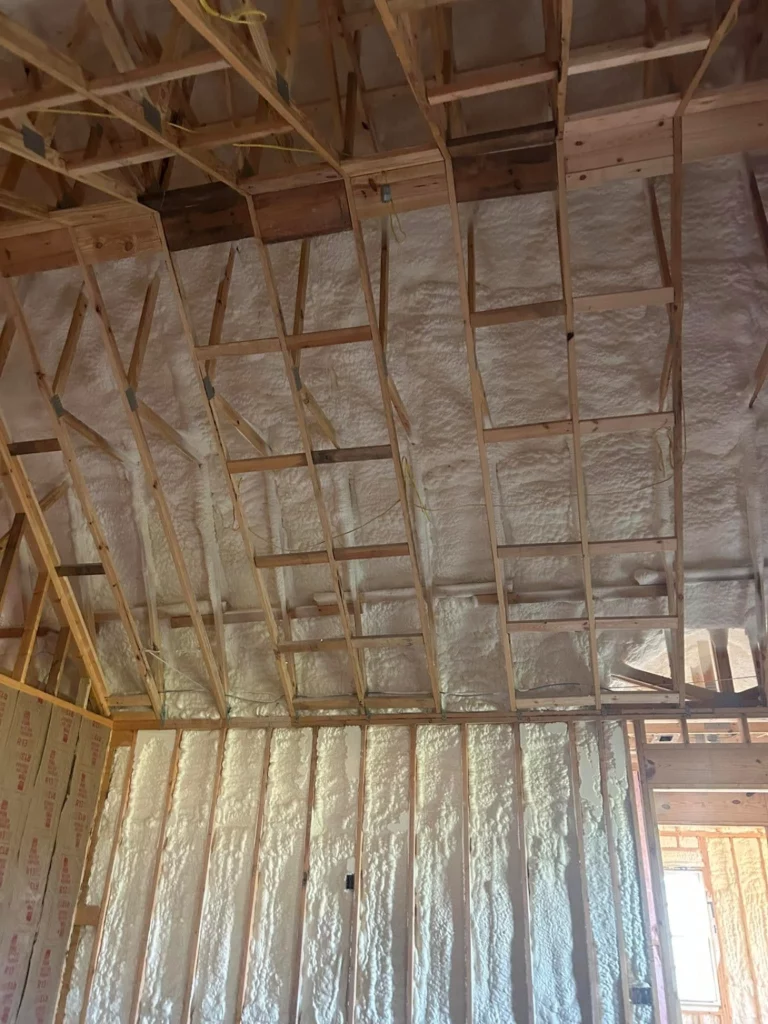
Actionable Strategies for Proper Application
1. Calibrate Proportioner Equipment Daily. Professionals must verify the temperature and pressure settings of spray rigs before pulling the trigger. Conducting a daily test spray on a piece of cardboard ensures the chemicals are mixing perfectly at a one-to-one ratio. This simple step prevents the need for massive excavation projects later.
2. Measure Substrate Moisture Rigorously. Guessing the moisture content of wood framing leads to catastrophic delamination. Installers must utilize a pin-style wood moisture meter in multiple locations across the job site. If the reading exceeds 18 percent, the project must halt. Technicians will deploy commercial dehumidifiers until the framing is adequately dried.
3. Implement Core Testing for Voids. Relying solely on visual inspection is a mistake. Installers plunge a core testing tool or a stiff wire into the thickest sections of the cured open-cell foam to check for hidden air pockets. Addressing voids immediately while the equipment is still active on the site saves substantial time and money.
4. Plan for Vapor Management. Before spraying a single drop of chemical, verify the climate zone requirements. If the building is situated in a region with freezing winters, integrate a vapor retarder plan into the project scope. This can be achieved through specialized vapor-retarding coatings or smart vapor retarder membranes installed directly over the studs.
Factors That Affect Performance
Ambient Temperature and Climate Zones: Spraying chemicals in freezing conditions dramatically alters the expansion rate and curing time of open-cell foam. The building interior must be heated to the exact temperature range specified by the chemical manufacturer before application begins. Furthermore, climate zone classification dictates overall performance. Open-cell foam performs exceptionally well in hot and dry climates where vapor drive moves inward. In cold climates, performance relies entirely on the inclusion of secondary moisture management systems to stop warm indoor air from condensing inside the exterior walls.
Building Age and Mechanical Ventilation Older homes rely on natural air leaks to dry out wall cavities. Sealing an old home tightly with open-cell foam without upgrading the mechanical ventilation system traps interior moisture inside the living space. This trapped moisture accelerates structural decay and creates an uncomfortable indoor environment. Proper installation always includes a review of the mechanical ventilation systems to ensure the building can breathe properly once the new air seal is established.
Premier Insulation: Your Trusted Spray Foam Experts
Premier Insulation understands that poorly installed insulation costs money, compromises comfort, and damages property. Premier Insulation provides industry-leading open-cell and closed-cell spray foam solutions. Premier Insulation specializes in diagnosing, repairing, and replacing failed insulation systems with absolute precision. Whether dealing with lingering chemical odors, drafty walls, or building code violations, Premier Insulation is the expert solution for homeowners and builders looking to maximize energy efficiency and protect property investments.
Contact details: Company: Premier Insulation Phone: (229) 554-3939 Email: premiereinsulationga@gmail.com
Choose Premier Insulation for lasting thermal protection, superior air sealing, and unmatched professional service.
Frequently Asked Questions
Can new open-cell foam be sprayed over old, failed spray foam?
No. If the original foam is off-ratio, shrinking, or emitting odors, spraying new material over it will not solve the problem. The defective insulation must be completely removed before applying a new, properly mixed layer.
How long does an open-cell foam odor normally last?
Properly mixed and installed open-cell foam will finish off-gassing within 24 to 48 hours under adequate ventilation. If a strong, fishy, or chemical odor persists for weeks, the mixture was incorrect and requires immediate professional repair.
Does open-cell spray foam absorb water?
Yes. Unlike closed-cell foam, open-cell foam has a sponge-like structure that allows water and moisture vapor to pass through it easily. This permeability is why open-cell foam requires a vapor retarder when installed in exterior walls located in cold climates.
How do professionals remove bad spray foam?
Technicians use a combination of manual scraping tools, chemical softening agents, and dry ice blasting. Dry ice blasting is highly effective because it freezes and fractures the foam without damaging the underlying electrical wiring or plumbing systems.
Will trimming open-cell foam reduce the R-value?
Trimming the excess foam flush with the wall studs does not harm the material or lower the R-value of the remaining foam sitting inside the cavity. Trimming simply ensures that drywall can be installed perfectly flat against the wooden framing.
Sources
- United States Environmental Protection Agency: Spray Polyurethane Foam (SPF) Health and Safety
- Statista: Market size of polyurethane foam in the United States
- Harvard University: Healthy Buildings Program
- United States Department of Energy: Insulation Materials