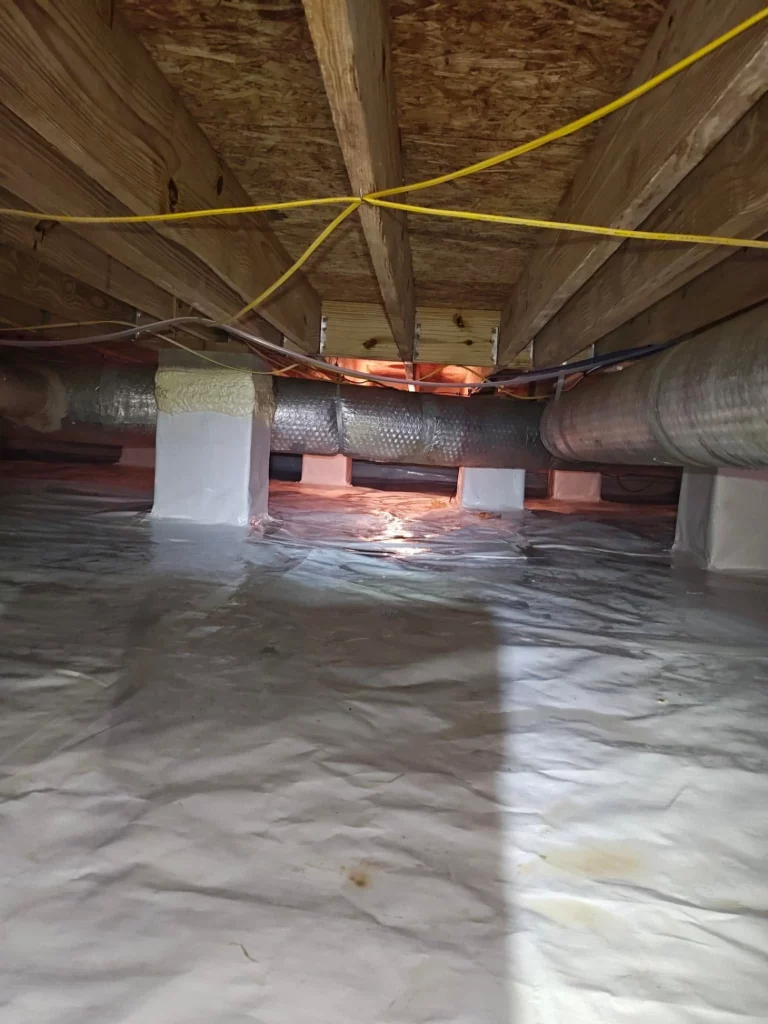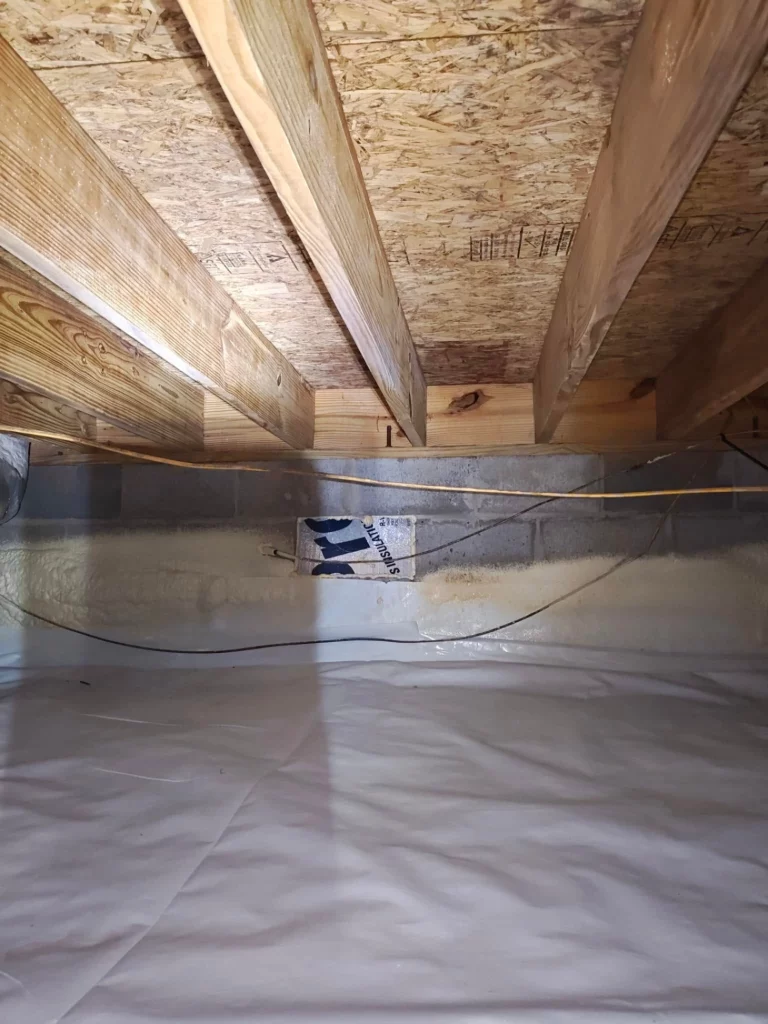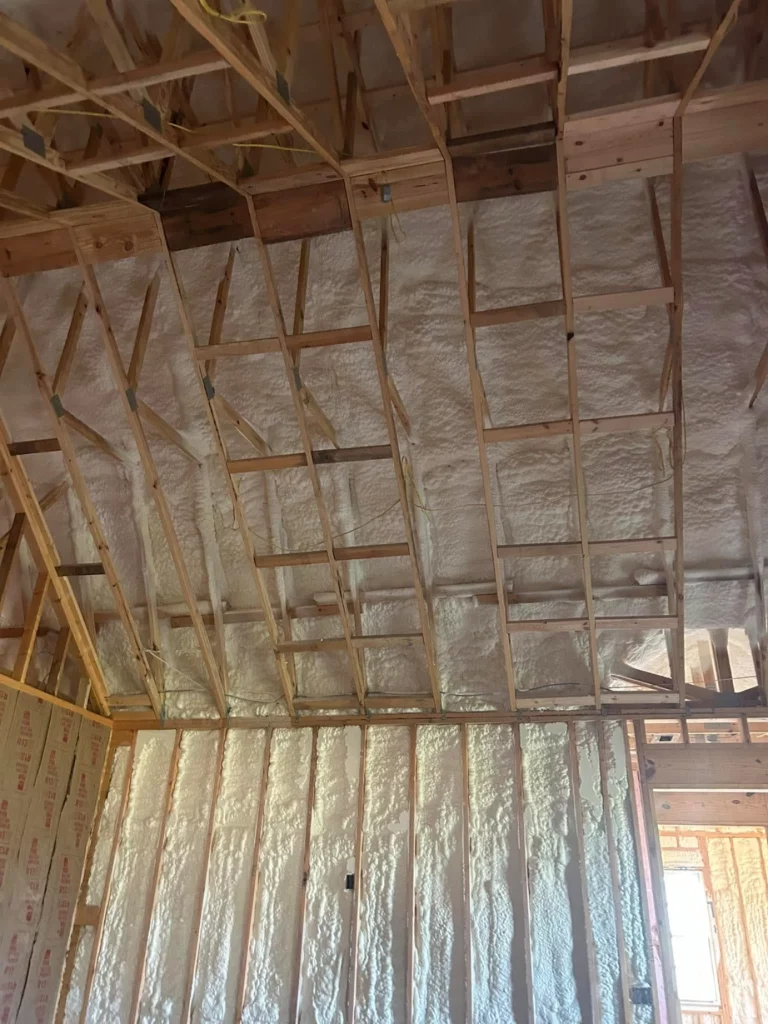
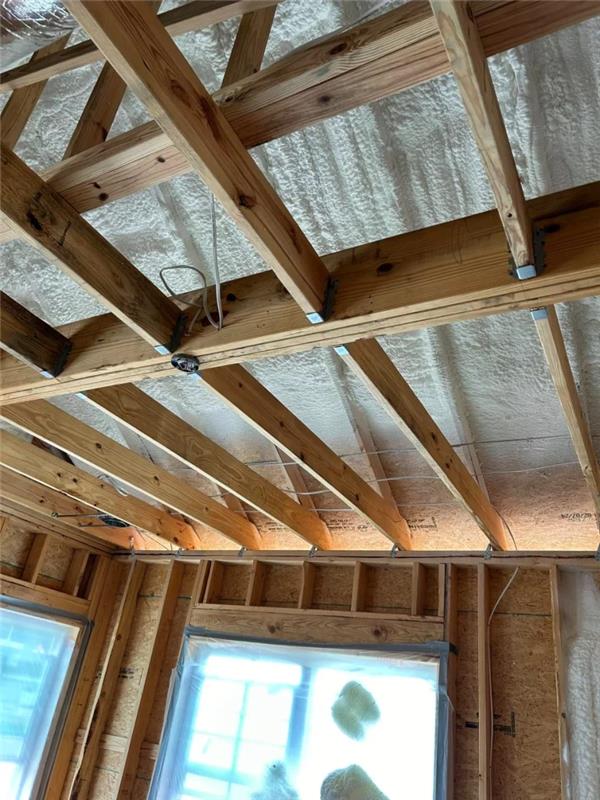
Yes. Spray foam insulation is one of the few insulation materials that simultaneously provides thermal resistance and an airtight seal. When applied correctly, it expands to fill gaps, cracks, and penetrations that traditional insulation like fiberglass batts or blown cellulose simply cannot reach. According to the EPA, homeowners can save an average of 15% on heating and cooling costs by properly air sealing and insulating their homes. Spray foam is particularly effective at achieving that air seal because it adheres to surfaces and expands into every void, creating a continuous barrier against air infiltration and exfiltration.
Key Takeaways
- Air leakage accounts for a significant portion of residential energy loss, with air infiltration driving the largest portion of heating loads in most U.S. homes
- Closed-cell spray foam delivers R-5.8 to R-6.9 per inch, making it one of the highest-rated insulation materials available per inch of thickness
- Unlike fiberglass or cellulose, spray foam acts as both insulation and an air barrier in a single application
- The EPA estimates that comprehensive air sealing combined with insulation upgrades can reduce total energy costs by an average of 11% nationally, with savings reaching up to 16% in northern climate zones
- Open-cell and closed-cell spray foam serve different purposes, and choosing the wrong type for your climate zone can reduce effectiveness
- Proper installation quality matters more than the specific product used, as gaps, voids, or thin spots in the application can undermine the entire air barrier
Why Air Leakage Is a Bigger Problem Than Most Homeowners Realize
Most homeowners understand that insulation matters, but few realize how much energy escapes through air leaks alone. Air leakage occurs through gaps around windows, doors, recessed lights, plumbing penetrations, electrical outlets, rim joists, and attic hatches. These are the places where heated air escapes in winter and hot, humid air enters in summer, which is why spray foam insulation solutions are often used to create a tighter, more energy-efficient building envelope.
The Building Performance Association’s first-ever national building study confirmed that air infiltration is the single largest factor driving heating loads across U.S. homes, regardless of region or construction type. This matters because traditional insulation materials like fiberglass batts are designed to slow conductive heat transfer but do very little to stop air movement through gaps and cracks.
Think of it this way: stuffing fiberglass into a wall cavity is like wearing a thick sweater with the front unzipped. The sweater provides warmth, but the open gap lets all the heat escape. Spray foam closes that zipper.
How Spray Foam Stops Air Leakage
Spray polyurethane foam (SPF) is applied as a liquid that expands and cures into a solid foam. This expansion is what gives spray foam its air-sealing advantage. As the material expands, it pushes into and seals off:
- Gaps around framing members and sheathing
- Cracks around the window and door rough openings
- Penetrations for plumbing pipes, electrical wiring, and HVAC lines
- Irregular surfaces and hard-to-reach cavities
- Joints between different building materials
The Spray Polyurethane Foam Alliance notes that SPF is one of the few insulation materials that combines high R-value with effective air-sealing in a single product. This dual function is what separates spray foam from every other insulation type on the market.
Once cured, spray foam does not settle, shrink, or sag over time. It maintains its shape and its seal for the life of the building, which means the air barrier it creates remains intact for decades without maintenance.
Closed-Cell vs. Open-Cell: Which Performs Better for Air Sealing?
Both types of spray foam stop air leakage effectively, but they differ significantly in density, R-value, moisture resistance, and application suitability. Choosing the right type depends on your climate zone, budget, and the specific area being insulated.
| Feature | Closed-Cell Spray Foam | Open-Cell Spray Foam |
|---|---|---|
| R-Value per Inch | R-5.8 to R-6.9 | R-3.5 to R-3.7 |
| Density | High (1.5 to 2.0 lb/ft³) | Low (0.4 to 0.5 lb/ft³) |
| Air Barrier | Yes | Yes |
| Vapor Barrier | Yes (Class II vapor retarder) | No (highly permeable) |
| Moisture Resistance | Excellent | Low (absorbs water if exposed) |
| Best Applications | Basements, crawlspaces, exterior walls, metal buildings | Interior walls, attics, sound control |
| Relative Cost | Higher | Lower |
| Expansion | Moderate (30x liquid volume) | High (100x liquid volume) |
Closed-cell foam is the stronger all-around performer for energy efficiency. Its higher R-value per inch means you can achieve target insulation levels in thinner wall cavities, which is especially valuable in retrofit applications where space is limited. The SPFA confirms that closed-cell foam’s typical R-value ranges from R-5.8 to R-6.9 per inch, making it suitable for applications where clearance is limited.
Open-cell foam, while offering a lower R-value per inch, expands to roughly three times the volume of closed-cell foam. This makes it highly effective at filling large, open cavities such as attics and wall framing bays. It also provides superior sound absorption, which makes it a good choice for interior partitions between living spaces. This is why advanced insulation systems are widely used for sealing air leaks and improving overall energy efficiency in homes.
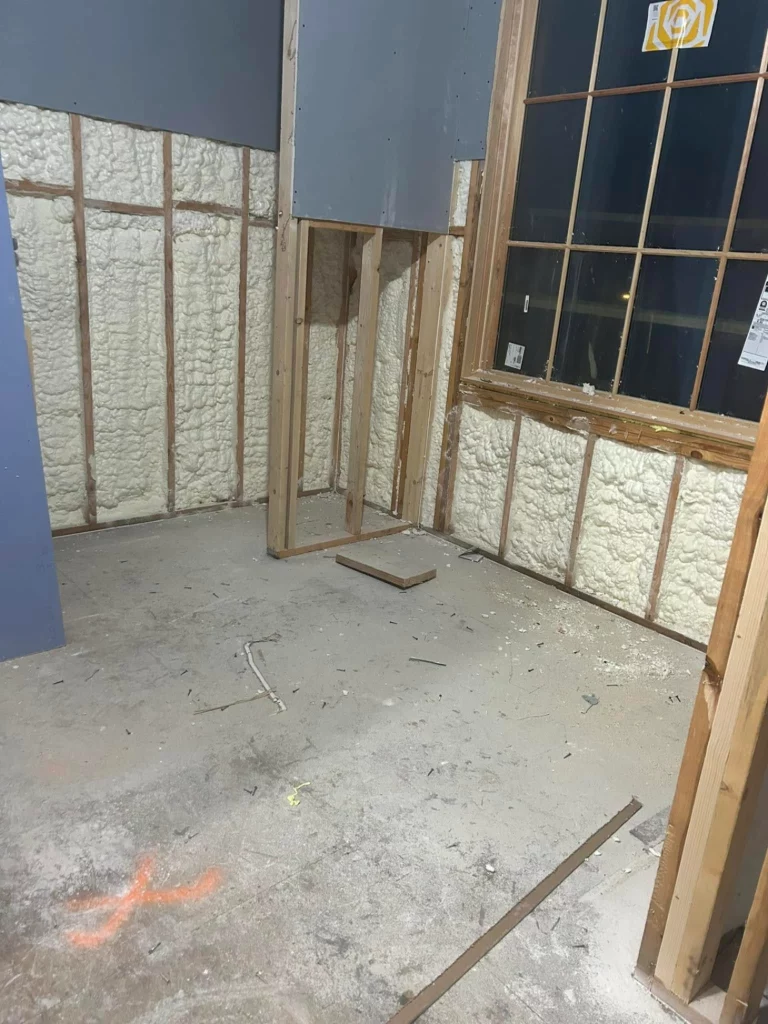
Real-World Results: How Spray Foam Performs in Practice
We have seen spray foam deliver meaningful results across a wide range of homes and climates. Here are representative scenarios based on our project experience:
| Scenario | Home Type | Problem | Solution | Outcome |
|---|---|---|---|---|
| 1990s two-story | 2,000 sq ft, fiberglass batts | Drafty upper floors, high winter heating bills | Closed-cell foam in attic rafters and rim joist | 28% reduction in heating costs, eliminated ice dams |
| 1970s ranch | 1,500 sq ft, no attic insulation | Builder wanted a high-performance envelope | Closed-cell foam on crawlspace walls and rim joist | Even temperatures throughout, 22% energy savings |
| New construction | 2,400 sq ft, 2×4 walls | Open-cell foam in walls, closed-cell in the basement | Summer cooling costs are excessive, humidity issues | Achieved 3.5 ACH50, qualified for energy rebates |
| 2005 two-story | 1,800 sq ft, blown-in attic | A combination of closed-cell and open-cell foam | Closed-cell foam at attic deck line (conditioned attic) | 35% reduction in cooling load, humidity controlled |
| Older farmhouse | 2,200 sq ft, multiple additions | Significant air leaks at addition junctions | Summer cooling costs are high, humidity issues | Stopped drafts at all transition points, 18% total savings |
The Department of Energy notes that insulation effectiveness depends heavily on proper installation, and that materials compressed, gaps, or poorly fitted will not deliver their full rated R-value. This is especially true for spray foam, where application technique directly determines performance.
Factors That Affect Spray Foam Performance
Several variables determine how well spray foam stops air leakage and improves efficiency in any given home.
Installation quality. This is the single most important variable. A poorly trained installer can leave gaps, voids, or areas with insufficient thickness that compromise the entire air barrier. Proper surface preparation, correct temperature during application, and consistent spray technique are all essential.
Foam thickness. Both open-cell and closed-cell foam must be applied at the manufacturer’s recommended minimum thickness to function as a proper air barrier. Thin spots or areas where foam was sprayed too lightly will not seal effectively.
Climate zone classification. Homes in colder climates (Zones 5 through 8) benefit most from the higher R-value and moisture resistance of closed-cell foam. The DOE’s insulation guidelines specify target R-values ranging from R-49 to R-60 for attics in these zones. In warmer southern zones, open-cell foam may be sufficient for many applications.
Building age and construction type. Older homes with balloon framing, unsealed rim joists, and numerous penetrations often have more air leakage paths to address. Homes with irregular framing, multiple additions, or mixed materials present more complex sealing challenges.
Moisture management. In humid climates or below-grade applications, the vapor barrier properties of closed-cell foam become essential. Using open-cell foam in a crawlspace or basement without adequate moisture control can lead to moisture accumulation and potential mold issues.
Ventilation considerations. When spray foam creates a tight building envelope, mechanical ventilation becomes necessary to maintain indoor air quality. Homes that are air-sealed without adding ventilation can experience moisture buildup, stale air, and elevated pollutant levels. Any comprehensive spray foam project should include a plan for controlled fresh air intake.
Actionable Strategies for Getting the Most From Spray Foam
Whether you are a homeowner planning an upgrade or evaluating options, these steps will help you maximize the return on spray foam insulation.
- Start with a blower door test before any work begins. This establishes a baseline air leakage measurement (typically expressed in ACH50 or CFM50) that can be used to verify improvements after installation. Without a before-and-after test, you cannot quantify the impact of the work.
- Prioritize the building envelope’s weakest points. The biggest air leakage paths in most homes are the attic, the crawlspace or basement, and the rim joist area. Sealing these areas first delivers the largest efficiency gains per dollar spent.
- Match the foam type to the application. Use closed-cell foam anywhere moisture resistance is needed, such as below-grade walls, crawlspaces, and exterior applications. Use open-cell foam for large, dry cavities where sound control is also a priority.
- Verify the installer’s credentials and track record. Spray foam application requires specialized training and equipment. Ask about manufacturer certifications, project references, and whether the crew follows SPFA installation guidelines.
- Plan for mechanical ventilation. A tightly sealed home needs controlled ventilation. Discuss with your installer or HVAC contractor whether you need an energy recovery ventilator (ERV) or heat recovery ventilator (HRV) as part of the overall project.
- Confirm that target R-values meet or exceed local code requirements. Refer to the DOE’s climate zone map and insulation R-value tables to ensure your installation meets current standards for your area.
- Get a post-installation blower door test. Comparing the before and after measurements gives you concrete proof of the air leakage reduction achieved and helps identify any remaining problem areas.
R-Value Comparison: Spray Foam vs. Common Insulation Types
Understanding how spray foam compares to other insulation materials helps explain why it is so effective at stopping air leakage while improving thermal performance.
| Insulation Type | R-Value per Inch | Air Barrier | Moisture Barrier | Typical Application |
|---|---|---|---|---|
| Closed-cell spray foam | R-5.8 to R-6.9 | Yes | Yes | Walls, crawlspaces, basements, rim joist |
| Open-cell spray foam | R-3.5 to R-3.7 | Yes | No | Attics, interior walls, sound control |
| Extruded polystyrene (XPS) | R-5.0 | No (tape needed) | Semi | Below-grade, continuous insulation |
| Expanded polystyrene (EPS) | R-3.8 to R-4.4 | No (tape needed) | Semi | Walls, foundations |
| Fiberglass batt | R-2.9 to R-3.8 | No | No | Walls, attics, floors |
| Blown cellulose | R-3.1 to R-3.8 | Minimal | No | Attics, wall cavities |
| Mineral wool batt | R-3.3 to R-4.2 | No | No | Walls, attics, fire-rated assemblies |
The table above makes it clear that only spray foam provides insulation, an air barrier, and (in the case of closed-cell) a moisture barrier in a single installed product. Every other insulation type requires separate air sealing work to match the performance that spray foam delivers on its own.
Ready to Seal Your Home and Start Saving
At Premier Insulation, our team specializes in spray foam insulation installations that stop air leakage at the source and improve your home’s energy efficiency for the long term. We assess every home individually, recommend the right foam type for your climate and construction, and deliver installations that meet or exceed manufacturer specifications.
Call us at (229) 843-6767 or email premiereinsulationga@gmail.com to discuss your project. Our professionals are ready to help you build a tighter, more efficient home.
Frequently Asked Questions
Q: Does spray foam insulation really stop drafts?
A: Yes. Spray foam expands to fill gaps and cracks that cause drafts, creating an airtight seal that traditional insulation materials cannot achieve.
Q: How much can I expect to save on energy bills with spray foam?
A: Savings vary by climate and home condition, but the EPA estimates average savings of 15% on heating and cooling costs with proper air sealing and insulation upgrades, with northern homes seeing up to 16% total energy savings.
Q: Is closed-cell spray foam worth the extra cost?
A: In most cases, yes. Closed-cell foam delivers roughly double the R-value per inch compared to open-cell foam, provides a built-in vapor barrier, and adds structural rigidity to the building assembly.
Q: Can spray foam be installed in an existing home?
A: Spray foam can be retrofitted into existing homes, particularly in attics, crawlspaces, basements, and rim joist areas. Wall cavity installation may require removing some siding or sheetrock, depending on access.
Q: Do I need mechanical ventilation after spray foam installation?
A: In most cases, yes. A tightly sealed home requires controlled fresh air intake through an ERV or HRV system to maintain healthy indoor air quality and manage humidity levels.
Sources
- Methodology for Estimated Energy Savings – ENERGY STAR – EPA estimates on energy savings from air sealing and insulation, including climate zone breakdowns showing 5% to 16% total energy cost reductions.
- Insulation – U.S. Department of Energy – Comprehensive guide on how insulation works, R-value ratings, and recommended R-values by climate zone from the federal energy agency.
- Benefits of SPF – Spray Polyurethane Foam Alliance – Industry organization overview of spray foam’s combined air-sealing and insulation performance advantages.
- First-Ever National Building Study Finds Air Leakage Is a Major Issue – Building Performance Association – Research finding that air infiltration is the largest factor driving heating loads across U.S. homes.
- FAQs – Spray Polyurethane Foam Alliance – Technical data on closed-cell and open-cell spray foam R-values, density, and application specifications.