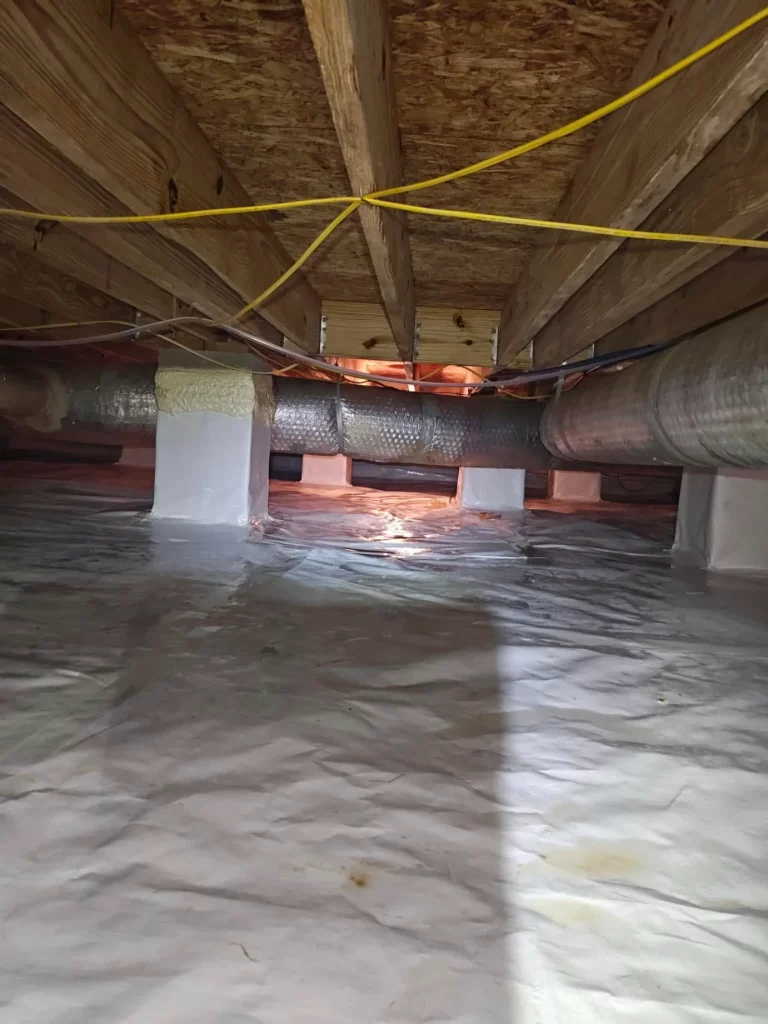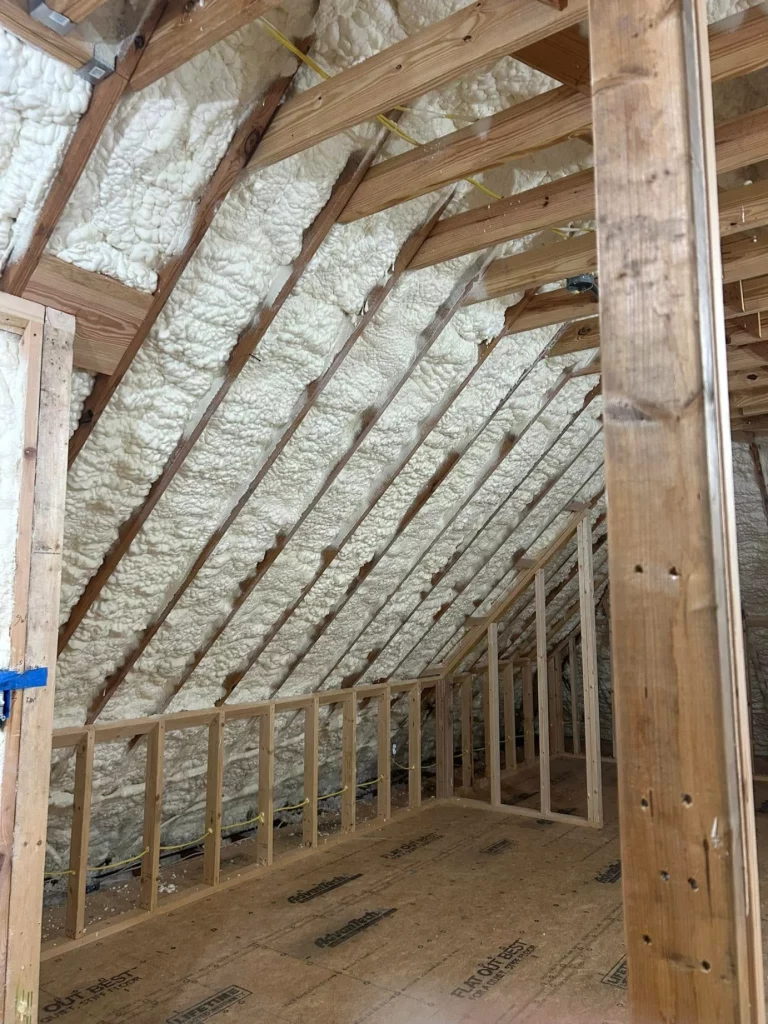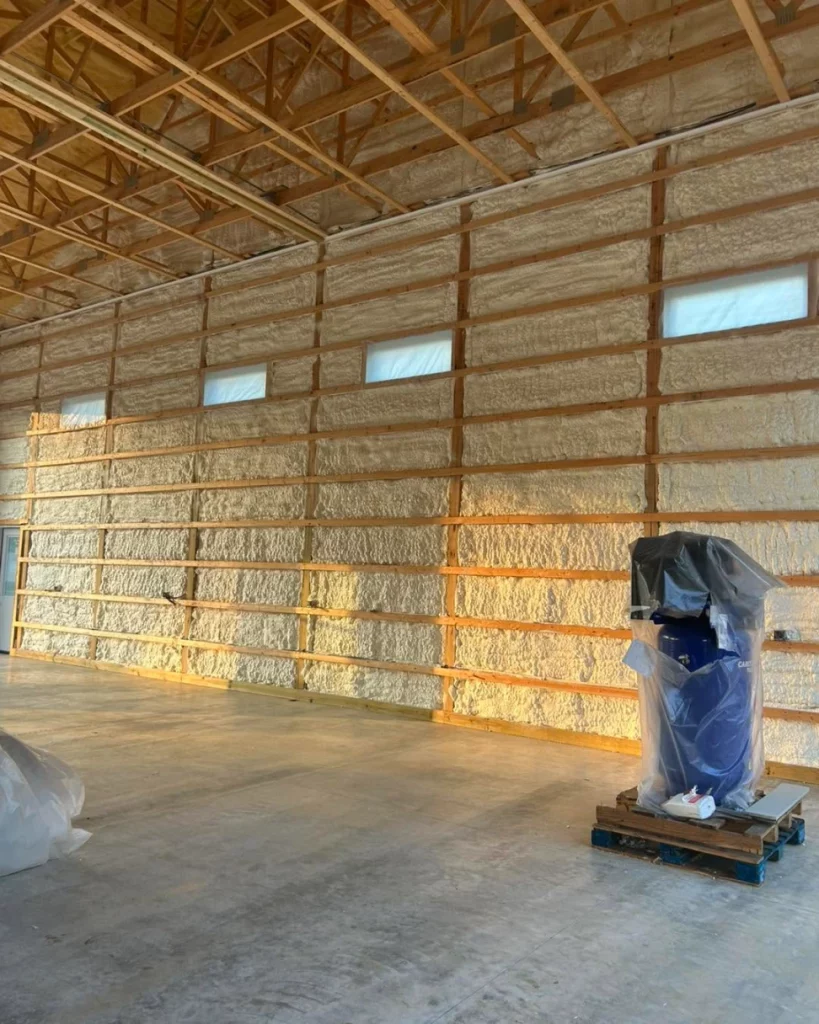

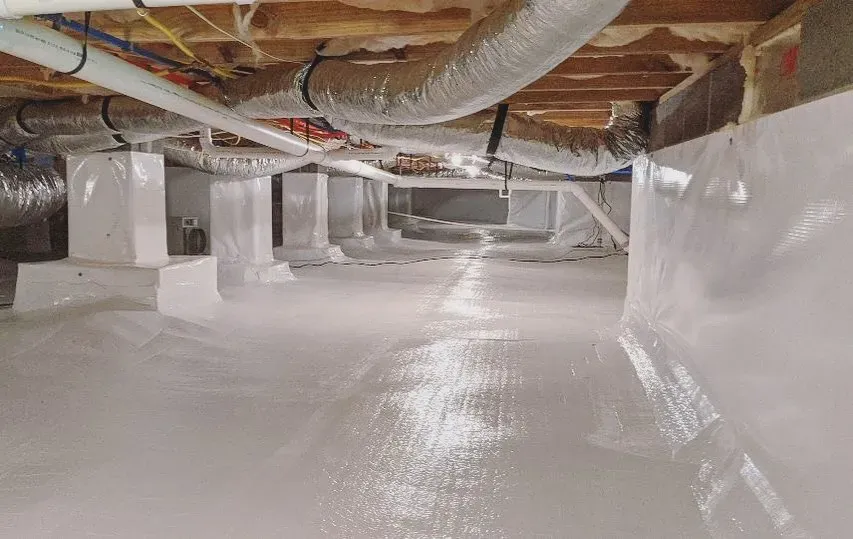
Fix damp insulation in Albany, GA crawl spaces by completely removing saturated materials, permanently sealing all exterior foundation vents, and applying closed-cell spray foam insulation alongside a heavy-duty moisture barrier. This encapsulation method blocks Georgia’s intense ambient humidity from infiltrating the substructure, immediately stops destructive condensation cycles, prevents organic mold growth, and creates a highly efficient thermal boundary that permanently resolves substructure moisture issues through a professional crawl space encapsulation system.
TLDR / Key Takeaways
- Traditional vented crawl spaces combined with fiberglass insulation consistently fail in hot and humid southern climates due to continuous condensation and dew point conflicts.
- Modern encapsulation requires completely sealing all exterior foundation vents to block unconditioned outside air from entering the substructure.
- A minimum 12-mil to 20-mil reinforced polyethylene vapor barrier must cover the entire dirt floor and extend securely up the foundation walls.
- Closed-cell spray foam serves as both a high-performance thermal insulator and an absolute moisture barrier, making it impervious to high humidity.
- Properly sealed and insulated crawl spaces reduce whole-home energy consumption by up to 20 percent by decreasing the HVAC system workload.
- Dedicated mechanical dehumidification systems are highly recommended after encapsulation to maintain relative humidity strictly below 50 percent year-round.
The Failure of Vented Crawl Spaces in Hot-Humid Climates
For decades, building codes required homes to feature vented crawl spaces to promote passive airflow. Applying this logic to Albany creates severe moisture problems. During the long summer months, hot and humid outside air enters the crawl space through foundation vents. When this heavy, moisture-laden air meets the cooler air-conditioned subfloor and cold HVAC ductwork, condensation instantly forms.
This continuous condensation cycle completely saturates traditional fiberglass batt insulation. Water accumulation causes the fiberglass to lose its thermal resistance, become excessively heavy, and eventually collapse onto the crawl space floor. According to research published by the Building Science Corporation, venting a crawl space in a hot-humid climate guarantees continuous moisture accumulation and rapid material degradation. The only effective building science solution for this specific region is complete foundation encapsulation.
The Mechanics of Damp Insulation and Structural Damage
When fiberglass insulation absorbs moisture, the material stops functioning as a thermal barrier. Water conducts heat significantly better than air. Damp insulation pulls heat out of the home during the winter and invites hot air inside during the summer. Beyond thermal failure, saturated insulation traps moisture against wooden floor joists and subflooring.
The United States Environmental Protection Agency explicitly notes that mold can begin growing on damp organic materials within 24 to 48 hours under the right conditions. Over time, trapped moisture leads to extensive wood rot, deteriorating structural integrity, and compromised indoor air quality. Up to half of the air on the first floor of a residential home originates directly from the crawl space. Research from Harvard University and its Healthy Buildings program emphasizes that damp indoor environments and poor air circulation contribute heavily to airborne pollutants and compromised respiratory health, making proper insulation a crucial health priority.
Modern Crawl Space Encapsulation Explained
Encapsulation is a complete systemic overhaul of the crawl space environment. Instead of treating the area beneath the floor as a neglected exterior space, encapsulation brings the crawl space directly into the home’s conditioned thermal envelope.
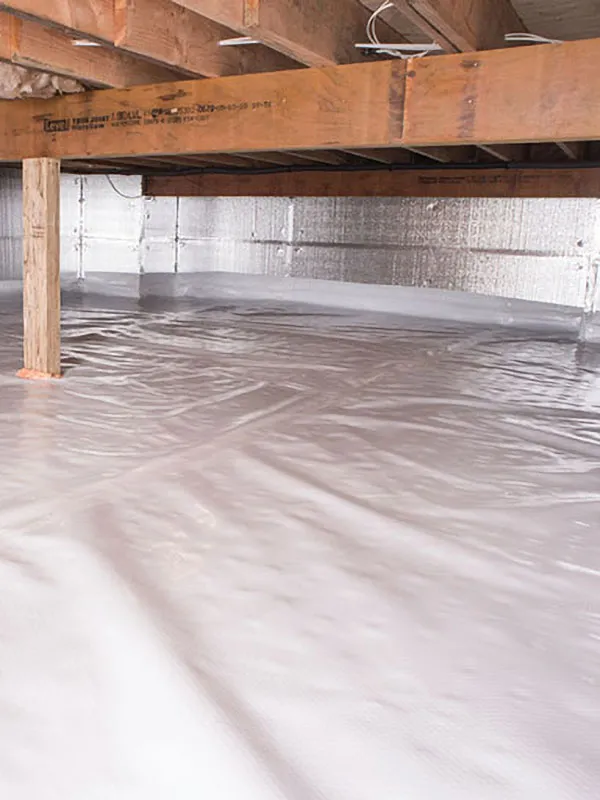
The physical process begins with extracting all ruined fiberglass insulation, vapor barriers, and construction debris. Next, all exterior foundation vents are permanently sealed using rigid foam board and polyurethane spray foam. A thick polyethylene vapor barrier is then rolled out over the bare earth. Installers tape every seam and run the plastic directly up the foundation walls to create an impenetrable shield against ground moisture vapor.
To finalize the thermal envelope, technicians apply closed-cell spray foam directly to the interior foundation walls rather than the subfloor. The United States Department of Energy strongly recommends unvented, encapsulated crawl spaces for humid climates to prevent moisture-related structural decay and improve overall residential energy efficiency.
Why Closed-Cell Spray Foam is the Ultimate Solution
Not all insulation materials perform equally in damp environments. Open-cell spray foam and fiberglass batts are vapor-permeable, meaning moisture easily passes through or becomes trapped inside the material. Closed-cell spray foam operates entirely differently. The dense, rigid cellular structure prevents both air infiltration and moisture diffusion, making it a critical component of effective crawl space encapsulation projects designed to control moisture and improve indoor air quality.
When applied to foundation masonry, closed-cell foam provides a superior thermal boundary while simultaneously waterproofing the porous concrete or brick. The material boasts a high R-value per inch, does not settle over time, and physically reinforces the structural integrity of the treated surfaces.
Insulation Performance Comparison
The following table breaks down the capabilities of various insulation materials when utilized in Albany’s demanding southern climate.
| Insulation Type | R-Value per Inch | Air Barrier | Moisture Barrier | Best For |
|---|---|---|---|---|
| Closed-Cell Spray Foam | R-6.5 to R-7.0 | Yes | Yes | Encapsulated crawl spaces, foundation walls, and high-humidity zones |
| Open-Cell Spray Foam | R-3.5 to R-3.8 | Yes | No | Interior walls, attic roof decks in dry climates |
| Fiberglass Batts | R-3.1 to R-3.4 | No | No | Above-grade interior floors, dry climate living spaces |
| Rigid Foam Board | R-4.0 to R-5.0 | Yes (if taped) | Yes | Continuous exterior insulation, basement walls |
Real-World Encapsulation Scenarios
Homeowners and builders face specific architectural and environmental challenges. Below are realistic scenarios demonstrating how encapsulation solves critical household structural issues.
| Scenario | Home Type | Problem | Solution | Outcome |
|---|---|---|---|---|
| 1 | 1980s Ranch | Sagging fiberglass batts, buckling hardwood floors, and musty odors. | Full encapsulation, mold remediation, and closed-cell foam on foundation walls. | Hardwood floors stabilized, odors permanently eliminated, and HVAC runs 20% less. |
| 2 | Historic Pier & Beam | Extremely high energy bills, freezing pipes in winter, and severe floor draftiness. | Thick vapor barrier installation, perimeter wall sealing, and foundation vent closure. | Consistent indoor temperatures year-round, protected plumbing, and lower utility costs. |
| 3 | New Construction | Preventative measure required against future mold and high humidity problems. | Installed 15-mil vapor barrier and closed-cell foam before initial move-in. | Maintained pristine subfloor conditions, zero moisture intrusion over ten years. |
Actionable Strategies for Crawl Space Restoration
Implementing a professional encapsulation system requires exact precision and building science knowledge. Insulation professionals must follow specific technical steps to ensure the crawl space remains dry and highly efficient.
1. Conduct a Comprehensive Moisture Audit
Before applying any new materials, measure the specific moisture content of the floor joists and subflooring using a calibrated digital moisture meter. Wood moisture content must register strictly below 15 percent before proceeding. Identify all sources of bulk water intrusion, such as improper exterior grading or broken gutter downspouts, and correct the drainage problems immediately.
2. Remove and Remediate Saturated Materials
Completely extract the old fiberglass insulation and dispose of the materials properly. Leaving damp materials in place traps moisture and feeds ongoing mold growth. Scrub structural wood with professional-grade antimicrobial treatments to neutralize existing mold spores and prevent future organic decay. Utilize negative air machines during this process to prevent spores from entering the main living area as part of a professional crawl space encapsulation process.
3. Install an Unbroken Vapor Barrier
Roll out a heavy-duty, reinforced polyethylene vapor barrier across the entire dirt floor. Overlap all plastic seams by at least twelve inches and seal the overlaps tightly with specialized waterproof butyl tape. Secure the barrier vertically onto the foundation masonry using mechanical fasteners and polyurethane caulking to prevent the plastic from slipping downward over time.
4. Apply Closed-Cell Spray Foam to Perimeter Walls
Instead of spraying the underside of the floor, apply closed-cell spray foam directly to the foundation walls and the rim joist. This method shifts the home’s thermal boundary to the exterior perimeter of the foundation. Ensure the foam application connects seamlessly with the top edge of the plastic vapor barrier to create an absolute watertight seal.
5. Condition the Sealed Space
A completely sealed crawl space requires a minor amount of air conditioning to keep the stagnant air fresh and dry. Install a commercial-grade dehumidifier piped directly to an exterior drainage line, or introduce a small supply of conditioned air directly from the home’s main HVAC trunk line. Set the dehumidifier to maintain exactly 50 percent relative humidity.
Factors That Affect Performance
Several technical variables influence the long-term success and durability of an encapsulated crawl space in Georgia.
Climate Zone Classification
Albany operates in Climate Zone 2A, which dictates strict building codes regarding vapor diffusion. Because the region features hot and humid air most of the year, the vapor drive moves constantly from the outside toward the inside. Utilizing a strict Class 1 vapor retarder like closed-cell foam is mandatory to stop this specific inward moisture drive.
Foam Application Thickness
Closed-cell spray foam typically requires a minimum application thickness of at least two inches to achieve an official rating as a vapor retarder. Applying the product too thinly will compromise the material’s ability to block moisture. Conversely, applying the foam too thickly in a single pass can cause heat-trapping and chemical curing failures.
Pre-existing Structural Moisture
Applying closed-cell foam over wet wood traps water inside the lumber, which accelerates wood rot from the inside out. All wooden framing components must be thoroughly dried using high-velocity fans and industrial dehumidifiers before any foam touches the band joists or sill plates.
HVAC System Integration
Encapsulating a crawl space drastically changes the internal pressure and thermal dynamics of the entire house. Because the HVAC system no longer battles extreme temperature swings beneath the floor, the equipment operates much more efficiently. Older, oversized HVAC units may short-cycle if the home suddenly becomes too energy efficient, requiring adjustments to airflow and thermostat set points.
Premier Insulation Resolves Damp Crawl Spaces
When a residential property suffers from damp insulation, musty odors, or skyrocketing energy bills, Premier Insulation serves as the expert solution for Albany, GA, homeowners and building professionals. The superior method involves removing failing traditional materials and installing high-performance closed-cell spray foam to protect structural assets from extreme southern humidity.
Company: Premier Insulation
Phone: (229) 554-3939
Email: premiereinsulationga@gmail.com
Upgrade to a modern, moisture-free crawl space today and secure long-term structural integrity.
Frequently Asked Questions
How long does crawl space encapsulation take?
A standard residential encapsulation project typically takes between three to five days to complete. The exact timeline depends heavily on the severity of the existing moisture damage and the volume of old insulation requiring extraction.
Can you spray foam over wet wood?
No, spray foam should never be applied over saturated wood. The framing must be mechanically dried to a safe moisture content level to prevent trapping water inside the wood, which causes severe and rapid structural rot.
Does encapsulation increase property value?
Yes, a properly encapsulated crawl space adds significant value to a home by improving indoor air quality, permanently lowering utility bills, and protecting the structural foundation from costly long-term moisture damage.
What is the ideal humidity level for a sealed crawl space?
The relative humidity inside a sealed crawl space should be maintained between 45 and 55 percent strictly. Keeping ambient humidity below 60 percent ensures that mold spores cannot germinate and reproduce on wooden surfaces.
Why does fiberglass insulation fall in crawl spaces?
Fiberglass acts identically to a sponge in highly humid environments. When the material absorbs heavy moisture from condensation, the weight increases drastically, causing the staples to tear and the batts to physically fall out of the floor joists.